Reconnecting the human being with nature, community, creativity and the body
We tend to picture healing as something that happens indoors: a quiet room, a chair, a trained listener, a diagnosis, a plan. Psychotherapy has earned its place in modern mental healthcare, and nothing here argues against it. But a growing body of research suggests well-being is bigger than any consulting room can hold. There is a second, under-used pathway to healing, and it runs through reconnection.
Reconnection with the earth. Reconnection with the body. Reconnection with other people. Reconnection with creativity. Reconnection, ultimately, with life itself.
For most of human history, daily existence was inseparable from sunlight, soil, movement, community and the rhythm of the seasons. Urban, digital life has loosened all of those ties: long hours indoors, sedentary routines, social isolation and constant digital stimulation have become the default rather than the exception. This is not a claim that modern living causes mental illness — psychological health is shaped by a tangle of biological, psychological, social and environmental forces. But the evidence is consistent enough to ask a serious question: what happens when healing is allowed to step outside the therapy room’s four walls?
Picture two people sitting on the ground instead of facing each other across a desk. The setting changes the exchange. Conversation loosens. Attention drifts to sunlight, air, sound, the physical fact of being somewhere. The intervention stops being purely verbal and becomes embodied. This tracks a real shift in psychology: emotion is not confined to the brain. It shows up in breath, posture, muscle tension, movement.
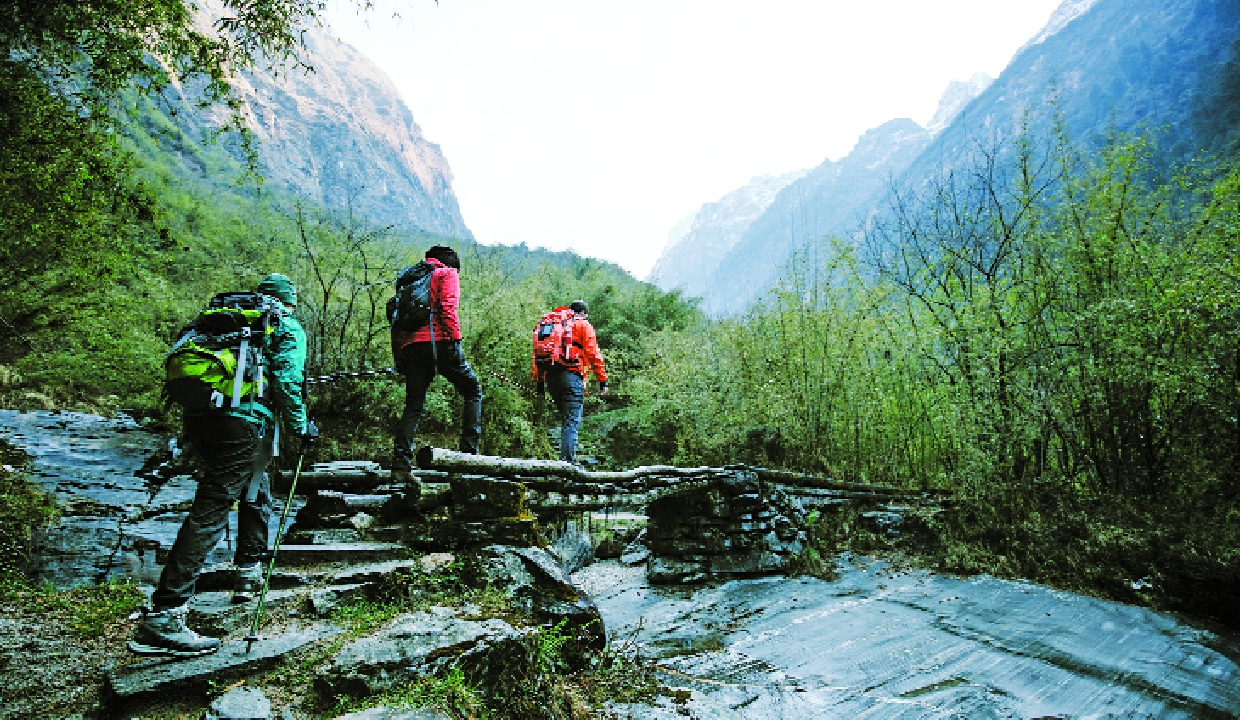
The body is not a passive container for feeling - it is an active participant in it, which is one reason mindfulness and other body-based practices have drawn serious scientific interest. Nature appears to work on the mind through more than one channel. Time in natural settings has been linked in research to lower perceived stress, better mood and restored attention. Attention Restoration Theory holds that natural environments offer a kind of effortless attention that lets our directed focus recover; stress-reduction models make a related case for physiological and emotional recovery in green or open spaces. But nature is only half the picture.
Humans are deeply social animals. Belonging, support and connection are reliably tied to better mental health, while chronic loneliness is a recognised risk factor for the opposite. This is why simply sitting together, listening without judgement, and building ordinary conversation into a sense of belonging can matter clinically - sometimes before a single therapeutic question is even asked. Healing, in other words, can begin with presence rather than technique.
Someone who has withdrawn from life may not need a new instruction so much as safe company, movement and a reason to feel competent again. This is close to the established idea of behavioural activation: in depression, withdrawal shrinks the supply of rewarding experience, which deepens low mood, and deliberately rebuilding meaningful activity can interrupt that spiral. Creativity fits naturally here.
Dance offers movement, music offers rhythm, poetry gives language to what is hard to say directly, and painting gives shape to feeling that has no words yet. None of this should be oversold as a cure — that would outrun the evidence — but expressive practice can help people regulate emotion, build self-awareness and re-enter their own lives as active participants rather than passive sufferers. Something shifts when a person makes rather than only consumes: the question moves from “what is wrong with me” to “what can still grow?”
A holistic approach does not reject medicine or therapy; it recognises that health is the product of interacting systems. The brain speaks to the hormonal system.
The nervous system speaks to the immune system. Behaviour shapes sleep and relationships; relationships shape stress and belonging; environment shapes daily behaviour. All of it feeds into one another — the premise behind psychoneuroimmunology, the field studying how mind, nervous system, hormones and immunity interact. That does not mean positive thinking or a walk in the park can cure serious illness; complex conditions still need proper medical and psychological care. But it is a reminder that health rarely lives in one isolated organ or symptom.
A clinician might reasonably widen the intake questions. Is there enough movement? Enough real connection? Enough time in restorative surroundings? Enough creative outlet, purpose, silence, laughter, belonging? None of this replaces clinical assessment — it complements it. Sometimes the most useful first step is not more analysis but re-entry into ordinary life: walk outside, feel the ground, notice the trees, breathe slowly, talk to someone, make something, move the body, listen to music, write without judging it, show up for community, let silence exist.
None of this is a magic prescription. Each is simply an invitation back to experiences that support resilience. Perhaps healing is not only the removal of symptoms but the restoration of participation — in movement, in each other, in the world outside the window. The earth does not ask for a diagnosis before it offers itself. A poem does not need perfect grammar before it can hold an emotion. And connection often starts not with an answer but with two people willing to sit together, on the ground, under an open sky — close enough to remember something modern life makes easy to forget: healing is not always something that happens to us. Sometimes it happens when we let life move through us again. And in that moment, perhaps, life itself becomes the healing.
The writer is a US-based psychologist, holistic mental health and mindfulness educator; Views presented are personal.