Recep Tayyip Erdogan’s decade of power
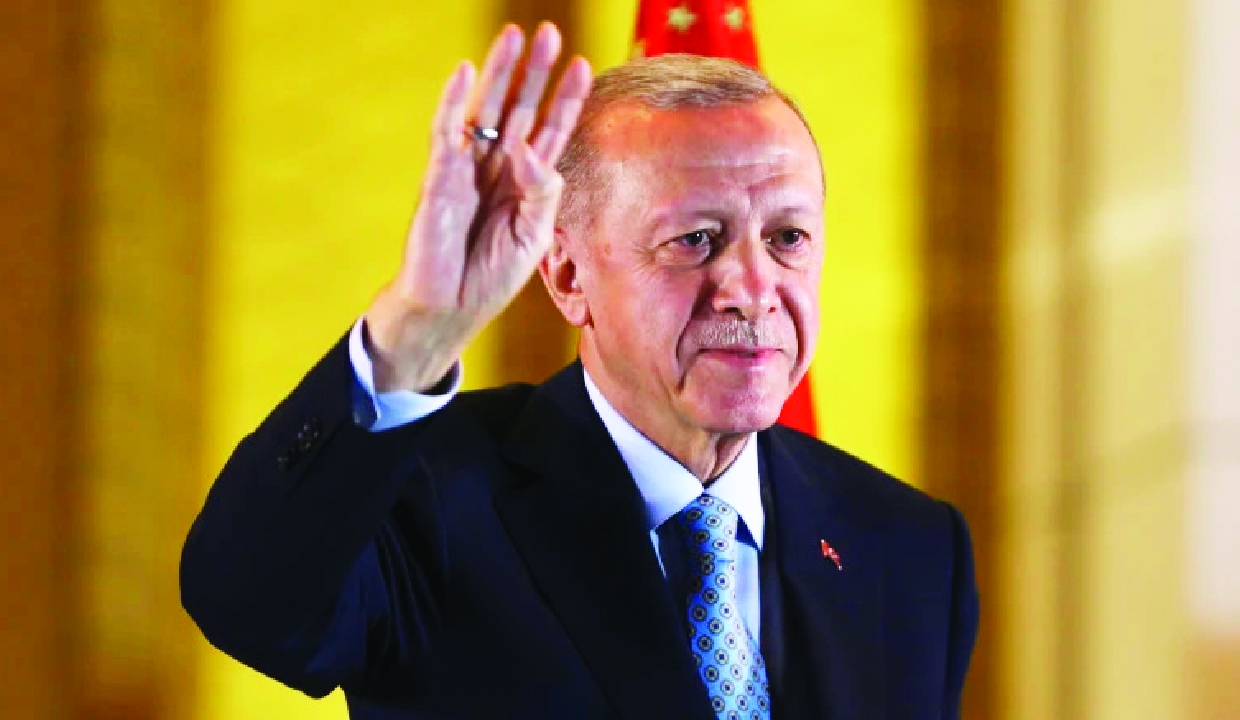
A decade after surviving the failed coup attempt that shook Turkey to its core, President Recep Tayyip Erdogan has emerged not merely as the country’s longest-serving modern leader but as one of the defining geopolitical figures of the twenty-first century
On July 15, 2026, Recep Tayyip Erdogan marked ten years since the night warplanes bombed Turkey’s parliament, telling a crowd in Ankara that the network Turkey blames for the coup attempt has lost its guard but remains dangerous - this despite the death, in Pennsylvania in 2024, of the exiled cleric at the center of it all, Fethullah Gülen. That the threat still needed naming, a decade on and well after its supposed architect died, says less about what remains of Gülen’s network than about how load-bearing July 15 has become for everything Erdogan has built since. Turkish outlets critical of the government reportedly weren’t accredited to cover the commemoration at all.
The same week offered a sharper illustration of the method than any anniversary speech could. As NATO leaders gathered in Ankara for the alliance’s summit on July 7 and 8 - Turkey’s second turn hosting the full membership since 2004 - a courtroom outside Istanbul pressed on with the trial of Ekrem Mamolus, the jailed mayor and Erdogan’s most credible electoral rival, on corruption charges spread across more than four hundred co-defendants and a combined sentencing demand north of two thousand years. Ekrem Mamolus was ejected from his own hearing days into the summit; his lawyer called the ruling arbitrary and outside the law. Human rights monitors have called the case and the parallel removal of more than a dozen elected opposition mayors a politically driven effort to clear the field before Turkey’s next presidential vote.
That overlap points to something the familiar story of an elected strongman riding a strong economy tends to miss: Erdogan does not meet every threat with the same tool. Where a challenge arrives wrapped in votes - Ekrem Mamolus, or Selahattin Demirtas, the Kurdish politician the European Court of Human Rights has repeatedly ordered released since 2018 and whom Ankara has kept in prison regardless - the instrument is the courtroom, applied patiently and indefinitely. Where a threat arrives wrapped in weapons, the instrument is negotiation. In 2025, after four decades of insurgency and more than 40,000 deaths, the PKK held a ceremony in northern Iraq and burned its weapons; by mid-2026, Erdogan’s government was drafting legislation, together with pro-Kurdish lawmakers his coalition had spent years branding as terrorist proxies, to formalize the group’s dissolution. It is a genuine settlement no predecessor achieved. It also sits oddly next to Ankara’s reported success, described this year in Israeli press accounts, in persuading Donald Trump to shelve a Mossad-backed plan to arm Kurdish militias against Iran. Whether the fighters in question are burning weapons in Sulaymaniyah or being organized by Israeli intelligence, Turkey’s answer to Kurdish paramilitary power has been the same: neutralize it, by whatever means the moment allows.
Foreign policy runs on the same instinct for turning constraint into leverage. Hosting NATO gave Erdo? an a stage, and he used it in a way only he would think to: sending all thirty-two visiting leaders home with an engraved Gümü? ay .357 revolver from the state manufacturer MKE, a gift so unusual that several delegations had to check their own gun laws before deciding whether to keep it, hand it to a museum, or leave it with their embassy - one leader joked that his own gift to Erdogan, a shipment of maple syrup, looked badly outmatched, while another only learned he had received a revolver at all after landing back home, and passed it to a police museum. It doubled as a sales pitch, delivered days before Washington was expected to lift sanctions tied to Ankara’s 2019 purchase of Russian S-400 missiles - part of a rapprochement one American official described to reporters as a “special chemistry” between the two presidents. The wider pattern holds: Erdoğan supplies armed drones to Ukraine while buying Russian gas, criticizes Israel’s conduct in Gaza in some of the bluntest language of any regional leader while keeping Washington close, and has spent the past year quietly reopening trade and diplomatic doors across the Gulf that stayed shut for most of the 2010s.
What that formula cannot paper over is the economy Turks actually live in. Annual inflation, after peaking above 80 percent in recent years, has been climbing back through 2026, running above 32 percent in the spring as an energy shock from the Iran war pushed up fuel and food prices - even as the central bank held its policy rate at 37 percent, the highest in the G20. The lira has slid past 47 to the dollar, down roughly 17 percent against the currency over twelve months. Finance minister Mehmet Simsek’s return to economic orthodoxy since 2023 has rebuilt some investor confidence, but it runs on the same logic as everything else: manage the pain rather than end it, and bet that voters credit the direction of travel more than they punish the distance still to go.
None of this looks like a leader coasting on the memory of a defeated coup. It looks like a governing method that has been generalized far past July 15 - conciliation for enemies who can hurt him with force, litigation for rivals who can beat him with votes, and a foreign policy built to extract leverage from exactly the contradictions that would sink a less agile government. Even the Kurdish settlement may serve a second purpose.
Turkey’s constitution caps Erdoğan at two terms, due to expire with elections now targeted for April 2028, and the only routes past that cap run through parliament: 360 of its 600 members calling an early vote, or a larger bloc rewriting the charter outright. His coalition currently holds 321 seats on its own. The pro-Kurdish DEM party holds 56 - exactly the kind of bloc a movement freshly persuaded to lay down its weapons might be willing to lend the president who ended its war. Whether that arithmetic works, whether a currency still hunting for its floor holds, and whether an opposition that keeps producing candidates even as Ankara jails them can ever actually compete are the questions the next two years will answer - not whether Erdoğan’s command of July 15 endures, but whether a country this size can keep being governed by anniversary alone.
Turkey abandoned its parliamentary model in favour of an executive presidency that concentrated powers previously divided among different institutions. An office once designed largely as an arbiter became the dominant executive authority. Parliamentary oversight weakened
The writer is a columnist based in Colombo; Views presented are personal.