Punjab's Bandi Singhs: How a 3.5-Year-Old Mohali Siege Turned Into Tear Gas at the Chandigarh Border and a Bandh
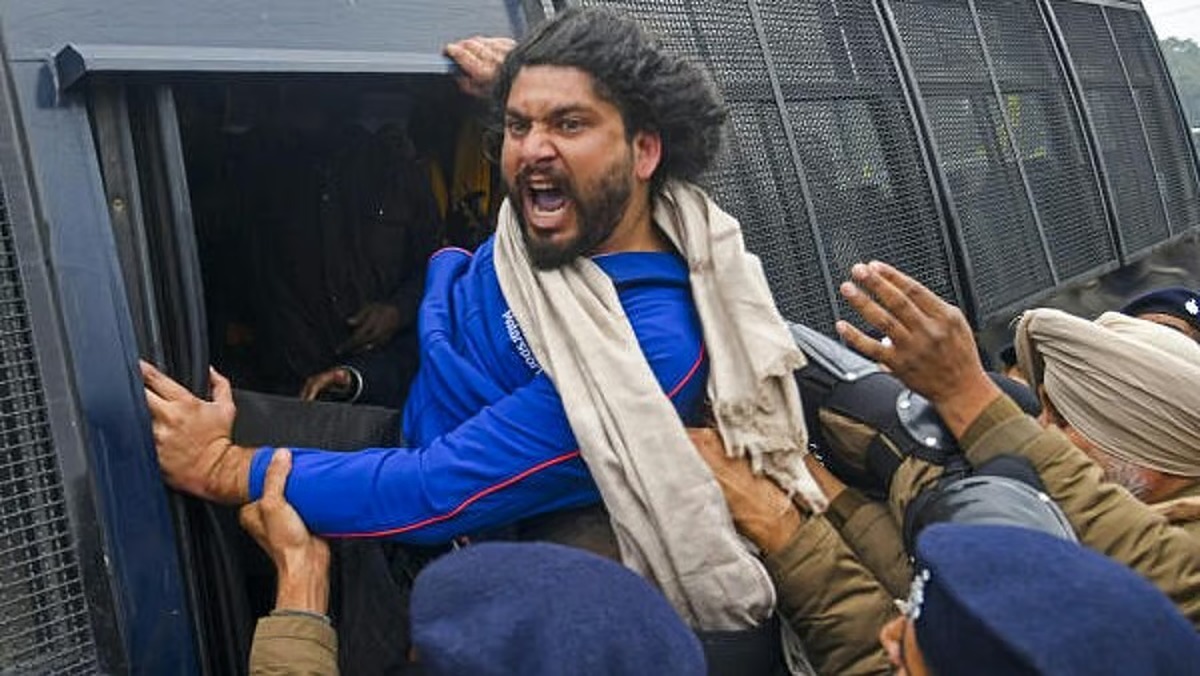
The Qaumi Insaaf Morcha has sat at the Chandigarh–Mohali border since January 7, 2023. On Independence Day this year, the confrontation turned violent. The police sealed every border point, fired tear gas, including shells dropped by drone, and used water cannons against protesters trying to march to the Punjab Governor, Gulab Chand Kataria's residence. The morcha has now called a Punjab Bandh for August 21. This is the story of how a 3.5-year-old protest became a flashpoint, and what the bandh means.
What Happened on August 15
Hundreds of protesters from several Sikh organisations, led by the Qaumi Insaaf Morcha, gathered at YPS Chowk, Mohali, and attempted to enter Chandigarh around 11.30 am. They wanted to reach the Governor's residence to demand the release of "Bandi Singhs" (Sikh prisoners) and 10-day parole for Jagtar Singh Hawara, the convict in the Beant Singh assassination case.
Police had erected multi-layer barricades topped with barbed wire at multiple points, including Sarovar Path, the Sector 51/52 light points, the Sector 56 furniture market, Kajheri border, YPS Chowk and roads near Mohali Phases 10 and 11. All border points between Chandigarh and Mohali were sealed. Tipper trucks were stationed, and anti-riot vehicles and Rapid Action Force personnel were deployed.
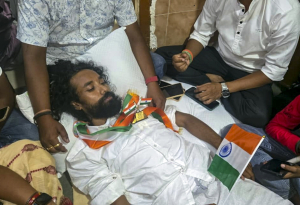
As protesters tried to pull down barricades, some using tractors, police fired several rounds of tear gas and used water cannons. Protesters alleged stone-pelting and claimed more than a dozen activists were injured, including one with a fracture. They also alleged a chemical substance was mixed with the water-cannon water, causing eye irritation; that allegation has not been independently verified, and no official injury count was available as of August 16.
Simranjit Singh Mann, president of the Shiromani Akali Dal (Amritsar) and a former MP, was detained by Chandigarh Police along with two others while trying to reach the Governor's residence.
Who Are the Bandi Singhs?
"Bandi Singh" is the term for Sikh prisoners convicted in connection with militancy during the Punjab insurgency. The Shiromani Gurdwara Parbandhak Committee (SGPC) , an organisation managing gurdwaras and other Sikh places of worship, maintains a list of 21 such prisoners. The morcha's focus has historically been on nine who, it says, had completed sentences of 15 to 31 years. Protesters now say several have been behind bars for 30 to 35 years despite completing their sentences or becoming eligible for release.
Jagtar Singh Hawara is the case driving current wave of protests. A former Babbar Khalsa International militant, he was convicted in the 31 August 1995 car-blast assassination of then Chief Minister Beant Singh outside the Punjab and Haryana Civil Secretariat in Chandigarh, an attack that killed 17 people, including the suicide bomber. Sentenced to death in 2007, the Punjab and Haryana High Court commuted it to life in 2010. He escaped from Burail Jail in Chandigarh in January 2004 through a tunnel, was re-arrested by the Delhi Police Special Cell in June 2005, and has been held in Delhi since, now in Mandoli jail. Court proceedings in July 2026 recorded 36 criminal cases against him. He has been convicted in seven, completed sentences in six, and is serving life in the Beant Singh case.
The other headline names in the morcha's campaign, Balwant Singh Rajoana, the prime convict in the Beant Singh assassination, whose death sentence the Centre commuted to life in 2019, though some analysts argue the commutation remains formally unexecuted. Devinderpal Singh Bhullar, convicted in the 1993 Delhi bomb blast case (9 killed, 31 injured), whose premature release plea was rejected by the Delhi Sentence Review Board on 10 February 2026 and Gurdeep Singh Khera, one of eight prisoners whose release the Centre notified in 2019, six were freed, while Khera's case was "committed to be processed" and, six years on, has no public explanation.
What Is the Qaumi Insaaf Morcha?
The name translates variously as "National Justice Front," or "Community Justice Front". The campaign's roots go back to November 2013, when rights activist Gurbaksh Singh Khalsa held a 44-day hunger strike at Gurdwara Amb Sahib, Mohali, for the release of six Sikh detainees who had completed their sentences. Khalsa died by suicide in 2018. The current siege is treated in coverage as a continuation of that Amb Sahib-based mobilisation.
On January 7, 2023, protesters gathered at Gurdwara Amb Sahib, marched toward Chandigarh, were stopped by police at the border the same day, and set up a permanent sit-in with tents, a stage and langar, modelled on the farmers' protest. It has remained at YPS Chowk, Mohali, and along Sector 52-53, Chandigarh ever since, roughly three and a half years, or 44 months.
The morcha's stated demands go beyond prisoner release, justice in the 2015 sacrilege and police-firing incidents (Faridkot/Kotkapura/Behbal Kalan), a murder case against officials responsible for the Kotkapura and Behbal Kalan police action, and a probe into disappearances.
Its convener is Pal Singh France, organiser Gurcharan Singh is Hawara's father. Other named leaders include advocates Amar Singh Chahal and Dilsher Singh, Jaswinder Singh Rajpura, Balwinder Singh and Sukha Gill. Media reports from 2023 suggest that its leaders include heads of various radical Sikh organisations. Support has come from the SGPC, farmer unions, and outfits including Akali Dal (Waris Punjab De), the party floated by jailed MP Amritpal Singh, SAD (Punar Surjit) and Nihang organisations.
Why Now: The Hawara Parole Flip-Flop
The immediate flashpoint is a reversal by Punjab Chief Minister Bhagwant Mann. As recently as March 2026, the AAP government opposed Hawara's parole in writing to the High Court, citing 25 criminal cases against him. On August 8, 2026, Mann wrote to Governor Gulab Chand Kataria seeking 10-day humanitarian parole so Hawara could meet his ailing mother, Narinder Kaur. Mann met the Governor on August 7, and again on August 12, and assured there would be "no law and order problem… no sloganeering or ruckus."
The Delhi Prison Department offered Hawara two day custody parole in mid August which he declined in favour of seeking regular parole. His lawyer has threatened to return to the High Court if parole is not granted under the jail manual. Beant Singh's grandson, BJP MP Ravneet Singh Bittu, publicly supported the parole, "I am forgetting that wound for the sake of his mother", while warning against politicising it. A purported video of Hawara, apparently shot inside the prison and released via the morcha, appealed for a peaceful march and warned against "mischievous elements trying to create disturbances." The video is yet to be authenticated by authorities, and there is no official jail-department explanation for how it was recorded or released.
What Comes Next
August 20: The Punjab and Haryana High Court is expected to hear the matter related to the proposed protest. It has already held that peaceful protest is a fundamental right and that authorities are duty-bound to act if it turns violent, while hoping authorities "act with due sensitivity."
August 21: The Punjab Bandh called by the morcha. Morcha leader Sukha Gill announced it at a press conference in Mohali; leaders say preparations are under way and meetings with farmer and religious organisations will continue, expecting their support. The campaign has widened from Hawara's parole to full release of all eligible Bandi Singhs. No government response to the bandh call yet, as of August 16. Parole decision: Hawara's application is under a time bound process ordered by the High Court; the Centre says it is "making arrangements" for him to meet his mother, with the security angle under review.
For context: Punjab has seen bandh calls before, farmers called a 10-hour Punjab Bandh on December 30, 2024 with rail and road disruption. Whether the August 21, call is obeyed, and how the government responds, will determine whether this flashpoint is a one-day story or the start of a longer confrontation.
(With inputs from PTI)