Prioritise indigenous battery storage tech for next phase of growth: Industry leaders
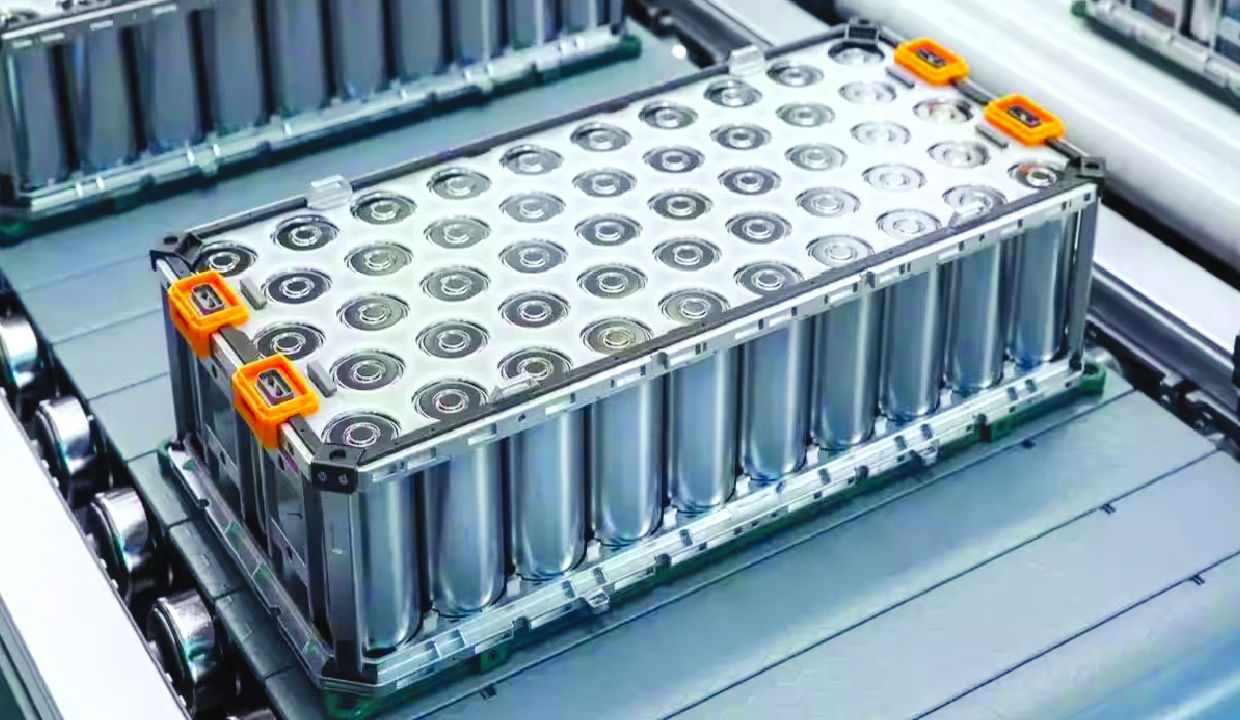
Industry leaders on Thursday urged the government to prioritise ‘Made in India’ battery storage technologies for the next phase of growth at the recently concluded India Energy Storage Alliance (IESA) Chennai Connect 2026.
India’s clean energy ambitions depend on how quickly the nation can scale up domestic battery storage technologies, an IESA statement said.
According to the statement, despite major renewable energy expansion, with India reaching over 283 GW of installed renewable capacity, the country still faces significant technology integration gaps.
To meet rising power demand and ensure grid reliability, India will need 888 gigawatt-hours (GWh) of energy storage capacity by 2035-36, it pointed out.
In the recently concluded IESA Chennai Connect 2026, industry experts urged the government to accelerate indigenous battery energy storage system (BESS) research, manufacturing and deployment nationwide.
Prof Ashok Jhunjhunwala of IIT Madras stated that in the next 5-7 years, technologies like sodium-ion and long-duration solutions, including iron-air batteries, will play a key role in renewable integration and grid flexibility.
“We must focus on domestic manufacturing across battery technologies, power electronics, and the clean-energy supply chain to ensure long-term energy security. The next phase is about building a stronger, smarter and more resilient electricity system, not just adding renewable capacity,” he added.
IESA’s summit showcased how Indian innovation and manufacturing could close these gaps.
Bindu Madhavi, Senior Director-Policy and Regulatory, IESA, noted that storage must no longer be viewed as an add-on to renewable energy, but as an integral part of how India plans, builds and operates its future power system.
Technical and business sessions throughout the summit underscored the need for a holistic, indigenous battery value chain, from modular storage solutions and second-life applications to supply chain resilience, recycling, and advanced procurement strategies for commercial and industrial consumers.
Bittu Singh, Manager, Power Trading and Sustainability at Customized Energy Solutions (CES), explained that tailored power procurement strategies, incorporating renewables, open access, and energy storage, are key to maximising value, resilience and sustainability for Indian businesses.
Smisty Sharma, Senior Manager-BESS, Waaree Energy Storage, stated that modular and containerised battery energy storage systems are rapidly expanding across industries, from data centres and hotels to hospitals, helping reduce diesel dependence and enhance power reliability.
Yashwanth Mahadevan, Chief Business Officer, Bridge Green Upcycle, added, “By using AI-based health assessment, we can repurpose EV batteries for second-life applications like cold storage and peak demand management, and recycle those that reach end-of-life, creating a more sustainable battery ecosystem.”