Patriotic songs and tricolour replace Maoist war cries, diktats in Bastar region
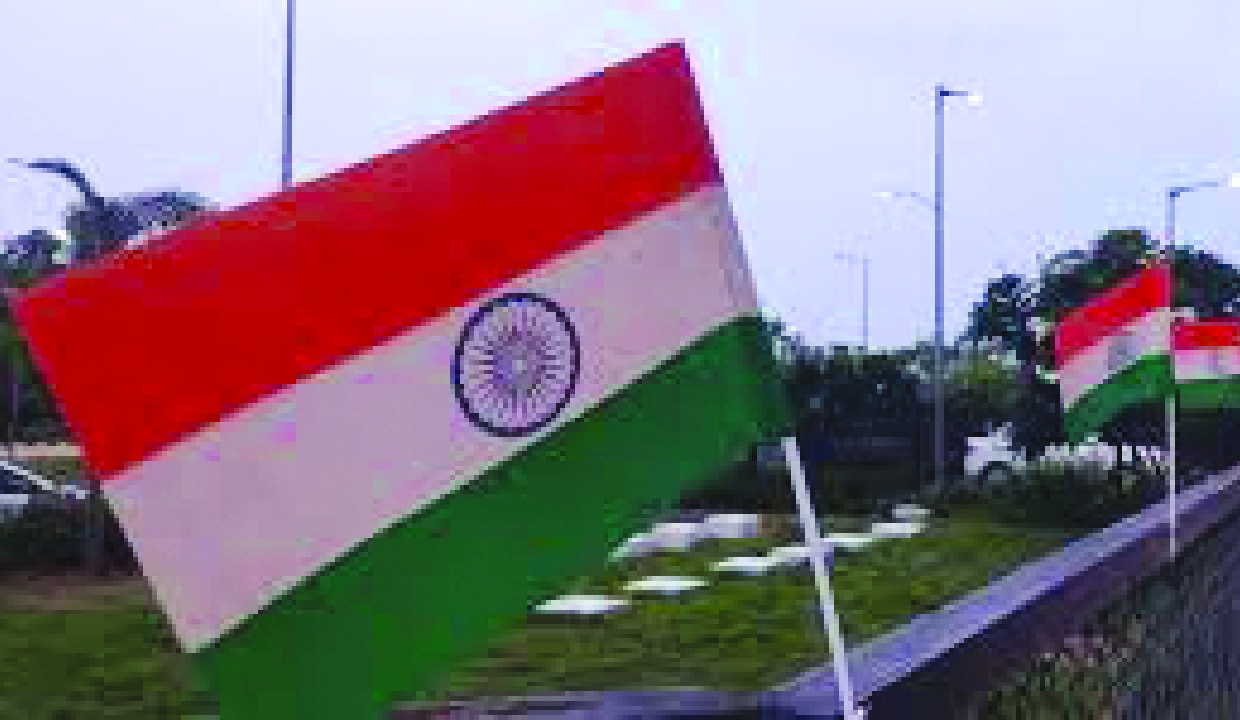
Hundreds of motorbikes carrying national flags sped through Bastar, long considered a hotbed of banned Maoist cadres, as the three-day Bastar Tiranga Yatra commenced, signalling a transformation towards peace and security across the region.
The rally was flagged off on Wednesday from the Higher Secondary School ground in Narayanpur district by Deputy Chief Minister Vijay Sharma and Forest Minister Kedar Kashyap, who both joined the procession on motorcycles. Over 200 motorbikes, driven by local residents and community representatives, set off amidst patriotic slogans to cover routes historically dominated by Maoist insurgency.
The convoy is scheduled to conclude its journey at the Karregutta hills in Bijapur district, situated near the Telangana border. The location holds strategic significance as the site of a 21-day joint operation by central and state security forces in April and May last year, which resulted in the deaths of at least 31 Naxals.
Sharma said the yatra would pass through areas where Maoist violence had once affected people's lives and convey to the country and the world that "Maoism has now ended in these areas". Narayanpur was chosen as the starting point as the district had remained among the most severely Naxal-affected areas for a long period, he said.
Sharma said that under the guidance of Prime Minister Narendra Modi and Union Home Minister Amit Shah and the leadership of Chief Minister Vishnu Deo Sai, the state government had adopted a policy against Maoism and achieved its stated goal of eliminating Naxalism in Chhattisgarh and the country by March 31, 2026.
"From now on, the tricolour will fly with full pride and honour in every corner of Bastar on every national festival," he said.
Tricolours had been hoisted in several remote villages of Bastar during national festivals since January 2024. More than 90 villages in the Bastar division are set to witness the tricolour being hoisted for the first time since 1947 on this Independence Day, he said.
He said the unfurling of the national flag also symbolised the reach of the Constitution to every corner of the state.
"Today, when I visit different villages in Bastar, people tell me that they truly feel free now. There is no longer any force that can reject India's national flag," Sharma said.
He recalled that Maoists used to issue diktats during national festivals, asking people to hoist black flags outside their homes.
Sharma credited the people of Bastar and the "indomitable courage" of security personnel for the region's emergence from Maoist violence.
"The time has come for the world to know Bastar. The people of Bastar will now make their mark across the world and write a new chapter in history," he said.
The state home minister said people in Bastar are now getting basic amenities, development and a secure environment, while the government has been working in a planned manner on roads, education, skill development, processing of minor forest produce and employment.
He also warned that strict action would be taken against those found compromising the quality of development works.
Forest Minister and Narayanpur MLA Kedar Kashyap said it was significant that the Tiranga Yatra was passing through areas once considered centres of Maoist activity.
He said soil would be collected from places along the route where security personnel and civilians were killed in Maoist incidents in the past, and will be used in a memorial to be built in the future.
"Bastar has now been moving towards development and prosperity after becoming free from Maoism," Kashyap said.
The three-day yatra, which began on August 12, will pass through some of the most sensitive and severely Maoist-affected areas of Bastar.
On the first day, the yatra travelled from Narayanpur through Munjmeta, Jharagaon, Dhaudai, Kanharagaon, Kadenar, Bodli, Satdhar and Barsur before reaching Dantewada, a government official said.
On the second day, it will travel from Dantewada through several Maoist-affected areas of Sukma and Bijapur districts. On the final day, it will proceed from Bijapur through Awapalli, Usoor, Galgam, Nambi and Tadpala before concluding at Karregutta hills, he said.