Pak minister meets Iran leaders to revive US-Iran mediation bid
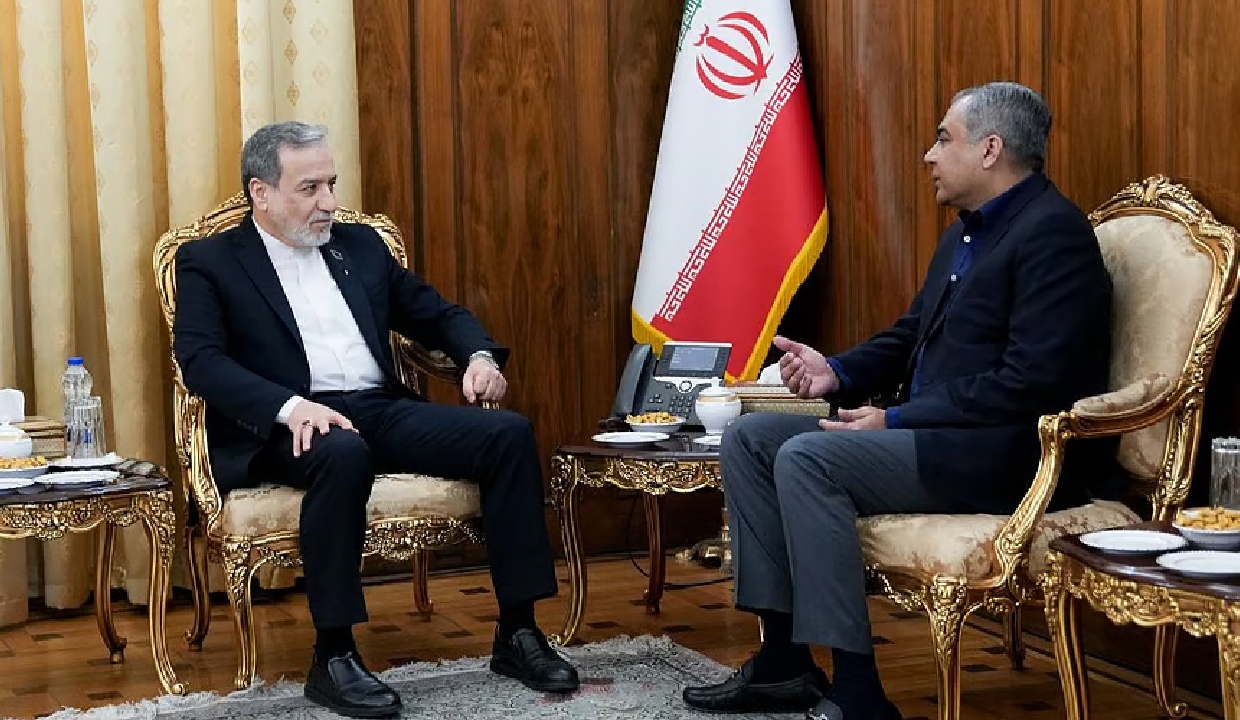
Pakistan's Interior Minister Mohsin Naqvi held talks with Iran's President Masoud Pezeshkian and Foreign Minister Abbas Araghchi in Tehran to follow up on the stalled US-Iran peace negotiations, according to media reports.
An interim peace agreement, which Pakistan signed as a guarantor, collapsed last month as tensions escalated in West Asia with the US and Iran resuming military strikes. Islamabad is now pushing to revive its mediation efforts to end the conflict.
Pakistan's Foreign Office spokesperson Tahir Andrabi said at a press briefing in Islamabad on Wednesday that the country was trying to resolve the US-Iran conflict with the help of other regional states.
"Pakistan remains engaged alongside its brotherly states in sincere efforts to resolve the crisis," Andrabi said when asked about Naqvi's Tehran visit. "Pakistan will continue to offset spoilers using direct and indirect channels and enable continuation of constructive dialogue to resolve all outstanding issues."
Naqvi arrived in the Iranian capital on Tuesday, August 11, for talks on bilateral ties and issues of mutual interest, according to Iran's official news agency IRNA. He was received at the airport by his Iranian counterpart, Eskandar Momeni, and later held talks with Araghchi.
In his meeting with the Iranian president, Naqvi described the relationship between the two neighbours as "strong, long-standing and unbreakable" and conveyed Islamabad's "serious determination and will" to pursue comprehensive development of ties with Tehran, according to a diplomatic source.
President Pezeshkian, in turn, said Iran-Pakistan relations would serve the two countries' national interests as well as contribute to regional stability and security, the source added.
According to the Dawn newspaper, the main objective of Naqvi's visit was to follow up on the stalled memorandum of understanding signed in June by the US and Iran, which had opened a 60-day window for high-level talks aimed at restoring peace. The talks collapsed after tensions between the two sides escalated again in mid-July.
Pakistan's efforts to revive the negotiations have so far not yielded results, particularly after Oman took the lead as mediator on the key sticking point the Strait of Hormuz, which is crucial for global energy supplies. Iran has said it is close to a separate deal with Oman to manage the strait, which runs between the two countries.
The Strait of Hormuz saw partial relief for a brief period after the June memorandum was signed but has remained blocked since the US-Iran talks collapsed, as Iran and Oman negotiate a new arrangement for safe passage through it.
The reported progress in the Oman-Iran dialogue has created an opening for Islamabad to try to revive the broader process that emerged from the June agreement, the diplomatic source said.
Andrabi said Naqvi's Tehran visit gave the two countries the opportunity to discuss "bilateral relations, security-related matters, and regional development, with a particular focus on efforts to promote peace, stability, and constructive engagement amongst the parties in the region and regional developments."
Pakistan has invited Araghchi and Iranian Parliament Speaker Bagher Ghalibaf to visit Islamabad "at the earliest possible opportunity." Iranian Foreign Ministry spokesperson Esmaeil Baghaei, however, said on Monday, August 10, that the visit by the two Iranian leaders would take place "at an appropriate time." Naqvi's Tehran visit is being seen as significant, as an effort by Pakistan to keep the mediation channel active while Iranian leaders decide on the timing of their own visit to Islamabad.
Separately, Iran's ambassador Reza Amiri Moghadam called on Deputy Prime Minister Ishaq Dar in Islamabad on Wednesday, August 12, and briefed him on "progress under various bilateral institutional mechanisms aimed at strengthening cooperation across diverse areas," Dar's office said in a statement.
Dar, who is also Pakistan's foreign minister, "reaffirmed Pakistan's commitment to further deepening engagement with Iran in key priority areas," it said. The two sides also exchanged views on "the evolving regional situation," with Dar underscoring that "dialogue and diplomacy remain the only effective means of addressing outstanding issues and achieving lasting peace, stability and prosperity in the region," the statement added.