Overshoot: The climate warning
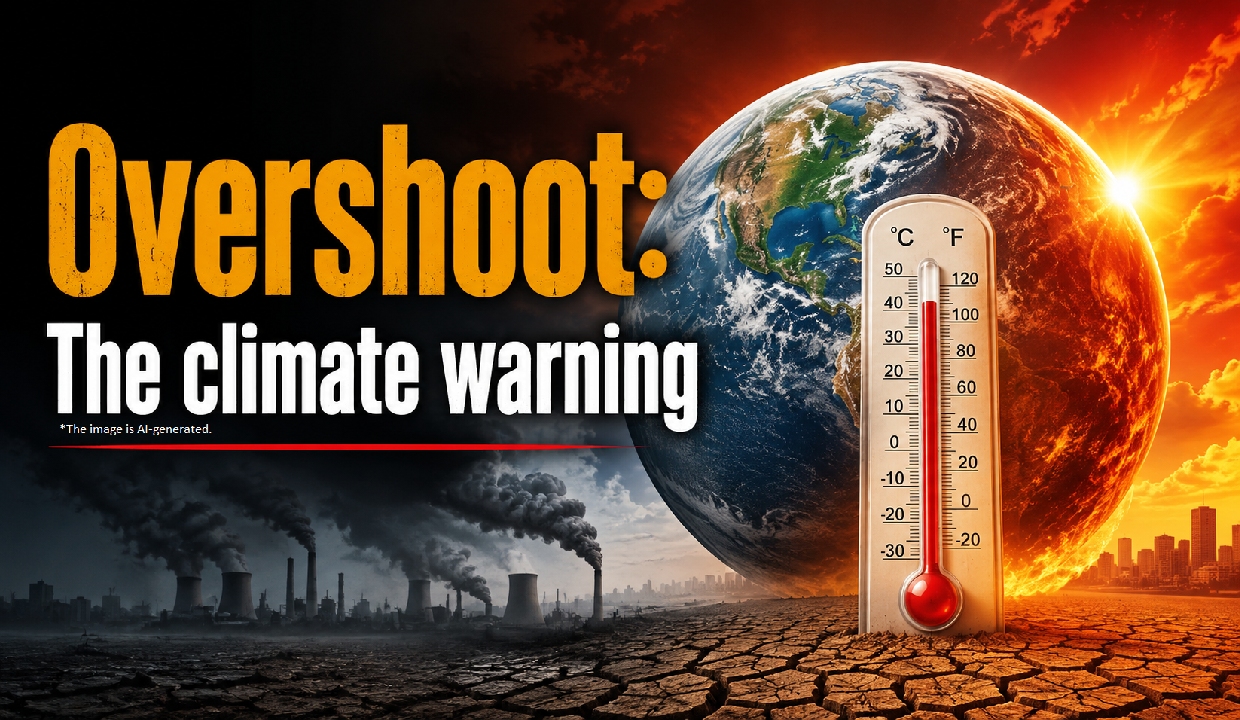
The United Nations’ stark warning comes as climate disasters linked to the melting Himalayas are causing an immediate human and regional security crisis
This week, the United Nations delivered a verdict scientists have long feared but stopped short of declaring outright: the 1.5°C ceiling set by the Paris Agreement will be breached “within the next few years,” not decades. The UN Environment Programme’s first “overshoot” report does not ask how to avoid crossing that line - it assumes we already have, and asks instead how briefly and how narrowly the world can stand on the other side. Secretary-General António Guterres called it what it is: humanity, he said, is “speeding past the limit to avoid climate catastrophe.”
That the world can still return below 1.5°C by the end of the century, as the report insists, is true. That doing so now requires halving emissions by 2035 and hauling billions of tonnes of carbon back out of the sky - after a decade of broken promises since Paris - is the harder headline.
Nepal did not need a UN report to know this. As UNEP’s scientists finalised their charts, rescuers in Rasuwa were still pulling bodies from mud left by a glacier collapse that sent flash floods down the Bhotekoshi-Trishuli river system on August 26. Nepal’s death toll has crossed 1,100; nearly 4,500 people remain missing across Nepal and Tibet; a newly forming lake threatens to repeat the flood that burst from the first one. Reporting since suggests warning signs were visible before the glacier gave way.
This is not an abstraction. This is overshoot with a body count.
India cannot watch from a distance. The Bhotekoshi feeds into the Trishuli, the Narayani and the Gandak - the river system that put Bihar and Uttar Pradesh on flood alert, and that reportedly carried some of Nepal’s dead across the border into India. But Delhi does not need its neighbour’s tragedy to see its own risk. Germanwatch’s 2026 Climate Risk Index places India ninth among nations hit hardest by extreme weather over three decades - 80,000 dead, a billion affected and $170 billion lost. Government data shows extreme weather struck India on 99 per cent of days in 2025 alone. One independent study projects that eight in 10 Indians will face high exposure to extreme events by 2036 - a decade away, not a century.
The way forward runs on two tracks, and India must walk both. Globally, it means using whatever leverage remains - at climate negotiations and beyond - to push for the emissions cuts and finance that make a short, shallow overshoot possible rather than a long, brutal one. Regionally, it means what Nepal’s tragedy has made urgent: real-time glacial and river monitoring shared across the Himalayas, joint early-warning systems with Nepal and China, and hard investment in floodplain and mountain infrastructure at home - before the next warning is missed, not after.
The situation is grave, but not irretrievable. The UN’s own report insists 1.5°C remains recoverable if action starts now. But it is grave enough that India, sitting downstream of a melting Himalaya and inside the world’s most climate-battered belt, cannot afford to treat this as someone else’s emergency.