Nepal Floods: Over 32,000 Affected as Damage to Infrastructure Mounts
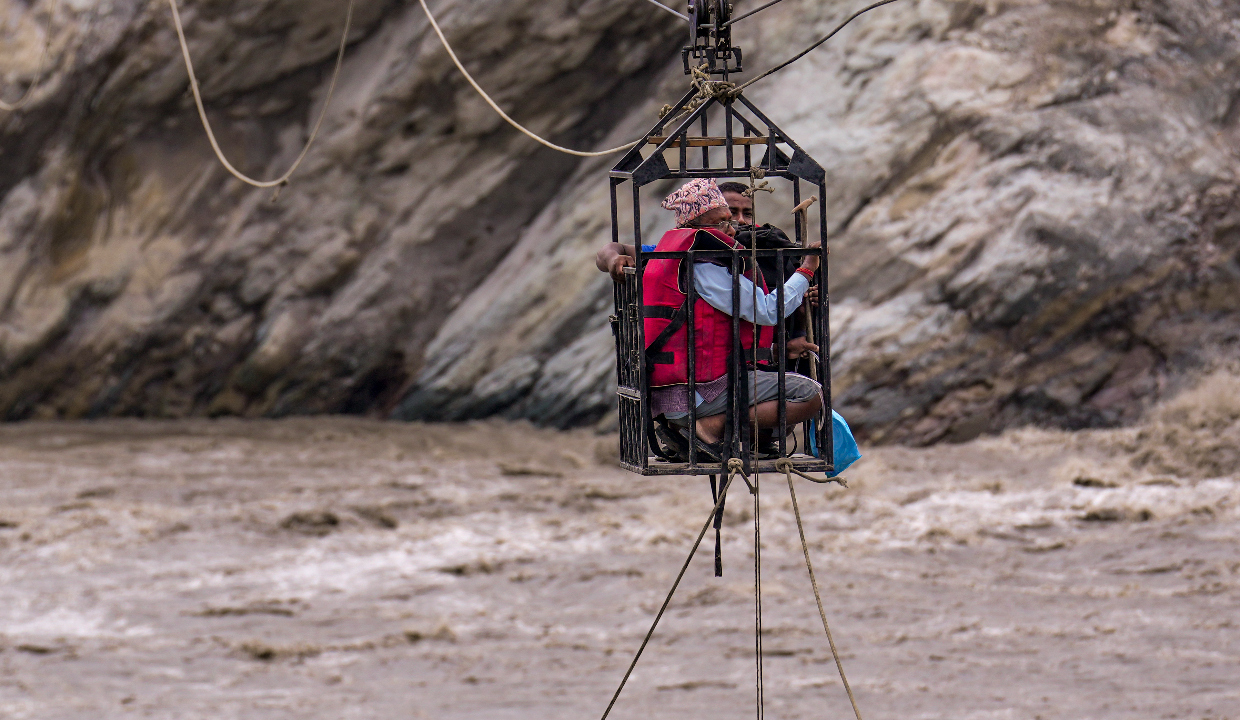
The devastating flash floods that swept across Nepal have affected more than 32,000 people and caused extensive damage to roads, bridges, schools and healthcare facilities, according to a preliminary government assessment released on Friday.
The report was presented by the National Disaster Risk Reduction and Management Authority (NDRRMA) during a press briefing as rescue and recovery operations continued in the affected areas.
The death toll from the disaster climbed to 1,295 on Friday after additional bodies were recovered from several flood-hit locations.
The floods were triggered by an ice-rock avalanche near the Nepal-Tibet border on August 26, causing widespread destruction across towns and villages in northern and central parts of Nepal.
According to the preliminary assessment, a total of 32,933 people have been affected by the disaster. Damage to educational infrastructure has also disrupted the education of more than 6,500 students.
The report said four healthcare facilities were completely destroyed, while three others suffered partial damage in the affected areas.
The disaster has also caused significant damage to transportation infrastructure. Around 55 km of motorable roads were completely destroyed, along with 37 motorable bridges and 68 suspension bridges.
Authorities, however, said the figures remain preliminary and that a comprehensive assessment of the overall damage and losses is yet to be completed.
Congress Leader Raises Questions Over Relief Operations
Meanwhile, senior Nepali Congress leader Arjun Narsingh KC criticised the government's handling of rescue and relief operations, alleging shortcomings in coordination and long-term disaster planning.
KC, who is a member of the House of Representatives, acknowledged the efforts of the Nepal Army, Nepal Police and Armed Police Force in search and rescue operations but said there were significant gaps in the overall response.
He estimated that the disaster may have caused losses exceeding Rs 800 billion and questioned the government's pace in initiating a post-disaster needs assessment.
KC called for the establishment of an all-party mechanism to ensure that relief reaches affected communities more effectively and inclusively. He also urged the government to constitute a high-level parliamentary committee to coordinate and oversee relief, rehabilitation and reconstruction efforts.
Call for Climate Justice
The Nepali Congress leader also called for Nepal to raise the issue of climate justice at international forums and seek compensation for countries that remain particularly vulnerable to the consequences of climate change.
Referring to earlier warnings by UN Secretary-General Antonio Guterres about the growing impact of climate change on Nepal, KC said the latest disaster had once again underscored the issue of climate injustice and the vulnerability of countries such as Nepal to extreme weather events.
with inputs from PTI