Naga peace in peril
The decade-old Framework Agreement remains hostage to disagreements over sovereignty, a separate flag and constitution, and a deepening trust deficit. With NSCN (IM) threatening to revive insurgency, the Government must seize the latest initiative to negotiate a durable political settlement before the window for peace closes
The appointment last month of former Director, JIC, Ajit Lal, as interlocutor, along with additional political representation to kick-start the Naga peace process, stalled since 2021, has been welcomed by the Nagas. On October 26, 2025, the frail but spirited 92-year-old NSCN (IM) supremo Thuingaleng Muivah returned to Somdal village, his birthplace in Tangkhul Naga district, Manipur, and issued his sternest warning against the ‘use of force’ in the face of ‘ultimatums from GoI’ because of its difficulties ‘in accepting their demand for a separate flag and constitution’, adding, ‘We will not surrender.’ Muivah’s most recent and dire threat to restart the insurgency, which PM Narendra Modi had intended to end with the big-bang Framework Agreement (FA) of August 3, 2015, one year after he came to power, came in his June 2026 interview with The Week magazine. Terminating the mother of all insurgencies was not going to be simple; it would entail ‘sharing of sovereign power’, which NSA Ajit Doval and principal interlocutor, IB Director RN Ravi, had assured they would be able to accomplish.
Ravi engaged Muivah and his team from 2014 to 2021 without achieving any breakthrough, even though he wore the additional hat of Governor of Nagaland from 2019 to 2021, when he was appointed Governor of Tamil Nadu. Strangely, the text of the FA was never made public, even as IB Special Secretary AK Mishra, on taking over from Ravi, informed Muivah that ‘no record of GoI competencies submitted by Ravi was available’. In November 2024, Mishra retired and was downgraded from interlocutor to representative. He was also made an adviser to the North-East and diverted to Manipur. In despair, Muivah sought third-party intervention for the first time, though he and his people met Mishra in perfunctory, closed-door meetings between 2022 and October 2025 to ensure there was no ‘breakdown’ in talks.
The Nagas declared an insurgency in 1955, drawing Indian troops into the then Tuensang and Naga Hills, with PM Nehru’s message to soldiers to ‘win hearts of the people, not to frighten or terrify them’. The shooting down of an IAF Dakota in 1960 escalated the insurgency as I joined pacification operations with my battalion. The Indian Army fought one of the most intense insurgencies of all time, even after the Shillong Accord (1975) with the Naga National Council, which Muivah opposed, until the Ceasefire Agreement (1997), which, after 80 rounds of talks, culminated in the FA with NSCN (IM). Muivah points to the earlier Amsterdam Joint Communiqué with the Vajpayee Government in 2002, which recognised Naga sovereignty. In 2017, Ravi signed the Agreed Position with the seven Naga groups called the National Naga Peoples Group (NNPG), which Chairman of NSCN (IM) Q Tuccu called the ‘Centre’s deceitful agreement, created as a counterweight to the FA to divide the Nagas’. Recall that the FA was signed only with NSCN (IM) and not with NNPG, which was an afterthought. The GoI has said that both groups have to agree for the FA to be consummated, thereby changing the goalposts.
People in Somdal said, ‘Muivah must apologise for coming back empty-handed after 55 years.’ A stalemate has existed since Ravi resigned as interlocutor. The FA’s failure can be attributed to the absence of a full-time negotiator and the lack of a peace process focused on addressing political and administrative autonomy. Ravi was in a hurry to provide the Government with the FA, for which he allegedly ran roughshod over the NSCN (IM), creating distrust. He was unable, or more unwilling, to accommodate the constitutional issue of shared sovereignty, even as including Naga sovereignty in the Indian Constitution and accepting the Naga flag as a cultural symbol did not satisfy Muivah. He insisted on a Naga constitution and flag, which became impossible after the abrogation of Article 370, when the Nagas began to fear that even the constitutional safeguard of special status under Article 371A might be withdrawn. The Neiphiu Rio-led Nagaland Government is today opposition-less and aligned with the BJP. Rio has sought Home Minister Amit Shah’s help to catalyse the FA. Muivah was deeply hurt when Ravi, as Governor, asked legislators to call NSCN (IM) ‘lawless gangs’ and accused Ravi of closing down talks at the behest of the RSS and NNPG. The NSCN (IM) says the Centre is using the Kuki and People’s Defence Force against its camps in Myanmar’s Sagaing region. The blame game goes on, even as 25 MPs urged Shah in February 2025 to disclose the FA’s status in Parliament.
Twenty-five years of the CFA were celebrated in 2023, with Lt Gen Bedi (retd), who headed the Ceasefire Monitoring Group (CFMG), in attendance. NSCN (IM) sent long-range patrols to its camps in Myanmar and to one camp in Bangladesh. It has approached the International Court of Justice in The Hague and hired the services of legal luminary Michael Van Valt, who also represents the Free Tibet cause. Nearly 100 rounds of talks have failed to untangle the Naga issue. On the contrary, positions have hardened, and trust has become the biggest casualty. 3 Corps, which is in operational command of the North-East, is prepared for various inimical contingencies involving NSCN (IM).
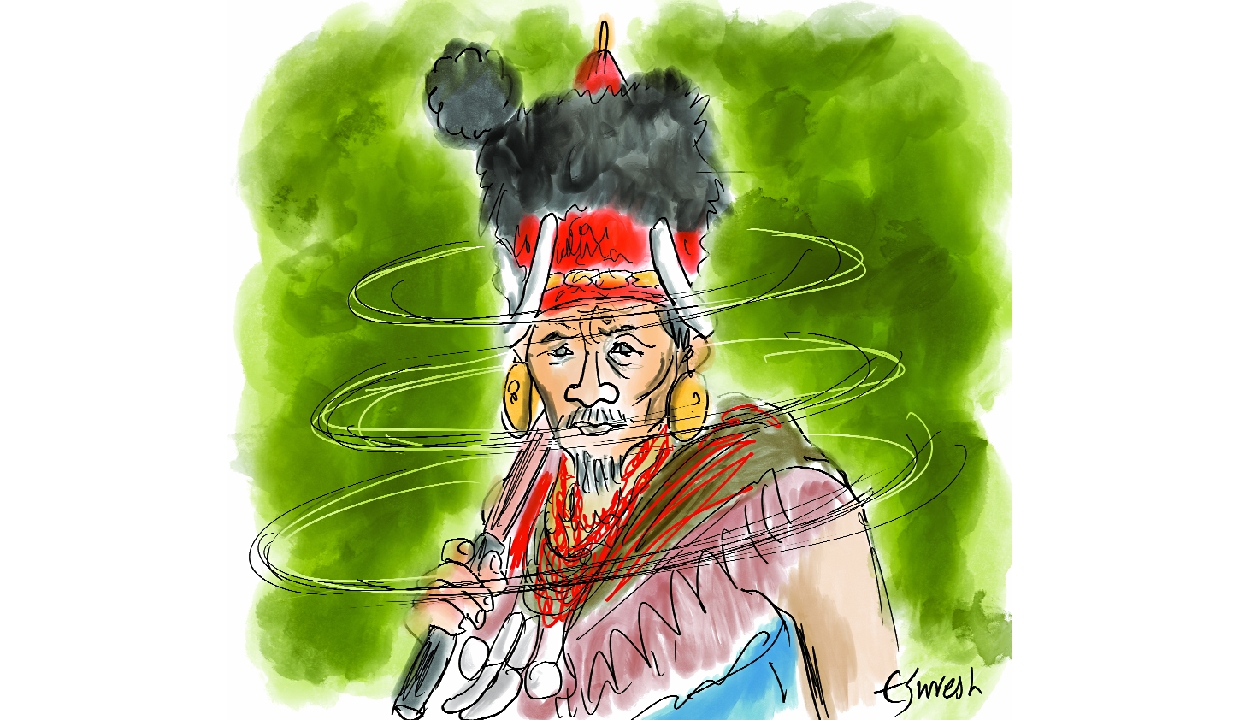
On Naga Independence Day, August 14, 2026, Muivah reiterated his quest for strategic autonomy, hinting at GoI betrayal and threatening to revive the insurgency. The Naga Army paraded some 2,500-armed cadres camped at Mount Hermon near Dimapur’s 3 Corps headquarters. Four to five smaller camps are located outside Nagaland and are also monitored by the CFMG. The Nagas are equipped with AK-47/56 rifles, M16 rifles, RPG-7s and even drones, and have caches in Myanmar. After Muivah, the line of succession is loaded with hard-line generals: V Atem, Anthony Shimiray, Q Tuccu and James Swu. The Naga Army’s motivation and capability to fight an insurgency, though limited, pose a danger and could prove escalatory, given the irreversibly divisive situation in Manipur and the lawless, junta-controlled India-Myanmar border. Even after Operation Sindoor, J&K remains terrorism-primed, while Ladakh has been clumsily destabilised, alienating both Kashmiris and Ladakhis. With both the eastern and western frontiers on a razor’s edge, the FA requires Doval’s immediate attention, as waiting for Muivah ‘to go’ would not be a good idea.
The new political initiative, when operationalised, must include constitutional experts to accommodate the complex political Naga demands for shared sovereignty, a flag and a constitution to mutual satisfaction, with a compromise solution helmed by Shah himself. The military option is unthinkable, and time is running out.
On Naga Independence Day, August 14, 2026, Muivah reiterated his quest for strategic autonomy, hinting at GoI betrayal and threatening to revive the insurgency. The Naga Army paraded some 2,500-armed cadres camped at Mount Hermon near Dimapur’s 3 Corps headquarters
The writer, a retired Major General, served as Commander, IPKF (South), Sri Lanka, and was a founder member of the Defence Planning Staff, now the Integrated Defence Staff; Views presented are personal.