More legal wall against tariffs
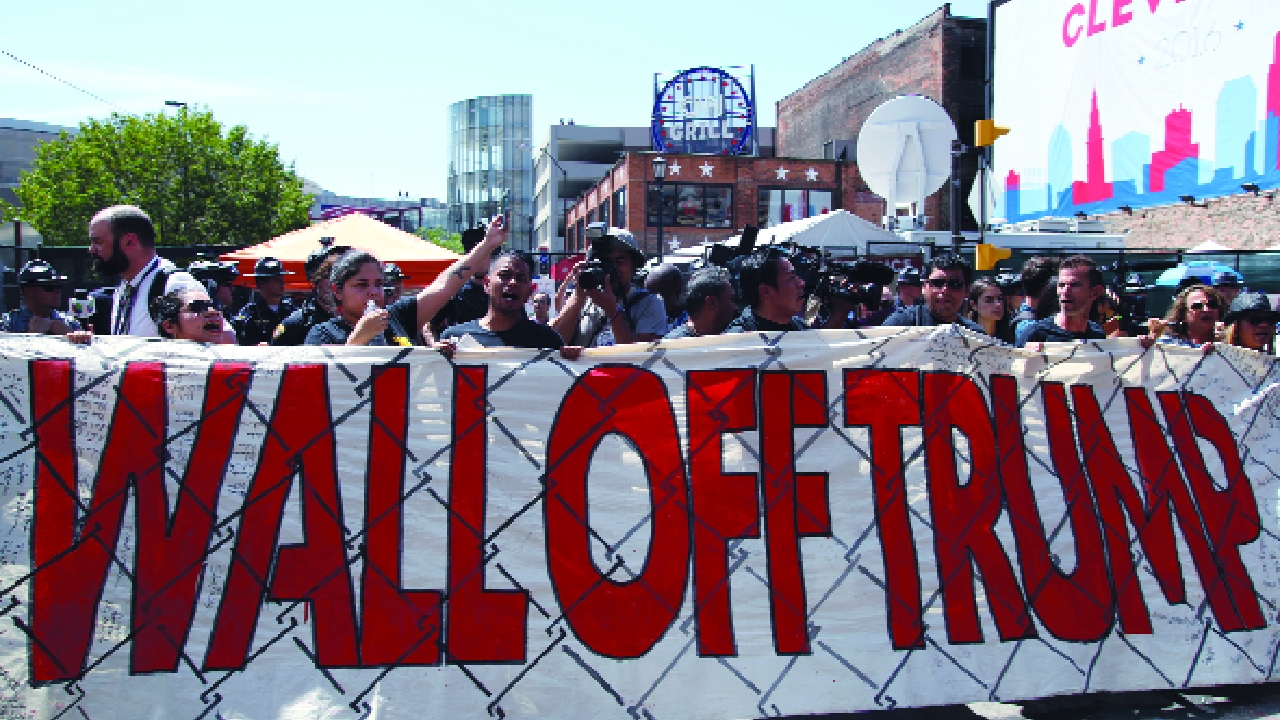
Political, business, and legal opposition intensifies against the US president Donald Trump’s tariffs. Nearly 24 of the 50 American states, which are Democratic, or blue, asked a court to stall the move to impose a new set of 10 per cent ‘trade’ tariff, which may increase to 15 per cent. Another court directed the Customs office to refund the earlier ‘emergency’ duties that were imposed but deemed illegal by the Supreme Court, and called for a behind-closed-doors meeting with the government lawyers to settle their early refunds.
According to the attorney for New York, “Once again (with a new 10 per cent tariff under a trade act, and not the emergency power one used earlier), President Trump is ignoring the law, and the Constitution to effectively raise taxes on consumers, and small businesses…. After the Supreme Court rejected his first attempt… the president is causing more economic chaos, and expecting Americans to foot the bill.” The attorney added that the 24 states were 100 per cent sure that the new tariffs will not stand judicial scrutiny, as did the old ones.
After Trump’s emergency powers to impose taxes under an old Act, which was never used by a previous president to do so, were deemed unconstitutional, the president used a “never-before-used-law” under a 50-year-old trade act. The latter allows a president to impose a “surcharge” of up to 15 per cent for 150 days, only to address “large and serious” balance of payment deficit. It needs a ratification by the Congress within 150 days, and does not apply to the trade deficit. Trump hopes to use the temporary powers, and buy enough time to impose longer-duration tariffs under other laws that mandate investigations.
Most critics agree that trade and balance-of-payment deficits are different in economic jargon. One of them claims, “The president either does not know the difference, or does not care. Either way, he is breaking the law.” Some attorneys argue that balance-of-payment problems do not occur in modern times. They are the relics of a fixed-rate regime, like was true under the old Gold Standard that was disbanded in the 1970s. During the earlier Supreme Court hearings, the government agreed that the two deficits were different.
According to the clauses of the trade Act used for the 10 per cent tariff, they need to be applied consistently, and not discriminately. Yet, the Trump regime exempted goods from several nations such as Canada, Mexico, Costa Rica, and Honduras. Indeed, the notification includes 84 pages of products that are specifically exempted from the new duties. Such moves indicate that the new tariff will “fail to fit the criteria” under the trade Act. Thus, the president seems to be walking towards another legal trade-tariff trap, either deliberately, or subconsciously.
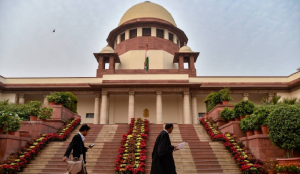
A few days ago, a judge issued a “sweeping order” to direct the nation’s Customs to refund the tariffs under the earlier emergency powers that were deemed illegal by the Supreme Court. Although the petition was filed by a single firm, the order made it clear that it was applicable to every importer, who paid the higher tax. At present, at least 2,000 firms have filed petitions to claim the refunds. The Supreme Court, surprisingly, did not provide a road map for the refunds, and one of the dissenting judges claimed that the process may turn out to be a “mess.”
However, to reduce the chaos, the judge who gave the “sweeping order” asked the Government to attend a meeting to discuss the modalities of how to handle the paperwork related to refunds on 79 million shipments. “I do not believe that any of this has to be chaotic with respect to anybody, because I know that you (Government) are going to come up with a way of doing it. And so, on Friday, we are going to hear at least the initial ideas from the Customs service as to how this will proceed.” Trump may seek a stay on the order, and process.
For Trump, there is another twist due to the ongoing US-Israel-Iran war that has spilled into the rest of the Middle East, and Central Asia. Across the globe, both oil producers and consumers are worried. More crucially, the war, if escalated, may last for a month, or more, and adversely impact the US economy, as well as the others. However, there is a mid-term election in the US later this year to elect congresspersons and senators. If the economy goes for a spin, Trump may lose control over both the houses, and become a lame-duck president.
One need not forget that if the new 10 per cent tariff is deemed illegal, it will shift the diplomatic momentum towards the other nations. Powerful and influential ones such as the European Union, Japan, and India may wish to renegotiate the bilateral trade deals with the US. The former may ask for more concessions with the knowledge that Trump is in a legal, political, and economic mess. This may further dent the ‘stick’ policy of the president, which will further impact the economy. It can lead to a non-virtuous economic cycle.
However, Trump is unlikely to give up easily. He has never done it before. He will fight on politically and legally, using little-known and little-used laws, as he did in the past. He will not care if the acts are deemed illegal in the future. His only purpose will be to show the world, and Americans that he is strong, and can go on without any respite. The fact remains that he needs to keep fighting these legal and diplomatic battles for another three years until his present term ends. If he can maintain the pressures till then, he will emerge triumphant.
This is evident from the White House’s latest reaction, “The President is using his authority granted by Congress (via laws) to address fundamental payments problems, and to deal with our country’s large and serious balance-of-payment deficits. The Administration will vigorously defend the President’s actions in court.” A few experts contend that the president is likely to get more legal leeway, or “deference,” for the new tariff under the trade Act (new tariff) compared to the earlier ones using the emergency powers related to national security. In the former case, Trump has a clear and legal 150-day window to seek the Congress’ okay, but the technicality between trade and balance-of-payment deficits remains a grey area.