Mayawati's Gen Z pitch and the battle for a generation : Who will win UP's young Dalit voters?
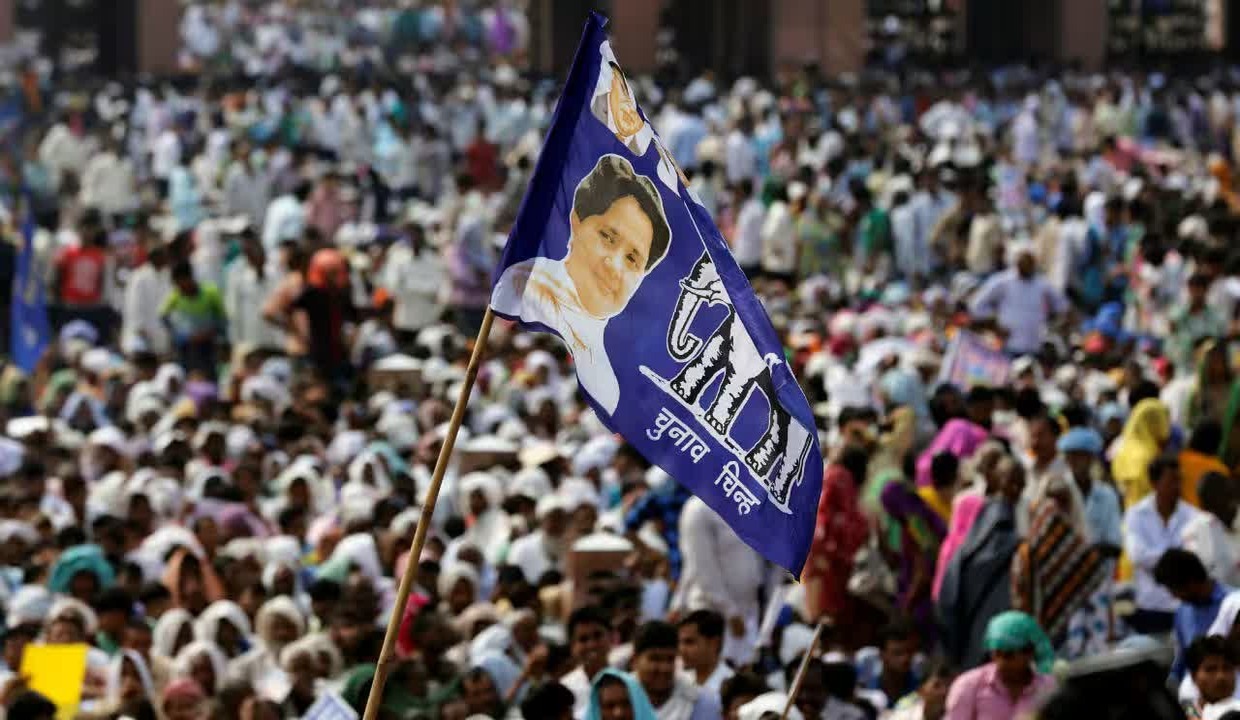
On August 8, Mallikarjun Kharge addressed a Congress rally at the Ramlila Ground in Haldwani. After the meeting, members of a Hindutva organisation conducted a shuddhikaran yagna at the venue. The organisers said the ground had been left littered and needed to be cleaned. The Congress president is a Dalit. The ritual's chosen word was purification.
Rahul Gandhi called the ritual another name for untouchability and demanded an FIR under the SC/ST (Prevention of Atrocities) Act. The Uttarakhand BJP president defended the ceremony, saying the venue had been polluted by slogans and had to be purified. On August 31, a case was registered against Rahul Gandhi himself, on the complaint of Amit Kumar, an office-bearer of the Shri Ram Sena Dharmarth Seva Nyas, under the Bharatiya Nyaya Sanhita and the SC/ST Act. The allegation is that his remarks hurt members of the Dalit community.
The same day, in Lucknow, Mayawati met her party's office-bearers and warned voters against what she called rewaadis, the freebies and attractive promises parties offer before elections. She said Gen-Z and Gen-Alpha were coming out against anti-people policies and were facing government repression, including police cases. She told the party it would form the government in UP for a fifth time. She also reviewed the BSP's booth-level committees, rebuilt after the Election Commission's revision of the electoral rolls.
The youth push has been building for a month, and it is chasing a protest wave the country has not seen from schoolchildren in years. In August, Gen Alpha students took to the streets in Delhi, Bhopal, Moradabad and in UP, blocking highways over bad roads and broken school buildings. Mayawati is also attempting to relaunch Akash Anand, her nephew and the party's national convenor. An announcement made in late July, with workers' meetings in western UP. On August 10, Anand held an open meeting in Hathras.
On August 11, Mayawati issued a press note to the students and Gen Z of the country, asking them to stay away from the politics of both the ruling party and the opposition. On August 13, she accused the Opposition of blocking Parliament out of greed for Gen Z votes.
On August 20, she backed the Gen Alpha school protests by name, calling it a matter of great sorrow and concern that children had to take to the streets. On August 25, Anand was in Jewar.The party, which has traditionally relied on its core Dalit vote, perhaps today is looking to gain relevance among first-time and young voters. This is the same Akash Anand who was removed as Mayawati's heir in May 2024 after a case over a campaign speech, removed from the party in March 2025, then reinstated and made national convenor in August 2025.
The numbers explain the rush. In 2007, the BSP won 206 of 403 assembly seats with a vote share of 30.43 per cent, in a coalition of Dalits and Brahmins that became the template of social engineering in Indian politics.
In 2012, it fell to 80 seats. In 2014, it won no Lok Sabha seat. In 2017, it won 19 assembly seats. In 2022, it won one, with 12.88 per cent of the vote. In the 2024 Lok Sabha election, it fielded candidates in 424 seats, including 35 Muslim candidates in UP alone, and won nothing. Its vote share in UP was 9.39 per cent. Its national share was roughly two per cent.
The Dalit vote did not disappear. It moved. The BJP built deep inroads among non-Jatav Dalits after 2014 through welfare delivery. The Samajwadi Party rebuilt its PDA formula, Pichhda, Dalit, Alpsankhyak, and gave tickets to backward and Dalit candidates.
Chandrashekhar Azad's Azad Samaj Party grew in western UP by speaking the language of young Ambedkarite Dalits. In the 2024 Lok Sabha election, the BJP fell from 62 seats in UP to 33. Of the state's 17 SC-reserved seats, which the BJP had swept in 2014 and won 14 of in 2019, it won eight.
Consider the voter. Scheduled Castes are about 21 per cent of UP's population, more than four crore people. They are the reason roughly one in five of the state's 403 assembly seats is reserved (84 seats are reserved for SCs and 2 for STs).
In 2022, voters aged 18 to 29 made up 22.93 per cent of UP's registered electorate, the share of the electoral roll, not of eligible population, down from 28.73 per cent in 2017. Projections for 2027 put the same 18-to-29 cohort at about 21 per cent.
The final electoral roll published on April 10, 2026 has 13.39 crore voters, including 17.63 lakh aged 18 and 19. The same revision removed more than two crore names, a deletion that has been challenged in the tribunals and on the streets, with opposition parties alleging it was partisan. And turnout among the youngest cohort in the 2022 polls was about 51 per cent, against a state average of 61.1 per cent.
The Dalit youth vote is the largest unclaimed block in UP politics, and both the BSP and the Congress are calculating how to claim it.
Mayawati's youth messaging is not empty of offers. This month she opposed the creamy layer for SCs and STs, restated her demand for reservation in the private sector, and backed the Gen Alpha protesters by name. The problem is not what she says. It is what the party can do with it.
On August 11, she told students and Gen Z to stay away from the politics of both the ruling party and the opposition, a warning about other parties' machines, not about their grievances. Nine days later, she backed the Gen Alpha school protests by name, calling it a matter of great sorrow and concern that children had to take to the streets. By August 31, she was telling her office-bearers that Gen Z and Gen Alpha are fighting the state. That is a shift from abstention to adoption in twenty days, and it is the real story. Mayawati is not warning the young away from politics, she is claiming their grievance for the BSP. The question is not whether the offer exists. It is whether a party with no MLA in the UP assembly can deliver on it. The party's other move this year has been to court Brahmins, the coalition partner of its 2007 success.
On Mayawati’s 70th birthday in January, she said Brahmins needed respect. By June, she had her third Brahmin outreach of the year. In August, she announced the party would contest alone in UP, Uttarakhand and Punjab. The last time the BSP fought UP alone, in 2022, it lost deposits in 287 seats. The 2007 playbook is being dusted off. But the young Dalit voter of 2027 was not born when that coalition won. The memory of 206 seats is not theirs.
This is why Haldwani matters more than the BSP's relaunch. The purification ritual was a public statement, made at the venue of a Dalit leader's rally, that the space needed to be cleaned after he used it. Rahul Gandhi gave that statement a language, the Constitution against the ideology of untouchability.
For a young Dalit who has lived through a paper leak, a recruitment exam cancelled mid-process, a backlog of reserved vacancies, and the news that a Dalit leader's rally ground was purified, the language of rights is not abstract. It is the only politics that names what they have lived. The Congress is not relying on the moment alone. The party has tasked Rajinder Pal Gautam, an Ambedkarite leader, with courting Dalit voters in UP.
Mayawati did condemn the Haldwani ritual, and on this matter, that was about it. On August 14, she called it highly condemnable and deeply concerning, demanded that the casteist and feudal elements responsible be sent to jail, and asked the RSS chief to take cognizance of the incident. The condemnation was a single post on X — and then, on this thread, the party went quiet. In the same month she opposed the creamy layer for SCs and STs and backed the Gen Alpha protests; the Haldwani fight did not get that kind of follow-through.
The muted response makes one wonder why leaders who claim the mantle of social justice had gone quiet in this fight for dignity. The party of Kanshi Ram, the man who built the BSP on the idea that Dalits must hold their own political power stuck to a single social media post.
There also is a trap in this competition between Mayawati, Rahul Gandhi, Akhilesh Yadav and Chandrashekhar Azad, with all chasing the same young Dalit voter. A divided Dalit vote has historically helped the BJP, which lost 29 seats in UP in 2024 precisely because sections of Dalits, especially non-Jatavs, moved against it. The BSP's Muslim-candidate strategy in 2024 was accused of being designed to split the anti-BJP vote. The charge stuck, fairly or not.
Mayawati's Gen Z outreach is a confession. The party that once owned Dalit politics in UP is trying to buy the attention of a generation that does not remember a time when the party was in power. The outreach is real, the organisation is not. The BSP has no Lok Sabha seat. Its only MLA, Uma Shankar Singh, died on August 6, and the party now has no one in the UP assembly. Its leadership question has been answered with a nephew who has been removed and reinstated. Rahul Gandhi's Haldwani stand, by contrast, speaks to the same voter with a different currency, dignity as a constitutional right. Whether the Congress can convert that language into an electoral success in UP is the open question.
The ground in Haldwani has been purified, and the man who demanded an FIR now faces one. This morning in Lucknow, Mayawati told her workers that Gen-Z and Gen-Alpha are fighting the state and that the BSP will come back for a fifth time.
The 17.63 lakh voters aged 18 and 19 on UP's roll this year will be asked, in a few months, to choose among a party that warns them against politics, a party that names their humiliation, a party that offers them PDA, a party that promises them Ambedkar, and a party that offers them welfare.
None of them can take the Dalit youth vote for granted anymore. That is new in UP politics. That is what a press note from Mayawati, the act of purification yagna, and the FIR against Rahul Gandhi all concede.