Manoj Kumar Sharma’s appointment as Chief Justice reshapes Constitution Bench tradition
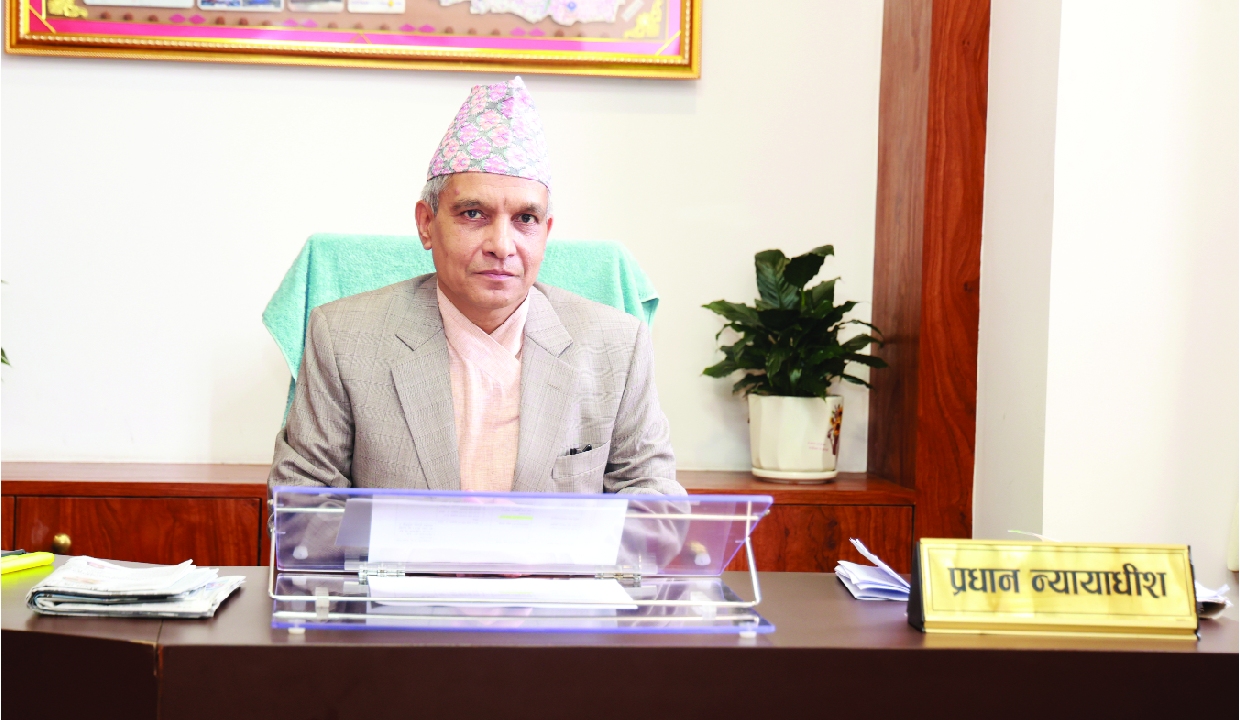
Currently, no specific or objective criteria have been defined for selecting judges for the Constitutional Bench. As a result, the sole basis for selection has now become the “will or discretion of the Chief Justice.” This issue has sparked a serious debate both inside and outside the judiciary.
Has this situation led to a confrontation among the judges themselves?
Last Monday (28th September), an Emergency Full Court meeting was held at the Supreme Court. While other agendas were discussed, one major agenda item was the formation of the Constitutional Bench. Asking the Chief Justice about the process of bench formation, the judges questioned: Why is there no participation of senior judges in the Constitutional Bench?
According to a judge who attended the meeting, the Chief Justice remained silent on this issue.
Ever since he was appointed Chief Justice in May 2026, the formation of the Constitutional Bench has been operating at Chief Justice Sharma’s discretion. The bench has consistently comprised judges handpicked by Chief Justice Sharma. However, many judges are dissatisfied with this approach. They argue that clear criteria must be established for forming the bench.
The Nepal Bar Association has also been criticizing the Chief Justice’s style. The Bar has repeatedly drawn attention to the issue, urging that “provisions be made immediately to form the Constitutional Bench based on seniority or the lottery system.”
Before Sharma became Chief Justice, the bench used to be formed on the basis of seniority.
What is the dispute over Bench formation?
Article 137 of the Constitution of Nepal provides for the constitution of a Constitutional Bench. It envisages that constitutional matters should be resolved through this bench. Clause 1 of the same article specifies that there shall be one Constitutional Bench in the Supreme Court. It states that such a bench shall consist of the Chief Justice and four other judges designated by the Chief Justice on the recommendation of the Judicial Council.
The judicial system adopted by Nepal is considered part of the Common Law system. In systems following the Common Law tradition, the authority to form a Constitutional Bench and select judges rests with the Chief Justice Dr Adish C Aggarwala, President of the International Council of Jurists, notes the same:
“The formation of a Constitutional Bench and the nomination of judges are the prerogative of the Chief Justice, as there are no specific constitutional or procedural guidelines on judicial selection. In India, the Chief Justice nominates judges to Constitutional Benches, regardless of their seniority. This flexibility allows senior judges to handle other important cases and ensures effective judicial functioning. Constitutional cases require extensive hearings due to their significance and are closely observed nationally and internationally.”
Dr Aggarwala, who is also the President of the All India Bar Association, explains that since the Chief Justice is constitutionally vested with this authority, the Bar Association may express a differing opinion on the Chief Justice’s action, but it cannot dictate it:
“The Chief Justice, as the master of the roster, has the authority to allocate cases and select judges based on their experience, expertise and capabilities, rather than seniority alone. The Bar Association, as an equal partner in the administration of justice, has the right to raise concerns and request the inclusion of senior judges but cannot dictate the Chief Justice’s selection. The Chief Justice should consider such requests while balancing the workload and importance of other pending cases.
Including all senior judges in a Constitutional Bench should not be a mandatory practice but should depend on judicial requirements and administrative feasibility.”
At first glance, deciding which judges serve on the Constitutional Bench appears to be the “constitutional prerogative of the Chief Justice.” Why then is the Bar opposing it? The Bar maintains that objective criteria are essential. Bijay Prasad Mishra, President of the Nepal Bar Association, levels a serious charge, stating that the absence of criteria for forming the Constitutional Bench has turned the judiciary into a “superstore”:
“The lottery system is the practice best suited to Nepal’s soil. We brought in the lottery system after protesting for 109 days against the buying and selling of justice within the judiciary. A tradition of appointing senior judges to the Constitutional Bench was also established. To maintain judicial tradition and impartiality, clear criteria are indispensable.”
The question is not merely about constitutional authority; it is also tied to judicial tradition and the reasons behind adopting that tradition. Reminding of past instances where the Chief Justice’s discretion led to the bargaining of justice, Bar President Mishra argues for the necessity of standards: “When authority was vested solely in the Chief Justice, we witnessed maneuvering and claims of settling cases for favors. We also saw interference from various power centers. If the previous state of affairs is being brought back, the Bar will take a stance. This issue was raised in the Full Court itself; the court has become like a superstore.” However, former Supreme Court Justice Balaram KC believes there is no reason for the Bar to protest.
Justice KC says:
“The present Chief Justice appears to be exercising his constitutional authority. Just because a past Chief Justice misused certain powers does not mean everyone will do so. The Chief Justice can exercise the rights written in the Constitution judiciously.”
After-Effects of Article 137
‘Why Today?’ Justice Phuyal Questions CJ Sharma Over Constitutional Bench Formation
Before the Constitutional Bench was scheduled to sit, while the judges had gathered in the joint chamber, Justice Hari Phuyal questioned Chief Justice Manoj Kumar Sharma about why he had not been included in the benches so far and why he had been included today.
“There must be a reason why I was not included yesterday or the day before, and why I have been included today. I have no issue with not being included previously. But now, let us discuss what lies behind this,” a judge who was present quoted Justice Phuyal as saying.
In the past, Chief Justice Sharma had constituted Constitutional Benches without Justice Phuyal. However, a Supreme Court justice said that Justice Phuyal questioned the decision after he was suddenly included in the bench.
Historical context
Disputes regarding the formation of the Constitutional Bench in Nepal’s judiciary are not new. When then-Prime Minister KP Sharma Oli dissolved Parliament for the first time, then-Chief Justice Cholendra Shumsher Rana prepared to handpick four judges himself instead of appointing the bench based on seniority while the case was pending before the Constitutional Bench.
He backed down following widespread opposition. Since then, although the lottery system was not applied to the Constitutional Bench, a practice was established to form the bench, including judges based on seniority. Former Chief Justice Prakash Man Singh Raut also bypassed seniority to place a junior judge on the Constitutional Bench in one case, but Raut backed down after fierce opposition from the Bar.
Due to the controversy, the Constitutional Bench could not even be formed for some time after that. Overall, the dispute over the formation of the Constitutional Bench is a conflict between the Chief Justice’s constitutional authority as “master of the roster,” past abuses of this authority, the tendency of “pick and choose,” and questions surrounding judicial impartiality.
The writer is a judicial, foreign, and security affairs lead and sub-editor at Kantipur Television in Nepal, covering constitutional affairs, governance and national security; Views presented are personal.