Educational institutions to remain closed in Manipur for 3 days over ‘law and order situation’
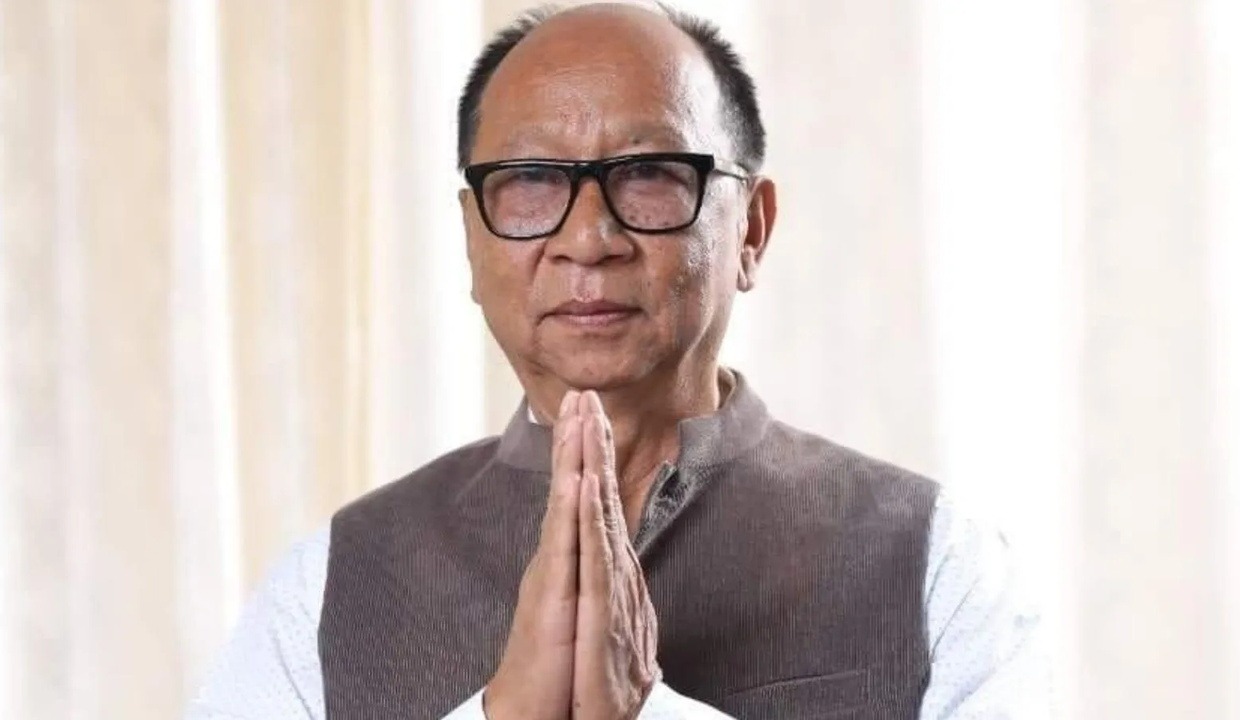
The Manipur government on Wednesday announced that all educational institutes in the state would remain closed for three days from August 20, citing the "prevailing law-and-order situation".
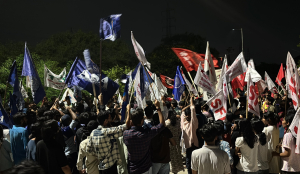
Protesters burnt effigies of politicians and took out rallies in different parts of Manipur's valley districts on the second day of the 48-hour general strike called by the Campaign for Just and Fair Delimitation (JFD) to press for updation of the National Register of Citizens (NRC) before the Census exercise is conducted in the state.
The JFD has also announced a boycott of all government offices from Thursday as part of its ongoing agitation.
An order by the state Education Department said, "In view of the prevailing law-and-order situation in the state, the Governor of Manipur declare the closure of all schools as may be affiliated to the Board of Secondary Education, the Council of Higher Secondary Education, the Central Board of Secondary Education or otherwise; colleges and higher education institutes including universities; falling under government, aided or unaided sectors, from August 20 to August 22..
At Khurai Lamlong in Imphal East district, bandh supporters burnt effigies of Chief Minister Y Khemchand Singh and Home Minister Govindas Konthoujam on Wednesday. They demanded that the census not be conducted until internally displaced persons (IDPs) return to their native places.
Dozens of demonstrators also took out a rally at Singjamei in Imphal West district and marched for nearly 2 km to press for their demands.
Road blockades continued at several locations in Imphal West, Imphal East, Bishnupur and Thoubal districts, with bandh supporters stopping private vehicles as well as security forces from proceeding and asking them to return.
A census training programme for supervisors, enumerators and field trainers was also cancelled in Thoubal district, officials said.
Reason behind current agitation
JFD and other groups supporting the NRC demand argue that Manipur's population has changed significantly because of migration and alleged illegal immigration.
They want citizenship to be verified before the state's population is officially counted.
The demand has particular urgency in Manipur because of the state's long-running concerns over migration across its border with Myanmar.
But the claim that large numbers of people have entered Manipur illegally remains contested. There is also a crucial distinction between undocumented migrants and Indian citizens belonging to communities that have historically lived on both sides of the India-Myanmar border.
The issue is also sensitive considering deep ethnic-ties between the Kuki-Zo communities of Manipur with Chin communities in Myanmar. During the conflict, Meitei organisations and political leaders have repeatedly alleged that illegal immigration from Myanmar has altered Manipur's demographic balance. Kuki groups have rejected the portrayal of the community as a whole through the lens of illegal immigration.
The demand for NRC predates the current ethnic violence facing the border state. In August 2022, the Manipur Assembly adopted resolutions seeking the establishment of a State Population Commission and the implementation of an NRC. The Assembly's own records list the Aug 5, 2022 resolution on the "Establishment of State Population Commission and NRC". In March 2024, the Assembly passed another resolution seeking implementation of the NRC.
The Manipur Assembly's official resolution list records both resolutions.
The State Population Commission was subsequently established in February 2023. According to its administrative report, the commission was created in pursuance of the 2022 Assembly resolution and a state Cabinet decision.
The commission's report says the demand for updating the NRC arose amid concerns over the state's "skewed demographic profile".
For supporters, the NRC is a mechanism to protect Manipur's indigenous population and address what they describe as demographic change. For many in the Kuki-Zo community, the same demand raises fears of being treated as outsiders in a state where they have lived for generations.