Living through Colours
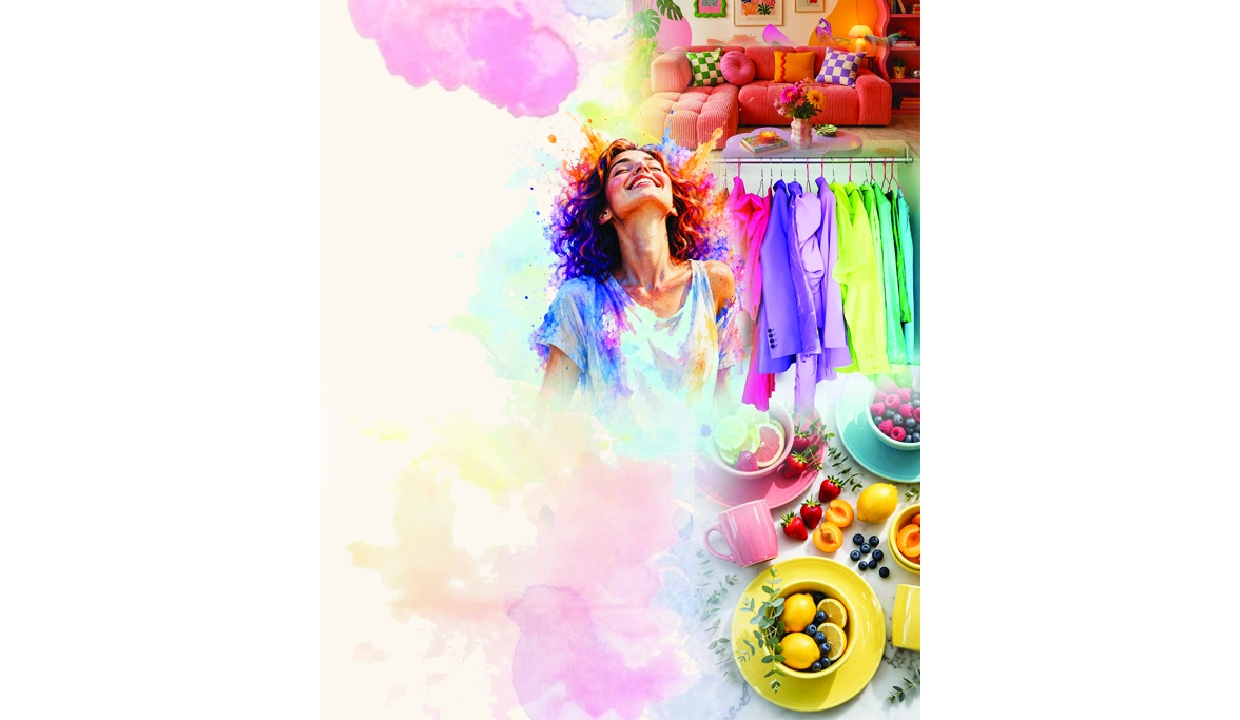
Did you know colours silently control your body and mind? Every shade we see instantly alters our daily moods, spending habits, and deep emotional comfort
Have you ever noticed how a bright yellow room wakes you up in seconds? Or why a blue dinner plate may influence your appetite before you even take a bite? We experience these sudden physical reactions because colour affects how we perceive and feel, but not the same way for everyone. Context, culture, lighting, even your own personal history, all of it plays a part. Some studies suggest that red light can heighten alertness and influence the body’s stress response, but scientists have not proved that simply looking at red immediately speeds up the heart or metabolism. This perfectly explains why the food industry relies on it so heavily, while on the flip side, cool blue shades gently calm your body and create a deep sense of peace. We take in these colours constantly throughout our day as they quietly guide how we feel and what we buy, along with how relaxed we are at our core.
The garments resting on our shoulders and the dishes on our dining tables, alongside the bedrooms we sleep in, all send clear messages. In fashion, we found something fascinating here. Donning a structured black blazer instantly grants the individual a profound sense of personal authority, while wearing pink naturally soothes those in their immediate presence. Colour acts as an unrelenting mental influence, continuously moulding your emotional state the very moment you awake every single day.
Spiritual life coach Priya Kaul observes that our instinctive shade preferences actually expose our unmet emotional needs. You might seek blue for quiet peace, green for fresh beginnings, yellow to feel hopeful, or dark brown for solid stability. Watching these changing preferences gives us a vital chance to stop and realise what our inner self genuinely needs and physically demands. We must closely observe our common environments to grasp the true impact of these visual choices. I spoke with three distinct professionals who shared exactly how these everyday shades manage to alter our minds, reshape our living spaces, and deepen our internal connections.
On Colour & Inner Wellbeing
Colour can help cultivate mindfulness by providing an individual with grounding in reflection or transition periods. We can choose a colour on purpose and pay attention to our own reactions to the colour without believing in its healing properties. Noticing changing colour preferences can offer gentle clues to our inner world and emotional needs. The value of the colour is in generating presence, intention and self-observation. - Priya Kaul, Spiritual Life coach
On Colour Psychology
Light striking the photoreceptors in the retina is where colour perception starts. Signals are transmitted to brain regions involved in vision, attention and emotion. The brain can judge colour based on context and learned associations before conscious judgment. Different colour responses are due to personal memories, culture, environment and past experiences. Biology and context count too. These responses influence emotional state. - Rahul Chandhok, Head Consultant, Mental Health and Behavioral Science, Artemis Hospitals
On Colour & Space
For us at House of J, colour is another material. Its intensity, saturation and relationship with daylight can completely transform how a space feels. Deeper, warmer tones can encourage families to linger and gather more often. There is no universal formula for how colour makes us feel. Personal memories, cultural associations, daylight and room function all influence that response. A colour can photograph beautifully and still feel completely wrong when you live with it. - Nishi Jain, Founder & Principal Designer, House Of J