Kurdish dissident groups say they are preparing to join fight against Iran with US support
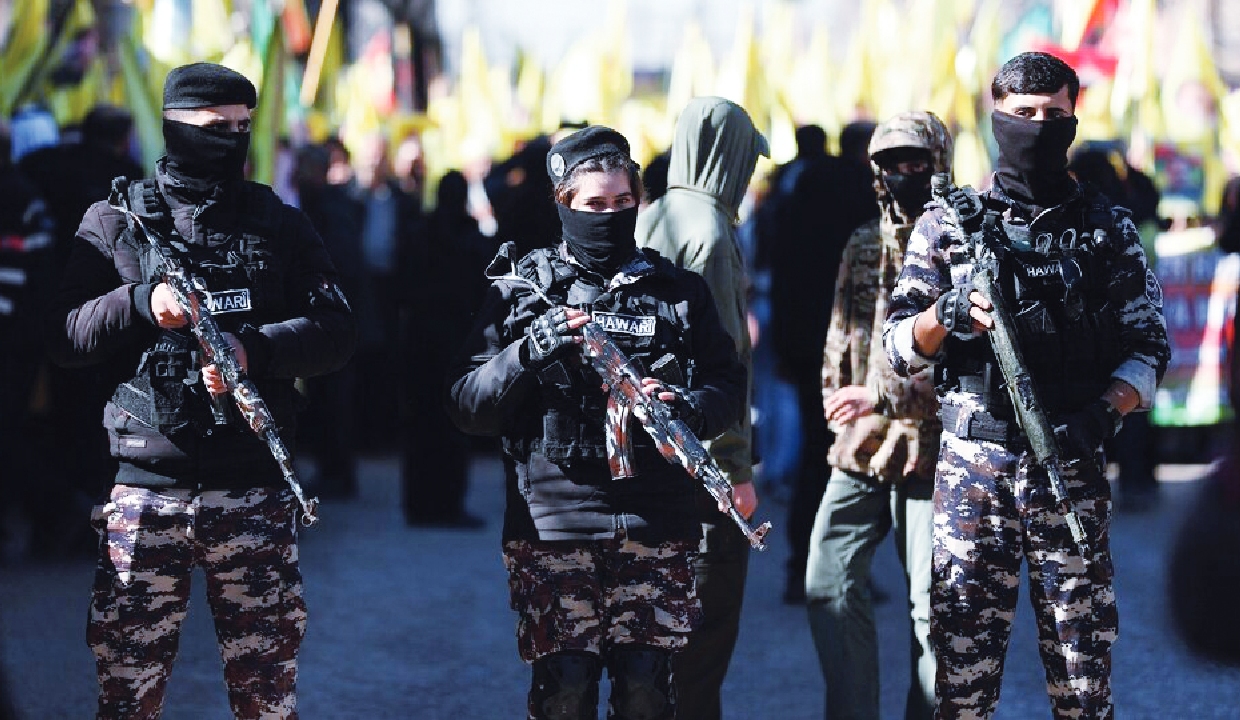
Kurdish Iranian dissident groups based in northern Iraq are preparing for a potential cross-border military operation in Iran, and the US has asked Iraqi Kurds to support them, Kurdish officials said.
The Kurdish groups are widely seen as the most well-organised segment of the fragmented Iranian opposition and are believed to have thousands of trained fighters. Their entry into the war could pose a significant challenge to the embattled authorities in Tehran and could also risk pulling Iraq further into the conflict. Khalil Nadiri, an official with the Kurdistan Freedom Party, or PAK, based in northern Iraq’s semi-autonomous Kurdish region, said Wednesday that some of their forces had moved to areas near the Iranian border in Sulaymaniyah province and were on standby.
He said Kurdish opposition group leaders had been contacted by US officials regarding a potential operation, without giving more details.
Asked about reports that the Trump administration was considering arming Iranian Kurdish groups, Defence Secretary Pete Hegseth told reporters on Wednesday: “None of our objectives are premised on the support or the arming of any particular force. So, what other entities may be doing, we’re aware of, but our objectives aren’t centred on that.”
Before the US and Israel attacked Iran on Saturday, triggering a new war in the Middle East, the PAK had claimed attacks on the paramilitary Revolutionary Guard in retaliation for Tehran’s violent crackdown on protests. But an official with the group said it had not sent forces from Iraq into Iran.
If the Iranian and Iraqi Kurdish groups were to join the war, it would be the first entry of a significant ground force into the battle. The Kurdish groups have battle experience from the fight against the Islamic State group. An official with Komala, another of the Kurdish Iranian groups, said Wednesday that their forces are ready to cross the border within a week to 10 days and were “waiting for the grounds to be suitable.” He spoke on condition of anonymity out of security concerns.
Kurds in Iran have a long history of grievances and uprisings against both the current Islamic Republic and the monarchy that preceded it. During the rule of Shah Mohammad Reza Pahlavi, Kurds were marginalised and repressed and sometimes rebelled. After Iran’s 1979 Islamic Revolution, the new theocracy also battled Kurdish insurgents. Iranian forces destroyed Kurdish towns and villages in fighting that killed thousands over several months. While they share a desire to see the current authorities ousted, the Kurdish groups have also butted heads with other opposition groups - notably the faction led by the former shah’s son, Reza Pahlavi, who has accused the Kurds of being separatists aiming to carve up Iran.
Iraqi Kurds hesitant to join the fray. The potential operation has put leaders of the Iraqi Kurdish region in a delicate position.
Three Iraqi Kurdish officials told the AP that a call took place Sunday night between US President Donald Trump and Masoud Barzani and Bafel Talabani - the heads of the Kurdistan Democratic Party, or KDP, and the Patriotic Union of Kurdistan, or PUK, the two main Kurdish parties in Iraq - to discuss the situation in Iran.
They spoke on condition of anonymity because they were not authorised to comment publicly.
One of the officials said Trump had asked the Iraqi Kurds to militarily support the Iranian Kurdish groups in operations in Iran and to open the border to allow the Iranian Kurdish groups to move freely back and forth.
When asked about the call and reports that Trump has sought military support for Iranian Kurdish groups, White House press secretary Karoline Leavitt said: “He did speak to Kurdish leaders with respect to our base that we have in northern Iraq,” but denied that Trump had agreed to a specific plan.
The Iraqi Kurdish official said the Iraqi Kurds were concerned that getting directly involved in the conflict would draw a harsh Iranian response. Already, the Kurdish region has seen a string of drone and missile attacks by Iran and allied Iraqi militias in recent days, targeting US military bases and the US Consulate in Irbil as well as the Kurdish groups’ bases.
While most of the attacks have been intercepted, civilian homes have been damaged, and the region is suffering from electricity cuts after a key gas field halted operations due to security concerns.