Industry reviving in Nashik after decade-long decline: CM Fadnavis
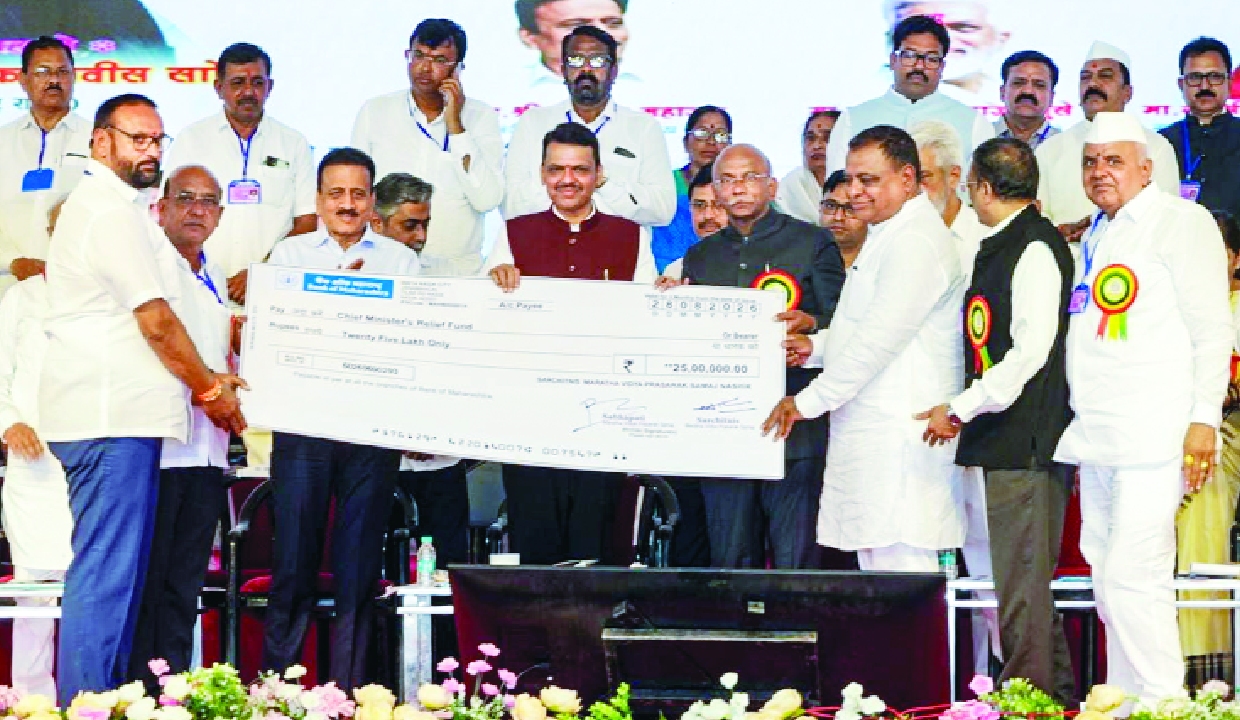
Nashik’s industrial growth had slowed down for some time but the city is now witnessing a revival and will emerge as an important growth engine of Maharashtra in the next five years, Chief Minister Devendra Fadnavis said on Saturday.
Speaking after inaugurating the administrative building of Pune’s Savitribai Phule University’s Nashik sub-centre, Fadnavis said the industrial growth of the north Maharashtra city faltered in the first decade of the current millennium as several difficulties emerged.
Investment increased in industrial areas around Chhatrapati Sambhajinagar and Pune, but that in Nashik stagnated, he said.
“But I am very happy that over the last 10-12 years, Nashik has been projected in different ways and different capabilities have been created here. Today, once again, Nashik is getting reborn...,” said Fadnavis, who also heads the finance department. “In the next five years, Nashik will be one of the most important growth engines of Maharashtra,” he added. The upcoming Vadhavan Port in neighbouring Palghar would open up new opportunities for Nashik, he said. “We are developing a route to directly connect Nashik with Vadhavan Port. Because of this route, Nashik will become the most important centre for engineering, logistics and exports,” Fadnavis added. Educational institutes must design their courses by keeping in mind the sectors that would generate jobs in the future, he said. “We have to think about which sectors will create the maximum number of jobs. Accordingly, we will have to prepare our syllabus, courses and degrees. We will have to create ‘sandwich’ courses, which bring different courses together,” the chief minister said. One cannot think of any field of knowledge “in a silo”, he further said. “No person can work by thinking only of one stream (of knowledge). In medicine, there is biotechnology which combines medicine and engineering. In engineering, along with physics and chemistry, we also have to consider biological sciences in a different way,” Fadnavis said. Universities should become centres of incubation and innovation, he said.
“Today, universities from around the world are coming to us. What is the biggest advantage of these universities? All the important companies in the world, whether it is Google or companies in MedTech and HealthTech, every such company was born in a university,” he noted.
In future, industries and innovation must happen “only in universities,” and an ecosystem should be developed for this, Fadnavis said.
“I am happy that Savitribai Phule Pune University has worked in this field. But the way...our economy is growing, I feel that our universities have still not done enough work,” he said, adding that the Pune-based varsity must think how it can create the next “unicorn”.
He expressed confidence that the Nashik sub-centre of the university would give fresh impetus to these efforts.
Fadnavis also urged the sub-centre to explore ways to contribute during the next year’s Kumbh Mela in Nashik.