Individual TOD plots can be converted to freehold under MPD
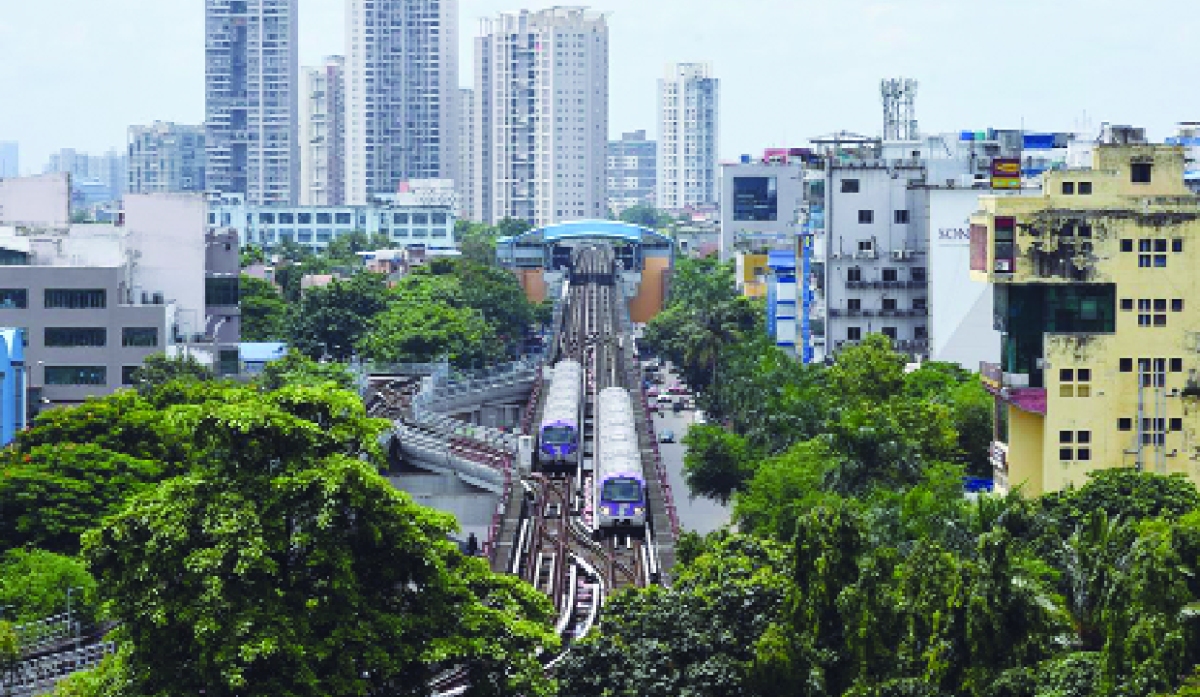
An individual plot identified in the Transit Oriented Development (TOD) corridor can be converted into freehold under the Master Plan of Delhi (MPD)-2047, in a bid to encourage private-sector participation, among other objectives.
The freehold status accords absolute and complete ownership of the land in question and also of the structure upon it, as opposed to the lease model under which a governing authority, such as the DDA, would retain the ownership of the land while allowing its use by the leaseholder.
As per the master plan, the entire TOD zone shall be declared as a Development Area to fast-track the approval of projects in the corridor.
“Individual plots forming part of a consolidated TOD plot, held on a leasehold basis, shall be deemed freehold, except institutional plots on leasehold, subject to clearance of all dues,” the Master Plan of Delhi (MPD) states.
The Delhi Development Authority (DDA) shall be the nodal authority for approval of TOD projects and sanctioning of building plans, it adds. Many properties in Delhi are currently on a leasehold basis, which means ownership belongs to the DDA. But the MPD-2027 paves the way for freehold ownership, free from leasing.
In a major push towards planned expansion, the Master Plan for Delhi-2047 proposes Land Pooling framework to facilitate integrated and infrastructure-led development of nearly 200 sq. km of Delhi’s Urban Extension areas. The plan envisaged road network of around 600 km, providing the backbone for connectivity and planned development across Land Pooling areas.
The new urban areas envisaged under the policy will provide for schools, healthcare facilities, parks and green spaces, commercial centres and other public amenities and infrastructure, ensuring that housing development is accompanied by facilities required for a good quality of life.
The master plan also introduces inclusive zoning, permitting a mix of activities within residential plots based on the Right of Way (RoW) of roads. This will encourage the creation of vibrant and self-sustaining neighbourhoods by bringing housing, economic activities and essential services closer together.
Another important provision is high-density mixed-use development along Urban Extension Road-II (UER-II) in Land Pooling areas. The plan envisages an integrated mix of logistics and warehousing, commercial and institutional activities and affordable housing along this major connectivity corridor, creating new opportunities for housing, investment and employment and supporting Delhi’s emergence as a future-ready global capital.