India to build hospital in Palestine, says Ambassador Abu Shawesh
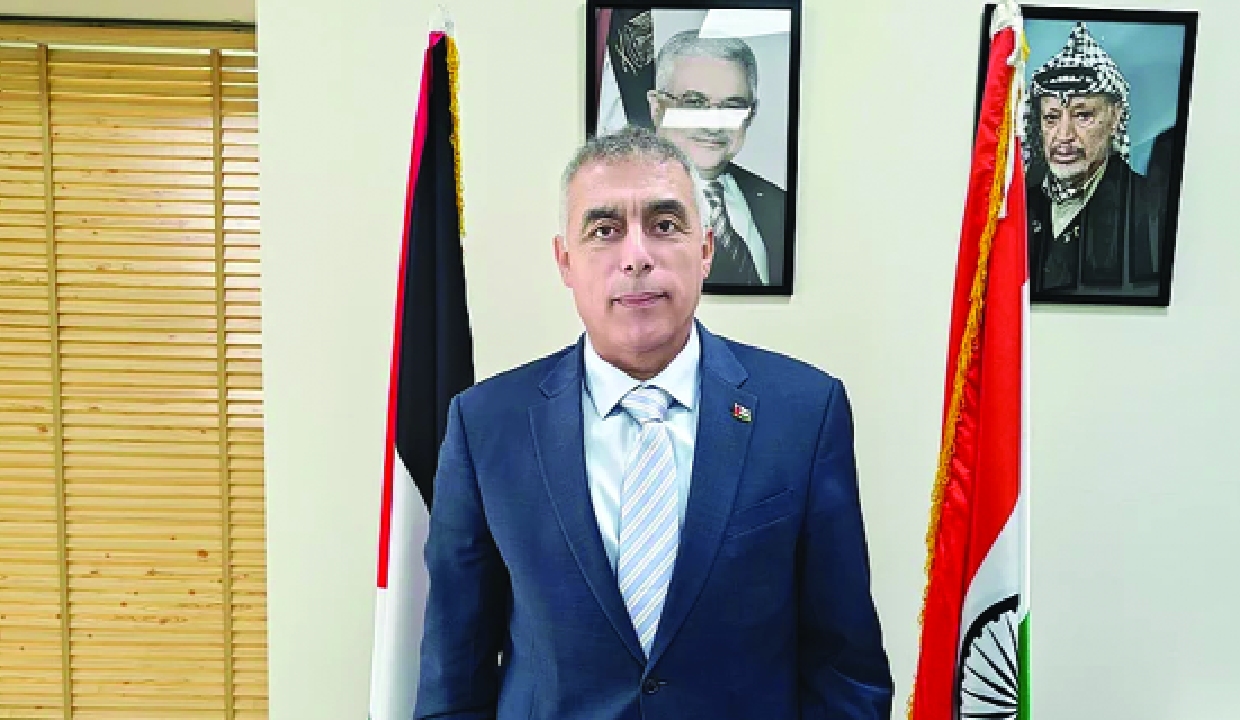
India and Palestine have finalised the paperwork for the construction of a new hospital in the West Bank, with the project expected to move into implementation soon, the Ambassador of Palestine to India Abdullah M Abu Shawesh said in an interview with The Pioneer.
Speaking about the outcome of a recent visit by Indian diplomat S. Ranganathan, Secretary (CPV & OIA) in the Ministry of External Affairs, the ambassador described the development as significant at a time when Palestine’s healthcare system is facing severe pressure.
“The health sector in Palestine is on the brink of collapse,” the ambassador said, adding that India had been approached for assistance, particularly in the health and education sectors. According to the envoy, the paperwork for the hospital was finalised between India and Palestine a day before the interview.
He expressed confidence that construction would begin soon, stressing that the project was moving beyond discussions and towards practical implementation.
The ambassador clarified that the hospital would be fully funded by the government, with no private ownership involved. India to Support Artificial Limbs for Gaza. The ambassador also highlighted India’s potential assistance to Palestinians who have lost limbs during the conflict in Gaza. He said he had already discussed the issue of artificial limbs with India’s External Affairs Minister and his Indian counterpart.
According to initial statistics cited by the ambassador, more than 5,000 people in Gaza have undergone amputations and require artificial limbs and other forms of assistance.
“India’s position is very clear. In principle, India is ready to implement this project,” he said, while stressing that the assistance would need to reach Gaza, where the requirement exists. The ambassador said he expected India to support Palestine in Gaza after the war and expressed confidence that the country would stand with Palestinians in reconstruction efforts. Medicines and Medical Equipment Beyond the hospital project, the ambassador said India had also promised assistance in the form of medicines, medical supplies and equipment. He said discussions were continuing with India’s Ministry of External Affairs and that the delivery of supplies was now largely a logistical issue.
“We are still discussing additional support with the Ministry of External Affairs,” he said. The ambassador also acknowledged assistance already received from India’s private sector, saying Palestinians had received machines, medicines and medical supplies.
“Part of this assistance has already reached our people, and we are grateful for it,” he said. India’s support for Palestine, according to the ambassador, is not limited to healthcare. He said Palestine had also received a commitment for the establishment of a vocational training centre, which he hoped would begin soon and benefit Palestinians.
The ambassador linked these initiatives to the broader challenges facing Palestine’s education and health sectors, both of which he described as being under enormous strain.
While discussing assistance from India, the ambassador also emphasised that the relationship could involve cooperation in which Palestine shares its own expertise with India.
The ambassador’s remarks place the proposed West Bank hospital at the centre of a wider Indian effort to support Palestine’s healthcare and humanitarian needs. Alongside the Government-funded hospital, the proposed artificial-limb assistance for Gaza, medical supplies and equipment, and the planned vocational training centre represent areas in which the ambassador said India could make a practical contribution.
For Palestine, the focus is on turning diplomatic support into projects on the ground at a time when the country’s health and education systems are facing extraordinary challenges. The ambassador expressed hope that India’s assistance would continue and expand, particularly in Gaza, where the need for medical and rehabilitation support remains acute.