India’s UPI set to go live in Israel
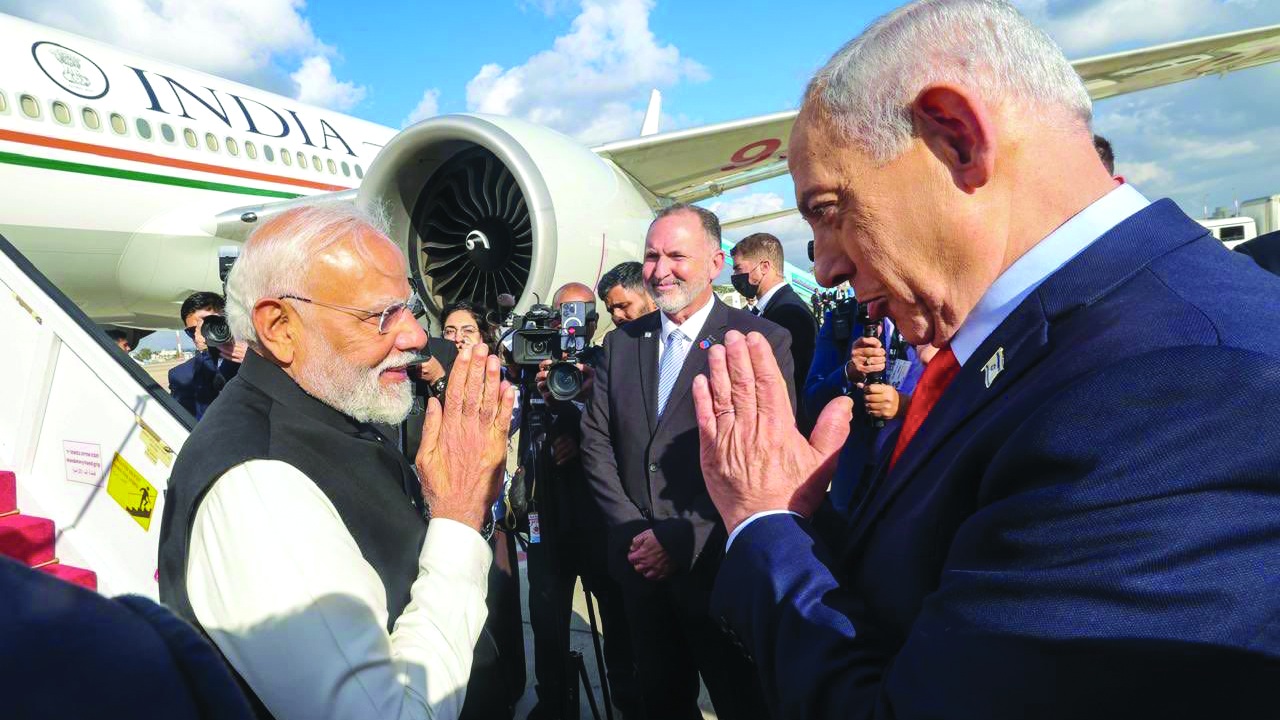
From neighbourhood kirana stores to international markets, India’s digital payments revolution is crossing borders. In a landmark development, Israel is set to adopt India’s Unified Payments Interface (UPI), marking another milestone in New Delhi’s growing global fintech footprint. The announcement came during Prime Minister Narendra Modi’s State visit to Israel, where both nations elevated their ties to a “Special Strategic Partnership for peace, innovation, and prosperity.”
The agreement to link UPI with Israel’s payment ecosystem will enable Indian travellers to make seamless, QR-based transactions directly from their bank accounts while in Israel. The linkage will be facilitated through cooperation between NPCI International Payments Limited and MASAV, Israel’s interbank payments operator. The move is expected to enhance cross-border
financial connectivity, reduce transaction friction, and promote digital interoperability between two economies.UPI, widely regarded as one of the world’s most efficient real-time payment platforms, is already live for merchant payments in several countries, including the UAE, Singapore, France, Bhutan, Nepal, Mauritius, Sri Lanka, and Qatar. Its expansion into Israel signals rising international confidence in India’s digital public infrastructure model.
Addressing the media, Foreign Secretary Vikram Misri described the visit as “incredibly rich in outcomes,” emphasising that digital payments and emerging technologies formed a central pillar of discussions.
He noted that the agreements reflect India’s commitment to leveraging technology for inclusive growth while strengthening trusted global partnerships.
During wide-ranging talks in Jerusalem with Israeli Prime Minister Benjamin Netanyahu, the two leaders agreed to elevate their long-standing strategic partnership. They also welcomed progress in negotiations toward a mutually beneficial Free Trade Agreement, aimed at unlocking new trade and investment opportunities.
Beyond digital payments, the visit saw the signing of multiple Memorandums of Understanding (MoUs) across artificial intelligence, cyber security, defence, agriculture, education, water management, fisheries, geophysical exploration, and cultural exchange. A key highlight was the launch of a new initiative on Critical and Emerging Technologies, to be steered by the National Security Advisors of both countries. Cooperation is set to deepen in AI, quantum computing, semiconductors, biotechnology, and space technologies.
The leaders also welcomed ongoing collaboration between ISRO and the Israel Space Agency, with a focus on expanding joint research and encouraging greater industry participation in space innovation. In cyber security, both sides endorsed the establishment of an India-Israel Cyber Centre of Excellence in India and agreed on a structured roadmap for strengthening cyber resilience, including in the financial sector.
Agriculture and water management — long-standing pillars of India-Israel cooperation — received renewed attention. The two leaders reviewed the progress of 35 Centres of Excellence operating across India, which have trained more than a million farmers in advanced irrigation and crop management techniques. New fellowships and innovation platforms are expected to further accelerate research collaboration and sustainable farming practices.
On the geopolitical front, both nations strongly condemned terrorism in all its forms and reaffirmed their shared resolve to combat extremism. In his statement, Prime Minister Modi stressed that India’s security interests are closely tied to peace and stability in the Middle East. Expressing support for ongoing peace efforts in Gaza, he said humanity must never become a casualty of conflict.
The leaders also discussed connectivity initiatives such as the India-Middle East-Europe Economic Corridor (IMEC) and cooperation under the I2U2 framework involving India, Israel, the UAE, and the United States. These platforms are expected to bolster regional trade, infrastructure, and technological collaboration.
Prime Minister Modi’s two-day visit - his second to Israel in nine years - included interactions with members of the Indian Jewish community and engagements with cultural and business leaders, underscoring the people-to-people dimension of the partnership.
With UPI poised to enter yet another international market and a broad spectrum of agreements signed, the India-Israel relationship is entering a technology-driven phase. As digital rails connect economies and innovation bridges continents, India’s fintech architecture is no longer a domestic success story — it is becoming a global standard.
From local QR codes to global corridors, India’s digital revolution is fast transforming into a worldwide transaction.