India rejects UN concerns on Delhi protest
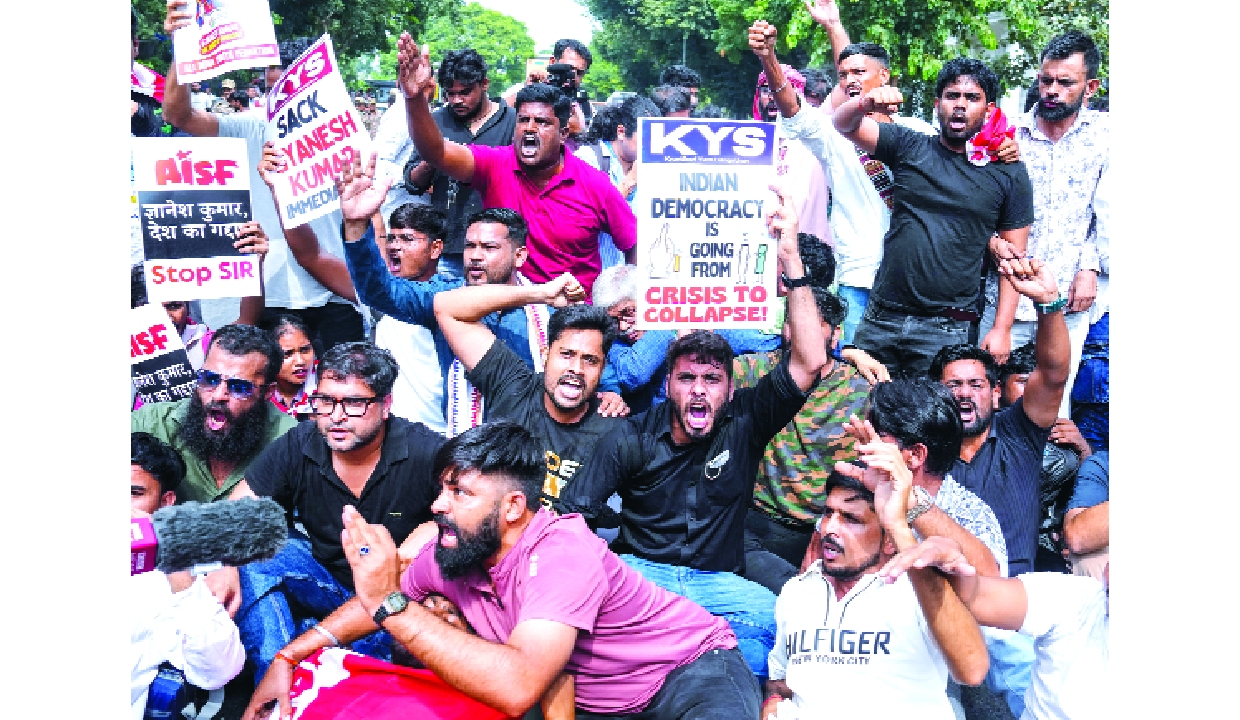
India has rejected concerns raised by the United Nations human rights office over protests in New Delhi, describing the remarks as “misplaced” and reiterating that the Constitution guarantees citizens the right to peaceful assembly, subject to reasonable restrictions to maintain public order. Meanwhile, Bangladesh’s National Citizen Party (NCP) has expressed solidarity with demonstrations led by the Cockroach Janta Party (CJP) over alleged irregularities in the revision of electoral rolls.
The controversy centres on protests against the Special Intensive Revision (SIR) of electoral rolls and demands for the resignation of Chief Election Commissioner Gyanesh Kumar. Protesters have raised concerns about electoral transparency and the functioning of the Election Commission, prompting heightened security arrangements in the national capital.
In its response to the UN human rights office, the Indian Embassy maintained that peaceful assembly is a constitutional right but noted that reasonable restrictions may be imposed when necessary to protect public order.
The exchange has renewed debate over the balance between civil liberties, democratic accountability and the responsibilities of authorities in managing public demonstrations. Security personnel were deployed around Jantar Mantar Road as authorities monitored the situation following the protest call. The handling of demonstrations, including reported detentions of protesters, organisers and journalists, has also attracted criticism from political groups and raised questions about restrictions on public assembly and internet access.
Bangladesh’s NCP convener Nahid Islam voiced support for the demonstrators in a statement shared on X from Dhaka.
He argued that democratic forces in India deserved transparent answers regarding electoral integrity and institutional independence, warning that detentions and restrictions on public gatherings threatened fundamental freedoms. Islam connected the protests to Bangladesh’s July 2024 student-led uprising, which began over government recruitment quotas before expanding into a nationwide movement against former Prime Minister Sheikh Hasina’s 15-year rule. Hasina left power in August 2024. Citing a United Nations estimate that up to 1,400 people were killed during the uprising and its suppression, Islam highlighted the consequences of confronting authoritarian rule.
He also acknowledged support from Indian students, writers and independent voices during Bangladesh’s protests, drawing parallels with movements such as the Shaheen Bagh demonstrations against the Citizenship Amendment Act and student activism at Jawaharlal Nehru University and Jadavpur University. He praised women’s participation in demonstrations in both countries.
Calling for equality, social justice and communal harmony, Islam criticised religious supremacy and authoritarianism, arguing that democratic societies must protect minorities and the right to dissent irrespective of religion, caste, gender or social background.
The CJP has continued to oppose the electoral roll revision process and demand Kumar’s resignation. Organisers announced another gathering at Jantar Mantar for 10 am on Sunday, October 11. The Supreme Court is also scheduled to consider a contempt plea concerning reported detentions and restrictions affecting public transport in the capital.
The developments have given the Delhi protests a wider regional dimension, highlighting competing perspectives on electoral transparency, institutional independence and the constitutional protection of peaceful dissent. While India has defended its legal framework governing public assembly, the NCP’s intervention has intensified political attention on the demonstrations and the broader debate over democratic freedoms in South Asia.