India-Malaysia economic ties driven by strategic trust: PM
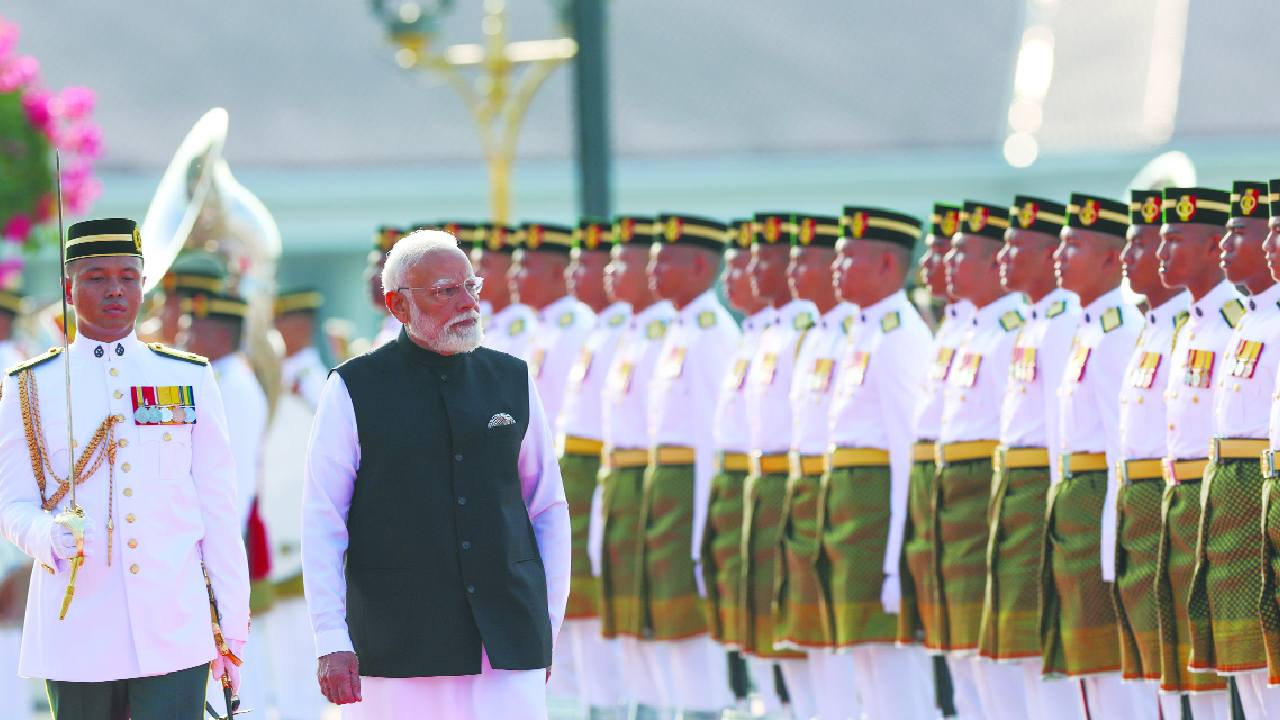
Framing strategic trust as the foundation for economic change, Prime Minister Narendra Modi on Sunday delivered an unequivocal message on terrorism as India and Malaysia agreed to broaden cooperation across trade, defence, technology and regional security.
“We will pave the way for economic transformation through strategic trust,” he said. Describing India-Malaysia relations as “special”, PM Modi said the two maritime neighbours share centuries-old civilisational and people-to-people links, which now provide a strong base for future economic cooperation. Speaking alongside Malaysian Prime Minister Anwar Ibrahim after bilateral talks in Kuala Lumpur, PM Modi underscored India’s continued commitment to peace while stressing that counter-terrorism remains non-negotiable. The visit saw the signing of 11 agreements and outcome documents, including a framework to deepen collaboration in the semiconductor sector — an area both sides identified as critical to future supply chains. The two leaders also welcomed efforts to promote the use of the Indian Rupee and Malaysian Ringgit for bilateral trade settlement, a move aimed at reducing dependence on third-country currencies. Ibrahim, praising India’s rapid economic rise, said Malaysia stood to benefit greatly from closer engagement with New Delhi.
In a significant diplomatic gesture, Malaysia reiterated its support for India’s permanent membership in a reformed United Nations Security Council, a position New Delhi has long sought. Both leaders agreed that global institutions must evolve to reflect contemporary realities. Security cooperation featured prominently in the talks. Modi said India and Malaysia would strengthen collaboration in counter-terrorism, intelligence sharing and maritime security, while further expanding defence ties.
The two countries also pledged zero tolerance towards terrorism in all its forms, including cross-border terrorism.
According to a joint statement, both sides noticebly condemned terrorism and agreed to work together to counter radicalisation, violent extremism and the financing of terror. They also resolved to prevent the misuse of emerging technologies by terrorist groups and to enhance cooperation in multilateral platforms such as the UN and the Financial Action Task Force (FATF).
On regional issues, Modi reaffirmed India’s strong support for ASEAN centrality and said the Indo-Pacific is emerging as the world’s next major growth engine. He added that India and ASEAN share a commitment to peace, stability and development, and agreed that the review of the ASEAN-India Trade in Goods Agreement should be completed at the earliest.
The Prime Minister also announced India’s decision to establish a Consulate General in Malaysia, a move welcomed by the Indian diaspora. During his visit, Modi met ministers, parliamentarians and senators of Indian origin, praising their role in Malaysia’s development and their contribution to strengthening bilateral ties.