India is the Mother of Democracy: PM
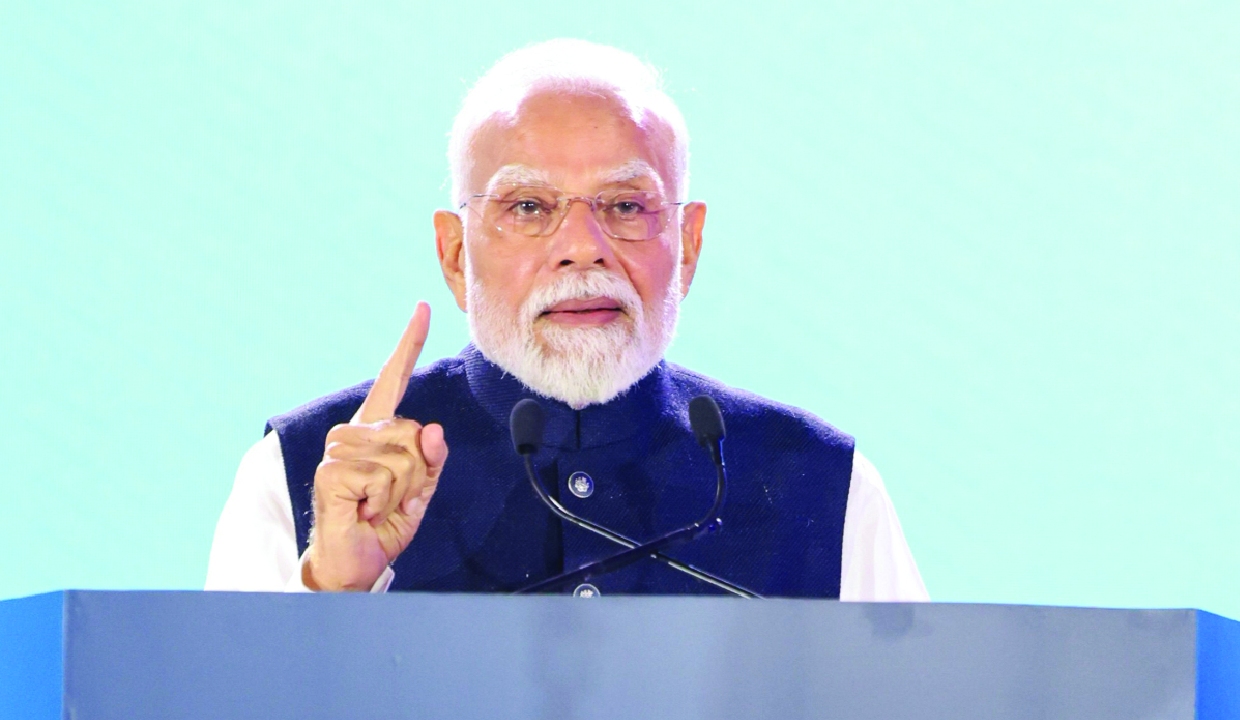
Moving beyond the power to succeed to the power to help others succeed, the vision with which I have come here today is Power to Empower
Prime Minister Narendra Modi said on Tuesday that India is the “mother of democracy,” and open debates, different perspectives, a robust free media landscape, and linguistic diversity are part of its ethos, in an apparent riposte to the ongoing Opposition protests.
Making these assertions here, he said the concept of ‘Power to Empower’ is deeply ingrained in its culture and traditions and actively applied to the nation’s governance and work culture. The true value of knowledge, wealth, and power is determined entirely by how ethically they are utilised, Modi added.
The Prime Minister also said India’s economic growth was anchored in strong fundamentals and sustained reform, noting that the country sought to expand its global economic influence through shared prosperity rather than at the expense of other nations.
Underlining these values while addressing the Bloomberg New Economic Forum, the Prime Minister showcased the vibrant dynamism of the ‘Mother of Democracy,’ listing the nation’s massive linguistic diversity, its 80,000 publications, and over a thousand television channels.
He emphasised that in the modern social media era, the nation’s half-a-billion YouTube and Instagram users engage in robust, open debates, proving that digital power is actively fueling democratic discourse.”In present times, what has played a major role in this is digital power,” observed Modi.
Addressing the summit’s core focus on emerging global powers, the Prime Minister highlighted a monumental paradigm shift in the 21st century’s third decade, where technology, data, knowledge, and innovation have become the ultimate metrics of power.
He challenged the audience to reconsider the fundamental purpose of this power, asking whether it should elevate a select few or democratise opportunities for millions, emphasising a shift from controlling to enabling and from competing to collaborating. “Moving beyond the power to succeed to the power to help others succeed, the vision with which I have come here today is Power to Empower,” Modi asserted.
Grounding this philosophy in ancient cultural wisdom, the Prime Minister quoted traditional Sanskrit texts, emphasising that the true value of knowledge, wealth, and power depends entirely on how ethically they are used.
He stressed that understanding this profound purpose of power is essential for navigating today’s complex global dynamics. “Meaning, the true value of Power lies in its Purpose,” affirmed Modi.
Elaborating upon the country’s economic growth, Modi said it was anchored in strong fundamentals, financial resilience and a sustained reform drive, pitching the country as a global economic and technology power that seeks to help other nations prosper rather than grow at their expense.
Modi cited the 7.8 per cent economic growth recorded in the April-June quarter, foreign-exchange reserves exceeding USD 700 billion and reforms spanning taxation, insolvency and labour laws as evidence of India’s resilience. “In a world filled with uncertainty, India offers the assurance of reliability and stability,” he said. He highlighted India’s digital public infrastructure, affordable mobile data, digital payments and direct transfers of government benefits as examples of technology widening access to economic opportunities.
He said India is also sharing its digital public infrastructure expertise with partner countries, particularly in the Global South, citing the open-source CoWIN platform developed during the COVID-19 pandemic. Modi presented the initiative as part of a broader effort to make India’s technological capabilities available beyond its borders.
On poverty reduction, Modi said India had lifted 25 crore people out of poverty over the past decade, pointing to technology-enabled welfare transfers and the government’s digital identity and payments infrastructure as contributors to more efficient delivery of public assistance.
He argued that India’s role as a supplier of affordable medicines, a source of skilled talent, and a provider of digital infrastructure offers an alternative rooted in cooperation. Modi also cited India’s vaccine supply to more than 100 countries during the pandemic as an example of using domestic manufacturing capacity to meet international needs.
Clean energy formed another pillar of his argument. Modi said India had achieved its target of sourcing 40 per cent of installed electricity capacity from non-fossil fuels in November 2021, well ahead of its 2030 deadline under the Paris climate pledge. He said renewable-energy capacity rose from about 75 gigawatts in 2014 to about 300 gigawatts.
He also highlighted the PM Surya Ghar and PM-KUSUM schemes, which support household solar adoption and solar energy generation by farmers. He said such programmes could reduce emissions, lower costs, and create economic opportunities.