India-China talks: Clearing the ground for Xi’s Delhi visit
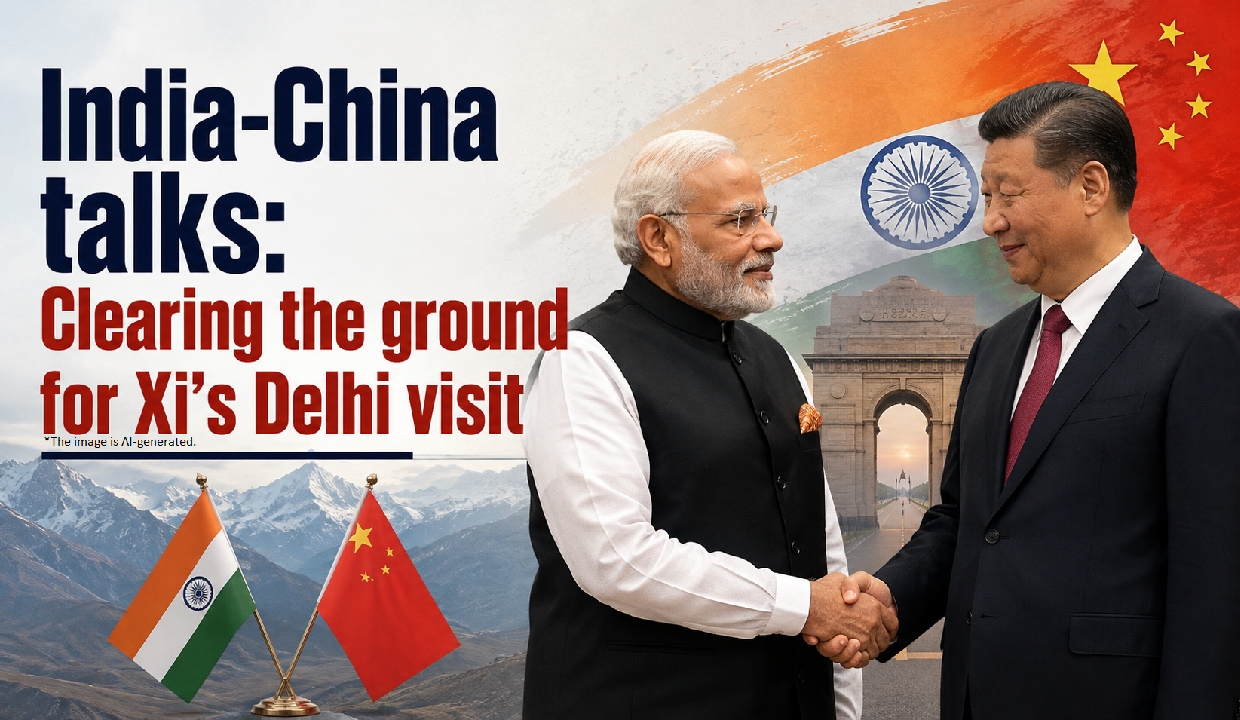
Coming just weeks before Xi’s visit to New Delhi for the BRICS Summit, the talks aim to stabilise the relationship and lay the groundwork for a significant summit
National Security Advisor Ajit Doval’s arrival in Beijing for the 25th round of Special Representatives (SR) talks with Foreign Minister Wang Yi looks, on the calendar, like routine business under a mechanism running since 2003. It is not. This is the first SR round in a full year, and it comes weeks before Xi Jinping is expected in New Delhi for the BRICS Summit on September 12-13 — a visit that would be his first to India in years.
The border talks are, in effect, ground-clearing for a summit both capitals want to succeed. The recent record shows real, if narrow, movement. The October 2024 disengagement at Depsang and Demchok ended a four-year military standoff and revived an SR channel dormant since 2019.
Modi’s visit to Tianjin last August, his first to China in seven years, was followed by direct flights resuming after a five-year gap, eased visas, a revived Kailash Mansarovar Yatra, reopened border trade, and a partial easing of Chinese curbs on fertiliser, tunnel-boring machines and rare-earth exports. The Working Mechanism for Consultation and Coordination on border affairs has already met twice this year to prepare the ground for this round.
Yet the irritants are many. The 3,488-km Line of Actual Control remains undemarcated, and disengagement at flashpoints has not been matched by genuine de-escalation of the forces both sides massed after the deadly 2020 Galwan clash. Beijing continues to claim Arunachal Pradesh as “South Tibet,” renaming its towns, and recent reports of Chinese troop movements there — dismissed by New Delhi but not forgotten — keep resurfacing.
China’s tilt toward Pakistan during last year’s conflict following the Pahalgam terror attack has not helped. Nor has the economics: India’s trade deficit with China has crossed $100 billion, a record, and is still widening this year, even as New Delhi remains dependent on Beijing for as much as 90 per cent of its rare-earth magnets and permanent-magnet imports. This is why 23 years and 25 rounds have produced management, not resolution. For China, the boundary is one lever among many in a wider contest with India; for India, it is a matter of sovereignty that cannot be traded away for economic convenience. That asymmetry of stakes, layered on a trust deficit Galwan made permanent, means both sides now negotiate for stability rather than settlement — a tactical thaw, as most analysts describe it, not a strategic reset.
The way forward lies in accepting that reality rather than resisting it. New Delhi should press the SR and WMCC channels to make de-escalation — not just disengagement — the next concrete milestone, while building the domestic capacity in rare earths and manufacturing that makes engagement with Beijing a choice rather than a compulsion.
Xi’s possible visit should be judged by whether it locks in verifiable troop reductions, not by the optics of a handshake. Diplomacy with China has always demanded patience without illusions. Nothing in Beijing this week suggests that changes.