India-China: A thaw without a breakthrough
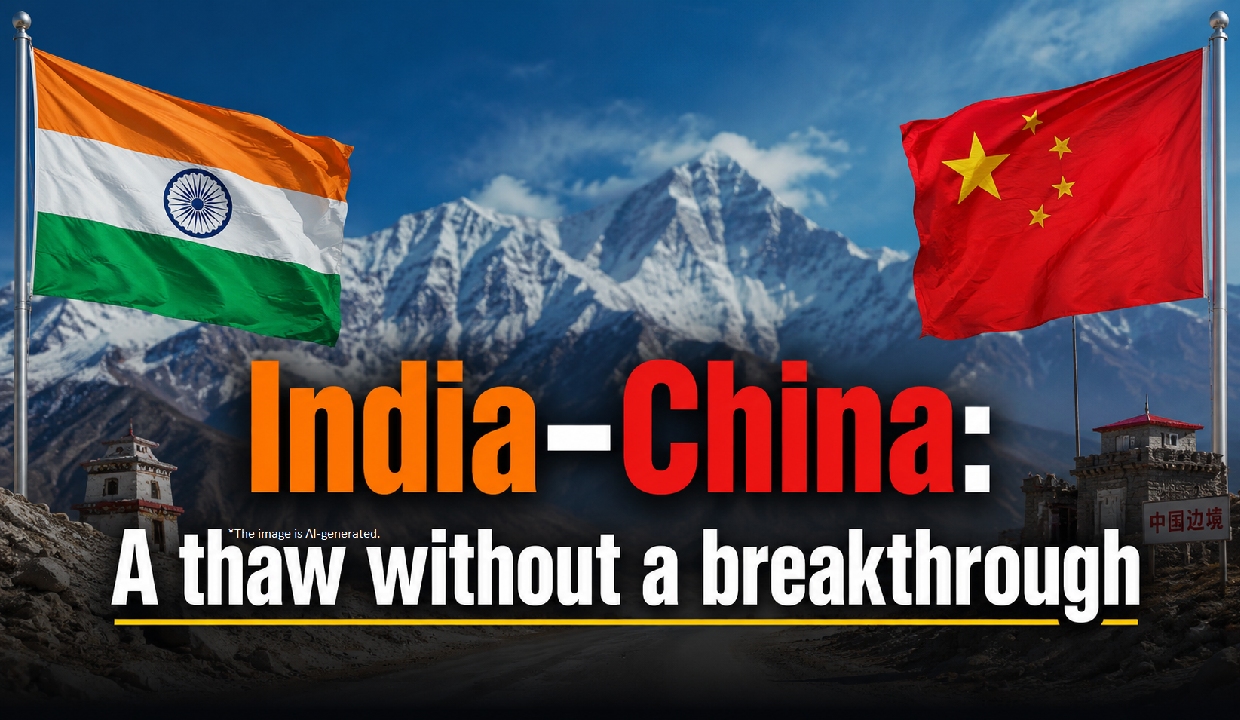
Twenty-five rounds of India-China boundary talks have produced an important thaw in relations, but little movement on the boundary itself
The 25th round of India-China Special Representative talks unfolded in Beijing on August 25, with National Security Adviser Ajit Doval and Foreign Minister Wang Yi holding what both readouts called candid, in-depth discussions on the boundary question. Doval called on Vice-President Han Zheng beforehand; Wang spoke of deepening trust and removing “disturbances.” The timing was deliberate: Prime Minister Modi and President Xi Jinping are due to meet twice in three weeks, first at the SCO summit in Bishkek, then at the BRICS summit New Delhi hosts on September 12-13.
The headway is real but narrower than the mood music suggests. Since the 2020 Galwan clash, the October 2024 disengagement restored patrolling and grazing at Depsang and Demchok; the Kailash Mansarovar Yatra, tourist visas and direct flights have all resumed over the past year. Yet this round’s statement quietly dropped “early harvest”, the phrase floated last year for quick delimitation wins, reverting instead to the older, slower pursuit of a “package solution.”
Twenty-five rounds since 2003 have moved the atmosphere considerably; they have not moved the line itself. What blocks that is visible on the ground, not in the readouts. China has issued six batches of “standardised” Arunachal Pradesh place names since 2017, the latest in April; India’s own counter-naming of border sites this August drew a sharp Chinese protest. More seriously, patrol parties reportedly came face to face near Taksing in Upper Subansiri in late July, with Chinese personnel said to have returned in early August and pitched tents - a claim India’s defence establishment has called unverified even as the opposition demands answers.
Add Beijing’s mega dam on the Yarlung Tsangpo, barely kilometres from the Arunachal border and already unsettling downstream water calculations, and it is clear India is negotiating trust with a neighbour simultaneously redrawing the map, the river and the patrol grid.
Xi’s Delhi visit, still unconfirmed by Beijing even now, would be his first to India in seven years, reportedly with some 400 officials in tow. The summit’s own agenda - local-currency trade, food and energy security, reform of multilateral institutions - will occupy the formal sessions. But the meeting the region will actually watch is the Modi-Xi sidebar: warmer bilateral language and movement on trade and connectivity, not a breakthrough on delimitation. That was never a summit’s job to deliver.
India’s task is to stop letting summit atmospherics and border facts stand in for each other. Engagement is worth having, but it should not outrun verification: patrolling parity and troop de-escalation to pre-2020 levels belong ahead of warmer language, not after it. New Delhi must match Beijing’s infrastructure push, village for village and road for road, with its Siang project as a counterweight to the dam. It must also get faster and clearer about what is confirmed on the border. Xi is welcome in Delhi, though the outcome may not be dramatic, but it is an opportunity to put across our deepest concerns.