IMF raises India’s FY27 growth forecast to 7%
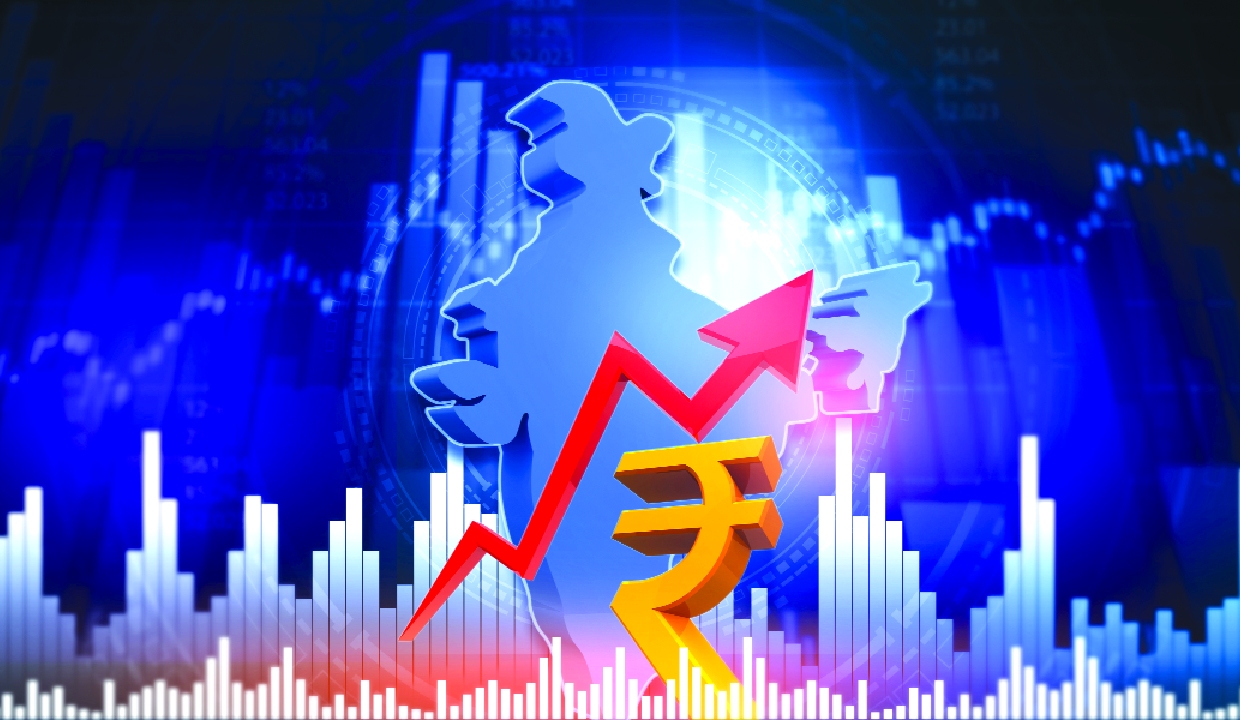
Despite global headwinds, the International Monetary Fund (IMF) has raised India’s GDP growth forecast to 7 per cent for 2026-27, up from 6.4 per cent in July. It also rated India among the fastest-growing major economies despite growing uncertainties.
The revision in the estimate comes on the back of a “stronger-than-expected momentum, supported by resilient domestic demand and robust services activity”. This comes just a week after the Reserve Bank of India (RBI) hiked its GDP growth estimate to 7.1 per cent for this year.
“India stands out with upward revisions, reflecting sustained momentum and growing evidence of stronger growth potential supported by favourable demographic dynamics, a large and expanding domestic market, and continued structural reforms,” the IMF said in an update to its flagship World Economic Outlook report.
In 2026, the IMF sees the world growing by 3.1 per cent, only slightly higher than 3% in July. Meanwhile, global growth in 2027 is seen unchanged at 3.4%.
Favourable demographics, a large and expanding domestic market, and continued structural reforms supported India’s growth prospects, even as higher oil prices posed a challenge.
Union Commerce and Industry Minister Piyush Goyal on Tuesday hailed the IMF projection of 7 per cent GDP growth for India in 2027, adding that the country’s multiple Free Trade Agreements (FTAs) are expected to boost global economic activity and “build resilient supply chains.”
“UNSTOPPABLE INDIA! The IMF has projected 7% GDP growth for Bharat in 2027, making us among the fastest-growing major economies. Our multiple FTAs under PM @NarendraModi ji are also expected to positively contribute to global economic activity and build resilient supply chains,” Goyal said in a post on social media.
Despite the growth upgrade, India still faces risks from higher commodity prices and external imbalances. The IMF projects India’s consumer inflation at 5 per cent in FY27, compared with 2 per cent in FY26, before moderating to 4.4 per cent in FY28. India’s inflation climbed to 5.5 per cent in September, the highest level in the new series.
India’s current account deficit is projected to widen to 1.5 per cent of GDP in FY27 from 0.7 per cent in FY26, before narrowing to 1.3 per cent in FY28.
The IMF has become more optimistic about some major advanced economies. Germany is now expected to grow by 1.3 per cent in 2026, up from the 0.7 per cent forecast made in July.
The UK’s growth forecast has also risen to 1.3 per cent from 1 per cent. China’s growth trajectory is projected to weaken further. After expanding by 5% in 2025, the country’s economy is forecast to grow by 4.5% in 2026 and 4% in 2027. Overall, advanced economies are now projected to grow by 2.1 per cent in 2026, up from the 1.7 per cent rate estimated in July.
Higher oil prices, subdued domestic demand and persistent structural headwinds are among the factors weighing on the outlook. The global outlook remains vulnerable to further disruptions in oil supplies, renewed trade tensions and tighter financial conditions, even as India continues to demonstrate relatively strong growth momentum.