Huddle Global: Showcasing Kerala’s Startup Ambition
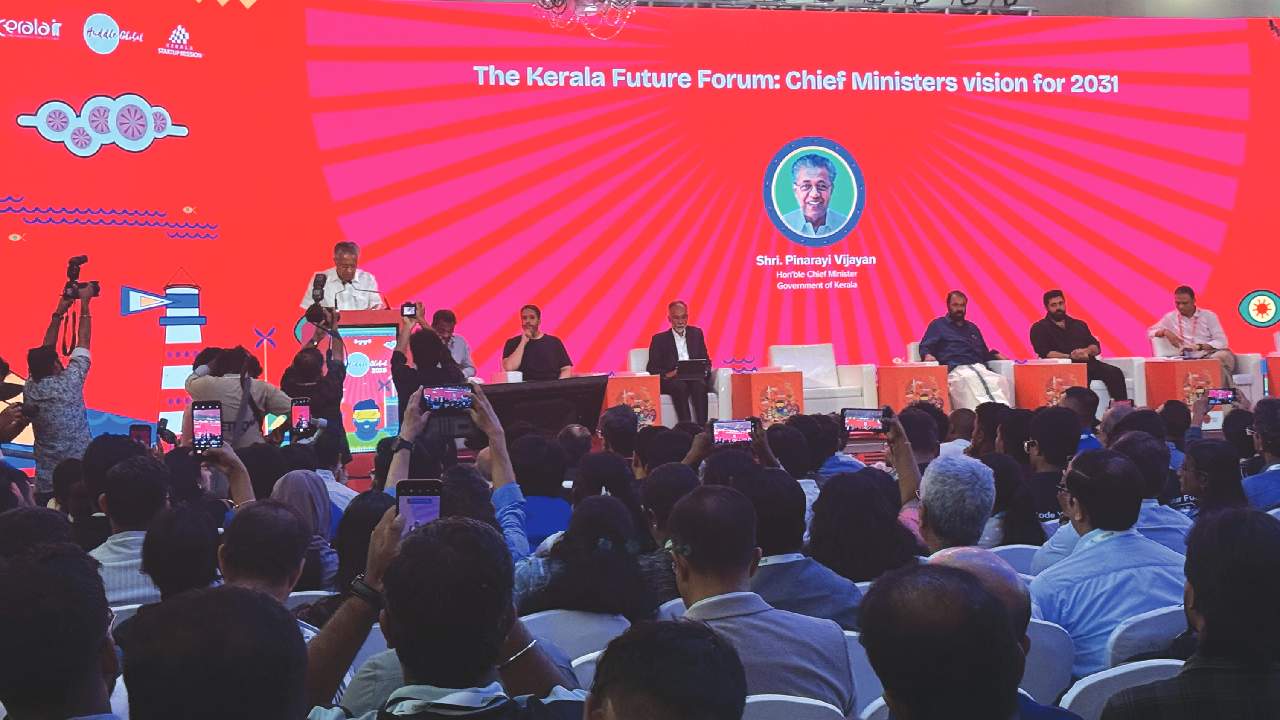
Startups have emerged as powerful engines of economic growth, innovation and job creation across the world. By translating ideas into scalable businesses, they fuel productivity, attract investment and create high-quality employment. For regions seeking inclusive and future-ready development, a vibrant startup ecosystem is no longer a luxury but a necessity. Kerala’s determined push to position itself as an innovation-led investment destination came into sharp focus at Huddle Global’s seventh edition of India’s largest beachside startup festival, held at Kovalam.
Organised by the Kerala Startup Mission (KSUM), the three-day event brought together policymakers, investors, entrepreneurs, academics and global experts to reflect on the evolution of Kerala’s startup ecosystem and chart the way forward. From fintech and AI to clean technology and animation, Huddle Global highlighted how innovation is becoming central to Kerala’s development narrative.
Anoop Ambika, CEO, Kerala Startup Mission said, “Kerala has taken a big leap in establishing Kerala as hub of startups and as our chief minister said we now are poised to move to consolidate this and move to innovation phase”
Over the past decade, Kerala has steadily built a policy-driven startup ecosystem, bucking conventional wisdom that innovation thrives only in industrial powerhouses. Experts speaking at a session titled “From Mission to Momentum: The Evolution of Kerala’s Startup Ecosystem and Way Forward” noted that unlike many other States, Kerala’s startup growth was not anchored in large industry support but was sustained by consistent and forward-looking Government policies.
Former Principal Secretary to the Chief Minister, M Sivasankar, underlined the need for Kerala to now adopt a distinctive “Kerala Model” of entrepreneurship. He argued for a balanced mix of MSMEs and unicorn startups, suggesting that KSUM identify 100 startups capable of reaching a `100-crore valuation and 10 potential IPO candidates within the next two years. He also flagged a major gap in institutional finance, pointing out that banks remain hesitant to fund startups until they transition into MSMEs, calling for targeted policy intervention.
The importance of strategic clarity was echoed by Dr Saji Gopinath of IIM Kozhikode, who stressed that startups must clearly choose between the MSME and venture-backed routes, with KSUM aligning its policies accordingly. Others, including analytics leader Tapan Rayaguru, cautioned startups against excessive dependence on Government grants, urging them to build sustainable, market-driven models.
Adding to the debate, Dr Jayasankar Prasad of the Centre for Management Development advocated greater autonomy for KSUM, suggesting it evolve into an independent institution with a stable, permanent workforce. Former Kerala Real Estate Regulatory Authority Chairman P H Kurian highlighted the value of international exposure, recommending that startups be taken to overseas exhibitions to build confidence, networks and global markets.
The opening session of Huddle Global 2025 further underscored Kerala’s broader economic vision. Finance Minister K N Balagopal, presenting “Vision 2031 - What is in Store for Kerala’s Knowledge Economy,” outlined how the state is leveraging digitalisation, AI, automation and logistics to drive its next growth phase. He highlighted the emerging Vizhinjam-Kollam-Punalur development triangle as a strategic hub combining port-led growth, manufacturing and inland connectivity.
The government’s commitment to innovation was reinforced through measures such as recapitalising the Kerala Financial Corporation to strengthen KSUM’s seed funding programmes and attract private venture capital. Digital and science parks focused on advanced technologies-from semiconductors to robotics-are being developed to anchor global research and industry partnerships.
As Huddle Global has demonstrated, Kerala’s startup journey is no longer experimental. It is evolving into a mature, globally connected ecosystem-one that blends policy support, talent depth and quality of life to position the State as a compelling destination for innovation and investment.