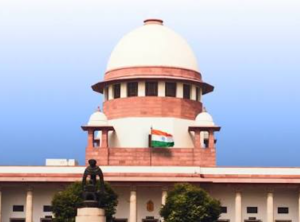
After Tiranga comes down: What the Flag Code says about dignified disposal

On August 15, as India marks its 80th Independence Day, millions of homes, offices, schools and street corners once again are awashed in saffron, white and green. The fifth edition of the Har Ghar Tiranga campaign, running this year from August 9 to 17 under the theme "Spirit of Vande Mataram", has pushed the tricolour further into the everyday fabric of the country than ever before, with organisers this year hoping to see the flag in more than five crore homes.
But the coverage of this Independence Day, across several publications, has converged on a quieter and less celebratory theme: what happens to the flag once the bunting comes down.
A recurring warning, every August
It is telling that almost every major outlet writing about the Flag Code this week, from lifestyle explainers to hard news, leads with some version of the same caution. Reporting has consistently noted that flags must not be left lying on roads, streets or other public places once the festivities end; instead, they need to be gathered and disposed of in a way that honours the flag's dignity. That instruction, repeated year after year since the Har Ghar Tiranga campaign began in 2022, has clearly not become second nature yet.
The legal backbone here is well established. The Flag Code of India, 2002, along with the Prevention of Insults to National Honour Act, 1971, governs not just how the tricolour is hoisted but how it is retired. Coverage this year has been consistent in flagging that the 1971 Act carries real teeth: publicly burning, mutilating, defacing, trampling upon or otherwise disrespecting the flag can invite up to three years' imprisonment, a fine, or both. The takeaway that recurs across outlets is simple: a damaged or soiled flag should never be displayed, and when it is retired, that retirement must happen privately, not on a pavement.
The paper flag problem
Where the coverage gets genuinely useful is in the specifics, and here a real tension emerges between patriotic enthusiasm and practical disposal. Several reports have pointed out that the Ministry of Home Affairs has discouraged plastic flags precisely because they are difficult to dispose of and do not biodegrade easily, while paper flags, the ones stuck to cheeks, waved from car windows, pinned to shirts, are permitted but come with an obligation: they cannot simply be dropped once the moment passes. They must be collected and set aside with the same respect owed to a full-sized tricolour.
This is where the gap between rule and practice is starkest. A flag code written for ceremonial flagpoles is now being applied to a nation of individual citizens holding small paper flags on a crowded street, and the infrastructure for "dignified disposal" at that scale barely exists. It is the predictable result of scaling up flag distribution without scaling up the disposal system alongside it.
What "Dignified" actually means
Multiple outlets this Independence Day have spelled out the mechanics that fewer people seem to know: a flag no longer fit for display should be destroyed as a whole, preferably by burning, or disposed of through another method consistent with its dignity and crucially, this must happen in private, never as a public spectacle. Some coverage has also mentioned the alternative of burial, noting that flags meant to be buried should first be placed in a wooden box. The throughline in nearly every piece is the word "private": the same nation that hoists the flag with maximum visibility is expected to retire it with none at all.
There is something worth sitting with in that asymmetry. The theatre of raising the flag- the drums, the selfies, the rooftop photographs that the Har Ghar Tiranga campaign actively encourages, has no equivalent for taking it down. Disposal is deliberately unceremonious, almost invisible. But it also means the moment is easy to skip, easy to forget, easy to outsource to whoever happens to be sweeping the street the next morning.
Beyond the Rulebook
It would be easy to read all this as a list of dos and don'ts to be filed away until next August. But the recurrence of this reporting suggests the problem is not a lack of information. It is a lack of habit. The Flag Code has existed in its current form since 2002 and was amended as recently as 2022 to allow the flag to be flown day and night; awareness of the display rules has grown accordingly. Awareness of the exit rules, though, has not kept pace.
Civic society appears to be filling that gap faster than official machinery. Volunteer groups and neighbourhood collectives stepping up to gather flags after the celebrations, rather than leaving the job to municipal workers, pointing to a more sustainable answer than any circular or advisory: a designated collection point, publicised as prominently as the flag distribution itself, in every locality that hands out flags in the first place.