GRAP-III curbs revoked even as very poor AQI persists
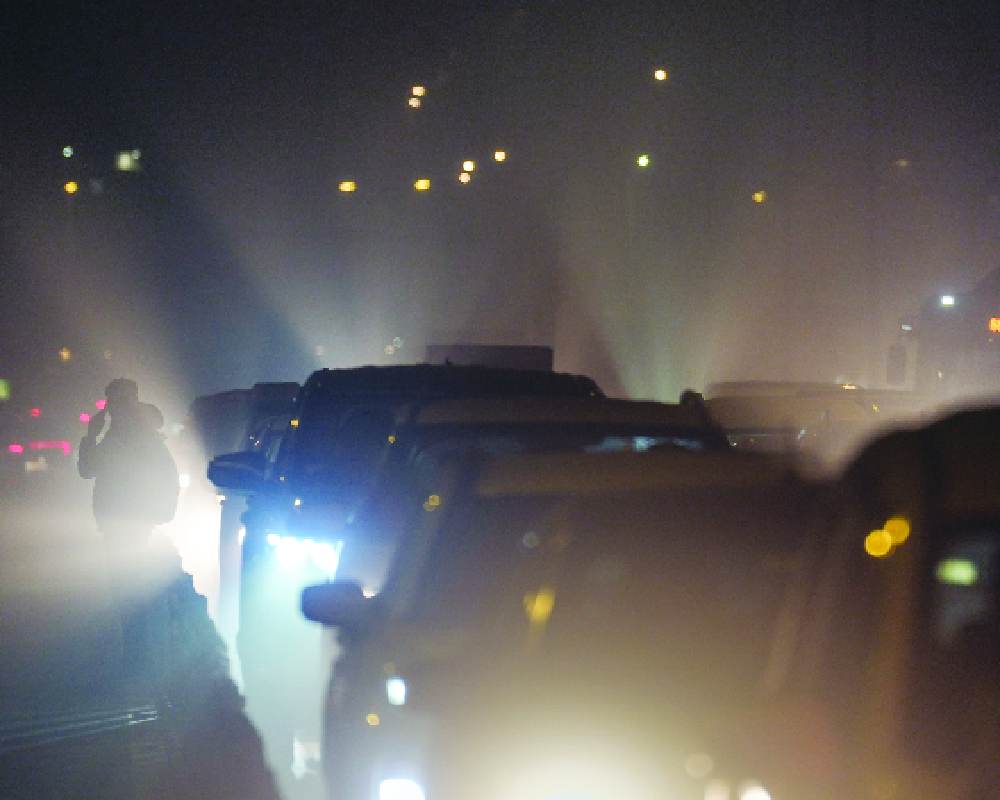
As the national Capital continues to grapple with deteriorating air quality, the Commission for Air Quality Management on Wednesday revoked the restrictions under Stage III of the Graded Response Action Plan (GRAP) in Delhi-NCR.
Notably, Delhi’s Air Quality Index (AQI) remained in the ‘very poor’ category for the 13th consecutive day, with the city recording an AQI of 327 on Wednesday, compared to 352 on Tuesday and 382 on Monday and forecasts by the India Meteorological Department (IMD) and Indian Institute of Tropical Meteorology (IITM) suggest that the air will remain in the “very poor” category.
“With the withdrawal of the Stage-3 measures, the 50 per cent work-from-home system mandated for offices has been discontinued and the hybrid mode of classes being followed by schools has also been revoked, Delhi Environment Minister Manjinder Singh Sirsa said in a post on X. Measures under GRAP Stage-2 will now be applicable across the city, he added.
However, the CAQM said actions under Stage-1 and Stage-2 of the modified GRAP, notified on November 21, will continue and be strictly monitored across the National Capital Region (NCR) to ensure that the pollution levels do not deteriorate again.
“In view of the improved conditions, the Sub-Committee on the Graded Response Action Plan (GRAP) has decided to withdraw its 11 November 2025 order enforcing Stage III, which applies to the ‘severe’ air quality category. The withdrawal comes into effect immediately.
However, the panel has made it clear that construction and demolition sites that were previously issued closure notices for violations will not be allowed to resume work unless they receive a specific order from the Commission permitting them to do so.
Measures under GRAP Stage I and Stage II will remain in place as per the revised guidelines issued on 21 November 2025. All agencies across the National Capital Region have been directed to strictly implement these actions, monitor compliance, and ensure that air quality does not slip back into the ‘severe’ or ‘severe+’ categories. Authorities have also been asked to intensify enforcement under Stage I and II, maintaining close vigilance across the region.
The CAQM’s order said the Sub-Committee on the GRAP reviewed the air quality situation and noted the recent improvement, leading to the withdrawal of the November 11 directions that had triggered the Stage-3 measures.
Officials emphasised that although Stage III restrictions have been revoked, the winter season remains challenging due to unfavourable weather conditions. The Stage-3 restrictions include a ban on non-essential construction and demolition work and stone crushing and mining activities. BS-III petrol and BS-IV diesel four-wheelers are restricted in Delhi, Gurugram, Faridabad, Ghaziabad and Gautam Buddh Nagar. Stage 3 also entails a ban on older diesel goods vehicles in Delhi, while schools up to Class 5 shift to a hybrid mode and offices may operate with 50 per cent staff in Delhi-NCR.
Meanwhile, the Central Pollution Control Board’s (CPCB) Sameer app, which displays real-time readings from monitoring stations across Delhi, had not updated data till 5 pm on Wednesday. On Tuesday, only one station — Rohini — recorded the air quality in the “severe” category with an AQI of 401. On Monday, 15 stations were in the “severe” range. The Decision Support System (DSS) of the Indian Institute of Tropical Meteorology in Pune estimated that vehicular emissions contributed 21.6 per cent to Delhi’s pollution on Wednesday — the highest among all sources — while stubble burning accounted for 0.8 per cent.
For Thursday, these contributions are projected at 19.5 per cent and 0.7 per cent, respectively.
With Delhi’s air quality slipping deep into the “very poor” and “severe” categories this winter, doctors have stressed the need for regular diagnostic screening to detect early signs of pollution-linked health deterioration, especially among smokers, asthma patients, children and people with pre-existing cardiac or respiratory conditions.