Every Generation Gets Its Own Battle
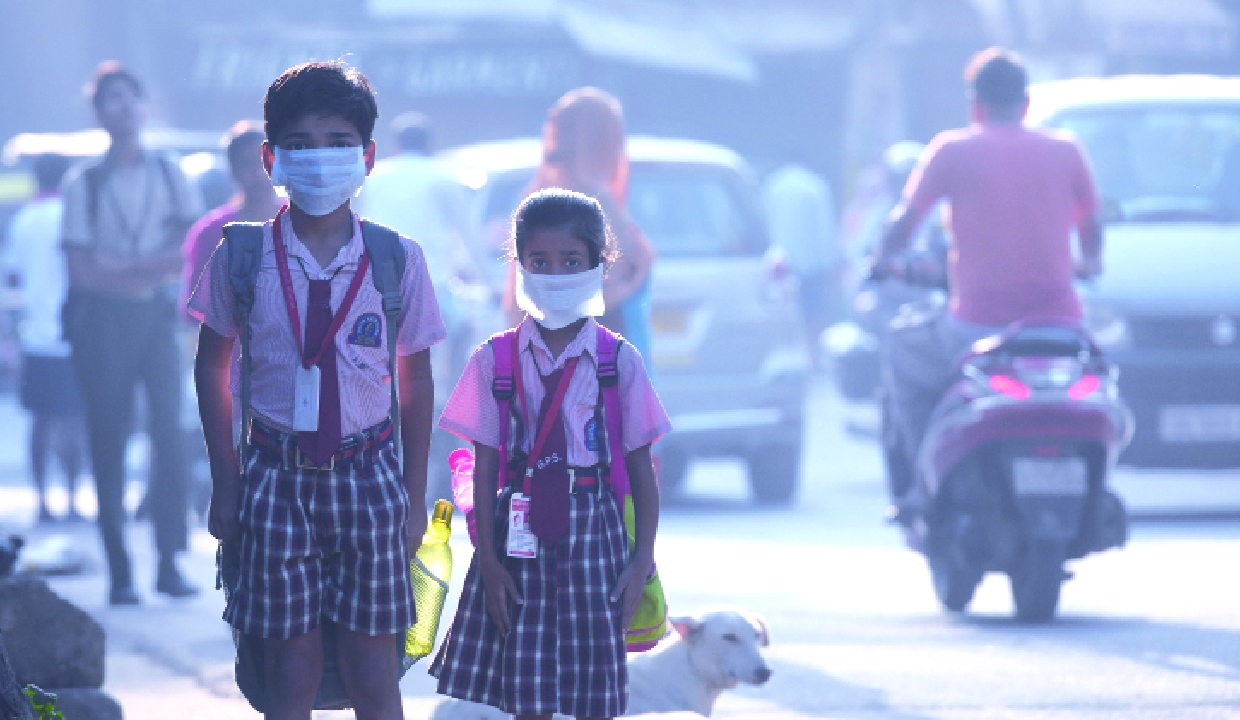
Our grandparents were killed by the water they drank; we are being killed by the air we breathe. The problem changes each generation — what solves it never does. And the first quality any generation needs is gratitude, because none of us reached the starting line unaided. There is a comforting myth that some earlier Indian generation had it easy. Examine any of them and it collapses.
The generation of 1942 faced a problem no textbook could solve: the country was not its own. The generation that inherited freedom was handed an almost empty house — life expectancy of about 32 years, roughly 145 of every 1,000 babies dead before their first birthday, one Indian in eight literate. Imagine graduating into that country at twenty-two, and then building the dams, steel plants, the IITs and AIIMS on small salaries and smaller meals, halving the death rate within two decades.
Those after them got four wars, oil shocks, ration queues and an eight-year wait for a telephone — then 1991, when reserves fell to a few weeks and national gold was pledged abroad. They held the country together and then opened it up; the next generation met global competition and turned what looked like an invasion into the IT boom.
The rule is unbroken: no generation got a soft landing, and none could use its predecessor’s toolkit. Satyagraha could not build a steel plant. Nehruvian planning could not survive 1991. The baton has passed again.
The deadline, not the dividend
India has around 367 million young people, the largest youth cohort in history. This is called a demographic dividend; it is more accurately a deadline - the State of Working India 2026 report warns we are nearing its peak while graduate unemployment stays high and job creation lags behind.
The paradox is inverted from 1947. Then the scarce thing was education; today it is the bridge between education and earning. The young are about 83 per cent of India’s unemployed, and fewer than seven per cent of male graduates found permanent salaried work within a year of finishing. Between 2014 and 2022, some 22 crore applications chased roughly 7.2 lakh central government posts — three hundred aspirants a seat. And artificial intelligence now presses on the entry point itself: the routine junior work that once taught us our trades is being absorbed by software, so the bottom rung is shaking.
The battle that moved inside the body
Nowhere is the shift clearer than in what Indians die of. The 1947 generation fought an enemy from outside — a mosquito, a contaminated well — and won decisively: smallpox went by 1977, polio by 2014, infant mortality fell from 145 per 1,000 to 27, life expectancy more than doubled.
This generation’s enemy does not invade. It is invited. The ICMR-INDIAB study found 101 million Indians living with diabetes and 136 million more pre-diabetic; hypertension affects 315 million. Non-communicable diseases now cause roughly two-thirds of all deaths — the near-exact inverse of 1947 — and they arrive early: in the West about 23 per cent of cardiac deaths occur before seventy; in India, 52 per cent.
Add the wound our grandparents had no word for: 1,71,418 suicides in 2023, some 41 per cent of them under thirty. And the old war is unfinished — a third of Indian children remain stunted in the same country where a third of adult women are obese. They fell ill from what they could not get; we fall ill from what we cannot stop consuming.
The air we cannot boil
But the largest battle is not in the body at all. It is in the environment around it, and it dwarfs the rest, because every other ambition assumes a habitable country to pursue it in.
See how completely the terms have changed. Our grandparents were killed by what they drank: cholera came with every monsoon, and diarrhoeal disease was among the great killers of Indian children. That war has largely been won by plumbing. When the Jal Jeevan Mission began in 2019, only 3.23 crore rural households — 17 per cent — had a tap; by early 2026 it was around 15.8 crore, over 81 per cent, with 2.7 lakh villages certified Har Ghar Jal.
And yet the enemy simply changed medium - from the water we drank to the air we breathe, and there is no equivalent of boiling it. All of India’s 1.4 billion citizens breathe air exceeding the WHO’s PM2.5 guideline.
The Lancet Countdown puts deaths from man-made particulate pollution at 1.72 million in 2022 alone, costing near 9.5 per cent of GDP, and the Air Quality Life Index calculates it shortens the average Indian life by about 3.5 years — twice the toll of malnutrition and five times that of unsafe water. We are surrendering a portion of the very lifespan the last generation fought to win. Nor is the water story finished: NITI Aayog warns more than half of India’s monitored wells are declining. We have solved distribution while depleting the source.
This is the defining difference. Illness of the body answers to personal discipline. Environmental degradation does not — no individual can boil the air, recharge an aquifer or cool a city alone. It is the first challenge that yields neither to a government programme by itself nor to private virtue by itself. It needs both, sustained for decades, by a generation that will not see the full benefit — exactly what every generation before us managed to do.
The debt that comes before the battle
Before any tactic or principle, something is owed — and it is the single most important quality a generation can possess.
The freedom to write this sentence was bought by people who went to jail for it, and by some who did not come back. The forty additional years the average Indian now lives were paid for by a generation that ate less so dams and hospitals could be built. The literacy that lets a young Indian compete for a global job was often funded by grandparents who could not read a line themselves. That we now worry about obesity rather than famine is a monument to somebody else’s hunger.
This is not sentiment but accurate accounting. Every generation begins several kilometres ahead of where the last one started, and nobody arrives at that line by their own merit. It matters practically too. A generation that believes it invented itself turns brittle: it reads difficulty as injustice and treats those who built the foundations as obstacles rather than elders. A generation that knows what it was handed understands that a hard problem is not a punishment but a continuation. And since our grandparents built for people they would never meet, the debt cannot be settled by thanking them — only by paying it forward.
What has never changed
None of this justifies despair. Employability has risen nearly ten points in four years, and India holds roughly 16 per cent of the world’s AI talent. The average path is getting harder while the prepared path is getting better - which side a young Indian land on is, uncomfortably often, a choice rather than a fate.
Beneath every tactic sit five qualities that have outlived every transition
Gratitude, first and largest, because it orders all the others. It converts entitlement into obligation, resentment into resolve, inheritance into stewardship. A person without it works only for himself — and stops working the moment it stops paying.
Hard work. Angela Duckworth’s West Point studies found a cadet’s grit predicted survival through the harshest training better than intelligence, leadership rating or fitness. Talent is common; persistence is rare, and outlasts it.
Character. Where competent work can be generated on demand, trustworthiness becomes the scarcest thing in the market. Skill opens the door; character decides whether you are invited back.
Focus. In an age engineered to fragment attention, holding one hard problem for one uninterrupted hour is close to a competitive advantage — precisely because it has become rare.
Faith. Karmanye vadhikaraste — the right is to the action, never to its fruit. Faith steadies a person through the interval between work and result, and stops success curdling into arrogance.
The generation of 1947 did not know India would survive as a democracy; the reformers of 1991 did not know their gamble would pay. They worked in the dark with clean hands, and history was written behind them rather than in front of them. Everything we argue about today — the jobs, the machines, the air itself — we argue about standing on ground they cleared. No generation is consulted about the difficulty of its challenge. It is asked only what it intends to do about it — and whether it was worth what the last one paid.
Sources: Azim Premji University, State of Working India 2026; ILO-IHD India Employment Report; ICMR-INDIAB (Lancet Diabetes & Endocrinology, 2023); NFHS-6 (2023-24); NCRB; Lancet Countdown (2025); Air Quality Life Index (2025); Jal Jeevan Mission data (2026); NITI Aayog; Duckworth et al. (2007).
The writer is an MLA from Sarojini Nagar, Lucknow and former Joint Director of Enforcement Directorate; Views presented are personal.