Digital India plugged welfare leakages: PM
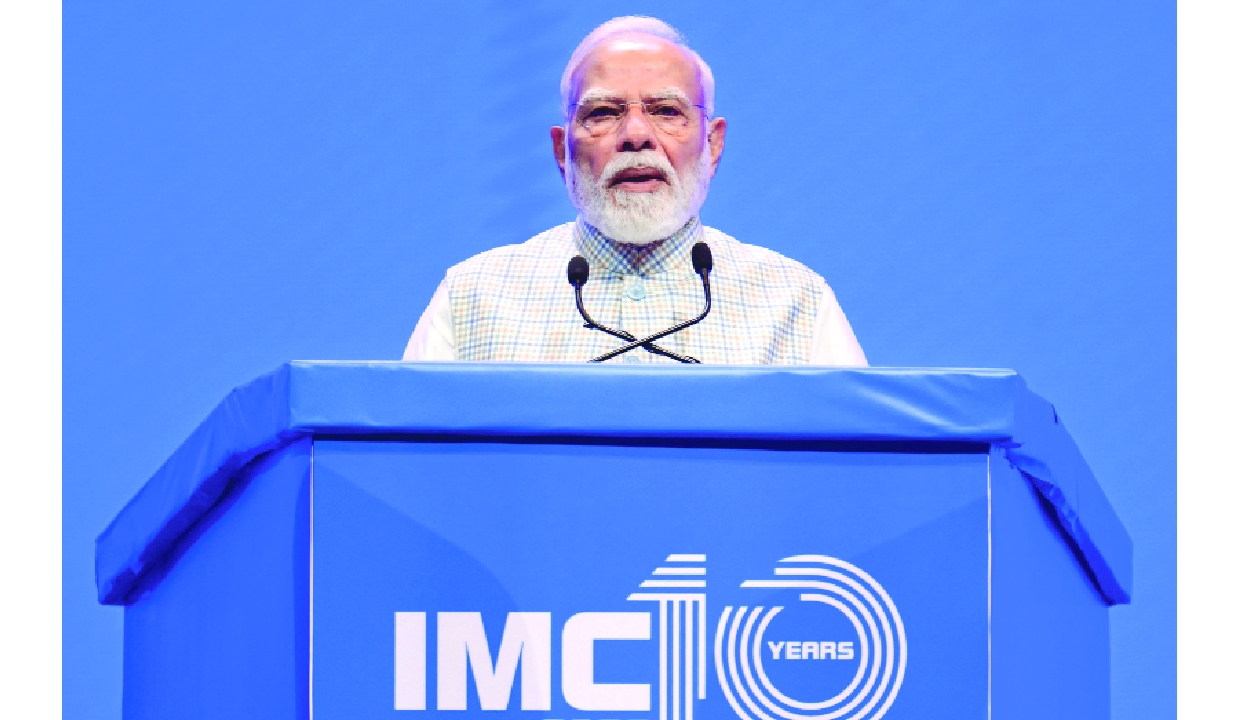
Vowing to continue his fight against “wrong practices” for the good of people in need, Prime Minister Narendra Modi on Thursday said India’s digital governance push has helped plug leakages in Government welfare schemes, with nearly Rs 5 lakh crore saved from going into “wrong hands,” thanks to direct benefit transfers.
Highlighting this achievement, he said nearly Rs 50 lakh crore had been transferred directly to beneficiaries’ bank accounts through the Direct Benefit Transfer (DBT), helping ensure that Government aid reached its intended recipients.
Making these assertions at the inaugural session of the Indian Mobile Congress, the Prime Minister also called for a global framework to tackle cross-border cyber frauds and the growing threat of deep fakes.
He urged Governments, technology companies, telecom operators, and financial institutions to come together to prevent such frauds before they reach the people. He said India has gained considerable experience in tackling cyber frauds and is ready to share its learnings with the world.
As regards direct benefit transfers using technology, Modi said, “And through this, nearly 5 lakh crore rupees...this is not a small number...5 lakh crore rupees have been saved from going into the wrong hands. Now tell me, those whose ill-gotten income has stopped, will they love Modi? Did I do the right thing? Should it be done or not? Should all these wrong practices be stopped? The Prime Minister stressed, “No matter how much they shout or scream, I am determined to get it done,” he said.
He observed that had the old system prevailed, Rs 5 lakh crore of the Government would have gone into leakages, filling the pockets of such people. “Modi has stopped this,” he said, adding that the money now reaches rightful beneficiaries and is used for the right causes.
Under the PM-KISAN Samman Nidhi, the PM said more than Rs 4 lakh crore has been deposited into farmers’ bank accounts. The amount is disbursed every four months, and farmers receive the message on their mobile phones, he said.
The prime minister also said India has moved from being a consumer to a creator in the telecom sector and is advancing toward designing products and owning technology and intellectual property in the country.
He said the ‘Reform Express’ was moving rapidly in the telecom sector, modernising decades-old laws and creating a modern regulatory framework through the Telecommunications Act.
On cross-border cyber fraud, Modi warned that such crimes do not respect borders and asserted that technology scales only when it earns trust.
Highlighting the cross-border nature of cybercrimes, he said a person sitting in one country, with the help of another country, can commit a crime in a third country.
“We are also seeing what a big challenge deepfakes have become,” Modi said, adding that countries need to work together on a global framework to address such emerging threats.
“Therefore, it is necessary that we work on a global framework for this. Governments, technology companies, telecom operators, and financial institutions will all need to connect to this framework. I urge the GSMA and telecom operators across the world: come, let us create a global mechanism that can stop such fraud before it reaches the people,” Modi said.
Industry body GSMA represents mobile network operators and companies across the global ecosystem.
Modi said strengthening the security framework around telecom and digital technologies was equally crucial for their rapid expansion, with phone and network security becoming priorities.
Communications Minister Jyotiraditya Scindia, Bharti Group Chairman Sunil Bharti Mittal, Reliance Jio Infocomm Chairman Akash Ambani and Aditya Birla Group Chairman Kumar Mangalam Birla were among those present at the inaugural session of IMC 2026.
Organised jointly by the Department of Telecommunications (DoT) and the Cellular Operators Association of India (COAI), IMC 2026 centres on the theme ‘Scale Without Boundaries’, highlighting India’s growing mettle in digital innovation, next-generation connectivity and technology-led growth.
The event focuses on next-generation digital infrastructure, technology-led economic growth, and inclusive digital access and secure ecosystems. It brings together global technology leaders, policymakers, industry experts, startups, investors and innovators to discuss emerging opportunities across the digital ecosystem.