Delhi riots case: Court acquits 13, cites doubts over key witness
A Delhi court has acquitted 13 people accused in a 2020 northeast Delhi riots case, saying the testimony of a key prosecution witness was under a “shadow of doubt” and could not be safely relied upon.
Additional Sessions Judge Parveen Singh also found the CCTV footage used to identify the accused too dark, grainy and unclear to establish their identities.
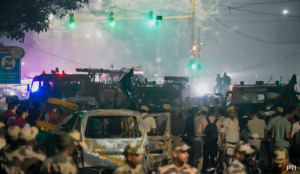
The case relates to an alleged attack on Raman Chauhan in the New Usmanpur police station area on February 25, 2020, during the communal violence in northeast Delhi.
Chauhan told the court that he could not identify any of the rioters who had allegedly attacked him.
The prosecution subsequently relied on another witness, who identified two of the accused from CCTV footage. However, the court noted that the witness had initially told investigators that he had not seen the incident but later appeared before the court as an eyewitness.
The court said this material change in his account raised serious doubts about his testimony.
“Considering the fact that this witness had suddenly become an eyewitness” and that his testimony was under a “shadow of doubt”, it would be unsafe to rely on it, the court said.
The court also examined the CCTV footage relied upon by the prosecution and found it inadequate for identification. The footage was black-and-white, dark and grainy, while the Forensic Science Laboratory had been unable to give an opinion on facial identification because of its poor pixel resolution.
The 13 accused faced charges including rioting, rioting armed with deadly weapons, attempt to murder, criminal conspiracy and disobedience of an order promulgated by a public servant.
The court also rejected the prosecution's claim of criminal conspiracy, observing that the recovery of weapons by itself could not establish that a conspiracy had taken place. It noted that there was no evidence showing when, where or how the alleged conspiracy was entered into or who had participated in it.
The court further found that the prosecution had failed to establish the mandatory procedure for proclamation proceedings against several accused who were also charged under Section 174A of the IPC.
“In view of the above discussion, all the accused are accordingly acquitted of all the charges framed against them,” the court said in its recent order.