Delhi HC asks Centre to consider always-on body cameras for police during protests
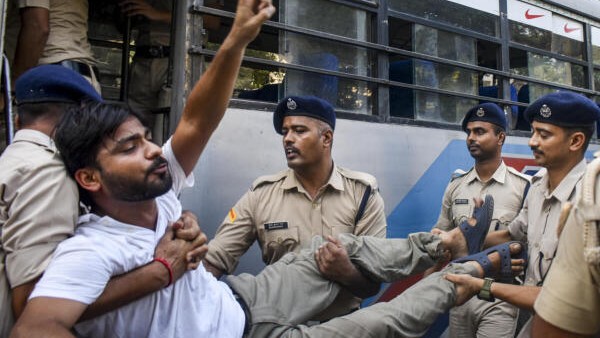
The Delhi High Court on Wednesday asked the Centre to consider a representation seeking mandatory "always-on" body-worn cameras for police and Rapid Action Force personnel deployed for crowd-control and protest-management duties.
A bench of Acting Chief Justice Nitin Wasudeo Sambre and Justice Arun Bhardwaj disposed of a public interest litigation (PIL) and directed the government to treat it as a representation and communicate its decision to the petitioner within six months.
The court passed the order after Additional Solicitor General Chetan Sharma, appearing for the Centre, said the authorities could treat the petition as a representation and communicate their decision within the stipulated period.
The bench noted that the use of body-worn cameras by police could be inferred from tenders issued by authorities as well as their use by traffic police, but observed that an applicable standard operating procedure (SOP) did not appear to be in place.
The PIL, filed by advocate Chahat Raghav, sought an expert committee to formulate a binding SOP making continuous use of body-worn cameras mandatory for every Delhi Police and RAF personnel deployed for crowd control, protest management or dispersal, from the start of deployment until stand-down.
It also sought a comprehensive framework governing the storage, integrity, retention and evidentiary use of footage recorded by the cameras.
During the hearing, the bench asked how the absence of body-worn cameras affected the rights of the public.
Senior advocate Akhil Sibal, appearing for the petitioner, said protests involving violence often resulted in competing allegations about who had used force and whether excessive force had been deployed by police.
He said a system was needed to establish accountability.
Sibal also submitted that police officials were already using cameras, but their use was "very sporadic".
"We need a system so that the allegations are not left to private persons who are videographing," he said.
Sharma told the court that guidelines for organising protests were already in place and included provisions relating to videography.
The petition was filed against the backdrop of the July protests at Jantar Mantar involving the Cockroach Janta Party and climate activist Sonam Wangchuk.
According to the plea, the use of force by Delhi Police and RAF personnel against student protesters during the protests was documented largely through unofficial mobile-phone footage recorded by bystanders.
The plea said allegations of excessive use of force by police were accompanied by allegations of stone-pelting, vandalism and attacks on police personnel.
It argued that accountability of the police and evidence against alleged miscreants in the crowd therefore depended largely on citizen-recorded footage and a few fixed cameras installed at the protest site.
The court's direction comes amid the broader debate over the use of body-worn cameras as a means of documenting police conduct and crowd activity during protests.