Defections or new device of power play?
Defections have been synonymous with the politics of Aaya Ram and Gaya Ram. But the recent spate in defections seem to be a ‘method in madness’— in the game of power play. The insatiable lure of lucre and office behind defections was sought to be curbed by the 52nd and 91st Constitution Amendments, but defections continue unabated.
In fact, the pejorative of Aaya Rams and Gaya Rams has become a thing of the past. In the new normal, defectors claim to be the rebellious knights-at-arms of the republic. The anti defection law envisages disqualification of a legislator if he voluntarily gives up membership of his political party or votes or abstains from voting in the legislature in violation of the party directive. It also provides that disqualification on ground of defections will not apply if two-thirds of the legislators split in a legislature party. This salutary provision of the law has been grossly abused overtime.
The anti defection law, enshrined in the Tenth Schedule to the Constitution, provides that if any question of disqualification arises on ground of defection or any claim arises related to merger of a political party or formation of a new political party after a split, it shall be decided by the Speaker, (or the Chairman, as the case may be) whose decision shall be final. Interestingly, the law as enacted, barred jurisdiction of courts. But, later, thankfully, the Supreme Court in Kihoto Hollohon v. Zachillu and others (1992) declared that the decisions of the presiding officers shall be subject to judicial review, which is an integral part of the basic structure doctrine.
The most recent case of whole sale defection or split is of the Rajya Sabha members of Aam Aadmi Party, who defected and merged with the BJP Legislature Party. The Chairman Rajya Sabha approved the merger without much hassle as the defecting group constituted clear two-thirds of Aam Aadmi Legislature party in the Rajya Sabha. However, legal luminaries continue to debate the merger.
Some describe the merger “unconstitutional”. They opine that the anti defection law permits merger only if the party is merged first, and “anyone cannot simply merge on their own.”
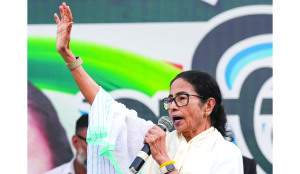
Notably, after recognition of the said split, there is a spurt in defections led by the MPs of the TMC and Shiv Sena Uddhav (UBT) in the Lok Sabha. Out of 29 MPs of TMC, 20 MPs have joined the National Citizens Party of India, (NCPI) a registered but unrecognised obscure Political party. Also, there has been a revolt in the TMC West Bengal Legislative Assembly as 58 MLAs, out of 80, have formed a separate block and its leader has been recognised as LoP by the Assembly Speaker with great despatch. The decision stands challenged in the Kolkatta High Court on the ground that it’s not a case of merger.
Also, 6 of the 9 MPs of Shiv Sena (UTB) are said to have crossed over to Eknath Shinde led- Shiv Sena. The rebel MPs of both have met the Speaker Lok Sabha and sought recognition for their merger on the ground that they constitute two-thirds of their respective legislature party. Per contra, both the original parties have urged the Speaker to disqualify the rebel MPs on the ground that such a merger can be recognised if two-thirds of the entire political party merges with another political party.
Such a spate in defections is a matter of grave concern for everyone passionate about our democracy. It’s speculated whether these defections reflect lack of ideological commitment; sheer pursuit for naked power; lack of intra party democracy; or, they are part of a larger design? Are we really heading for the beginning of end of multi party democracy? Is it conceivable ‘to watch and control the Govt., to throw the light of publicity on its acts’, without effective opposition?
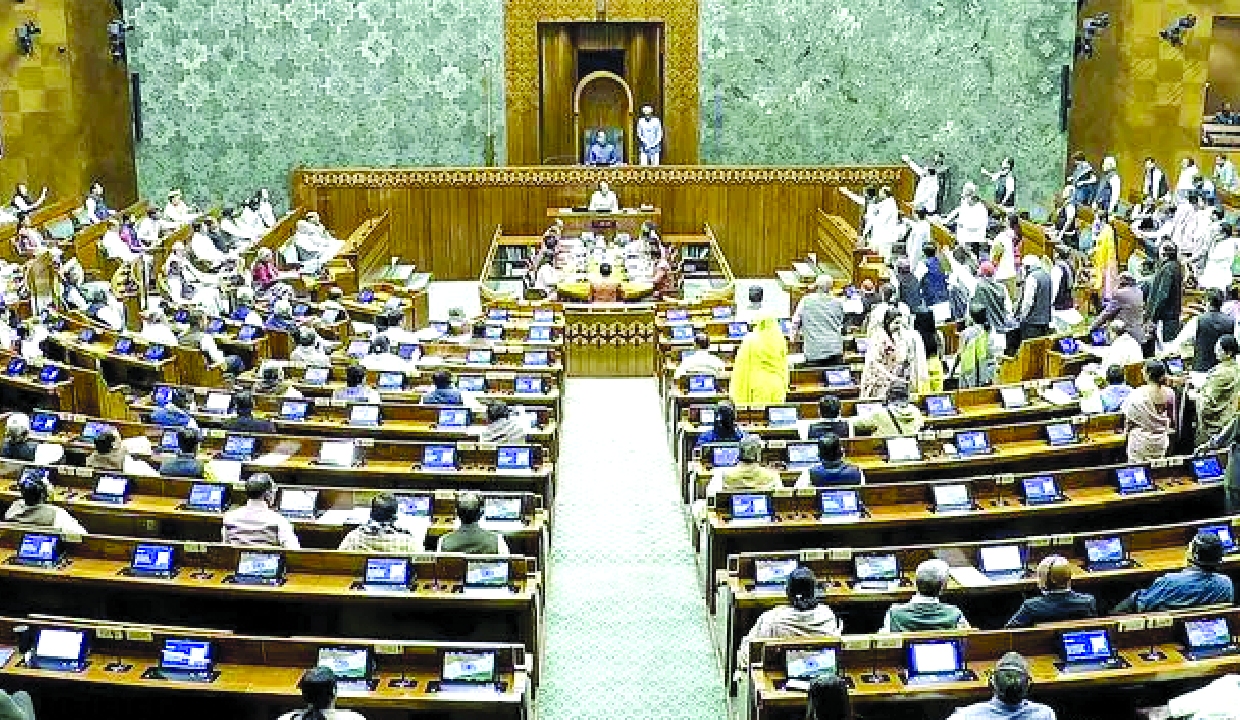
In this view of the matter, the anti defection law casts a great responsibility on the Speaker, who, as a high Constitutional Tribunal, has to decide the petitions before him. The petitions regarding recognition of mergers qua disqualification of the defecting MPs are in the High Court of the Hon’ble Speaker, Lok Sabha. The Tenth Schedule does not impose any time limit on the Speaker, although in Meghachandra Singh v. Speaker Manipur Legislative Assembly (SC 2020), the SC ruled that the Manipur Legislative Assembly must decide the case within a reasonable time frame, preferably within 3 months. But that was a case specific and not a general direction.
It is hoped that the Hon’ble Speaker will decide the cases in right earnest, according to the Rules framed by the House -Disqualification on ground of defection Rules, 1995, which unambiguously lay down the procedure for entertaining petitions for disqualification on ground of defection. Every petition thereof is verified in the manner laid down in the Code of Civil Procedure, 1908. If satisfied about the bonafide split, and after assuring himself that the splits have occurred without any external coercion or inducement, the Speaker may, if not found otherwise, approve the merger, bringing down the curtain.
However, there is apprehension that the recognition of such mergers is bound to give further fillip and stimulus to the politics of Aaya Ram and Gaya Ram, and it would negate the very objective of the anti- defection law. But under the law as it stands today, the Speaker has little option but to decide it according to the provisions of the Tenth Schedule. Its pertinent to note that para 4 of the Tenth Schedule allows valid merger into another political party, but bars formation of a separate party. The defectors therefore choose the escape route of merger with an existing party as did the defectors of Aam Aadmi Party in Rajya Sabha with the BJP and, so is the case of the MPs of TMC and the Shiv Sena (UBT), who have merged with NCPI and Eknath led Shiv Sena, respectively.
In Subhash Desai v. Governor of Maharashtra (2023), the SC held that Parliament has recognised the independent existence of a legislature party and that political party and legislature party cannot be conflated. The SC held that had Uddhav Thackeray refrained from resigning, they would have considered the grant of the remedy of reinstating his Government. The splinter group led by Eknath Shinde, though commanding two-thirds majority in the Assembly, had not joined any political party but formed a separate party which is not protected by para 4, Tenth Schedule but they escaped disqualification due to resignation by Uddhav Thackeray, said the Supreme Court. So, the law is settled that if there is a split in the legislature party, and the splintered group, constituting two-thirds, merges with any party, they escape disqualification.
Nevertheless, the allegations of horse trading, betrayal of electoral trust, political uncertainty and the resultant weakening of opposition, remain unaddressed.
The gross inadequacies, the flaws and absurdities in the anti defection law can only be remedied if the Anti defection law is amended to provide that the defecting legislators shall lose their membership and shall stand debarred from contesting election for five years, at least.
The author is Lawyer and former
Secretary, Lok Sabha
Leave a Comment
Comments (1)
The author has chronicled the Indian Political Space vitiated by recent spate of defection by law makers of our times both in Parliament and State Legislatures of firstly Maharashtra followed by West Bengal shaking the faith of Voters who had sent them to there to work for them . The author has also outlined the sweep of Tenth Schedule, the judicial boundaries and gray area (of the body here the Tenth Schedule )to be operated upon by Surgeon Saab for that Parliament has to step in so that the cancer of defection is cured ab initio . There may be many reasons behind these that has already been detailed out by the author however these have tarnished our Parliament's and State Legislatures image badly in the eyes of men in Uniform with guns on their hands at our borders far away from their loved ones and even those working for their mother land selflessly abroad.