Confidence is India’s new neighbourhood doctrine
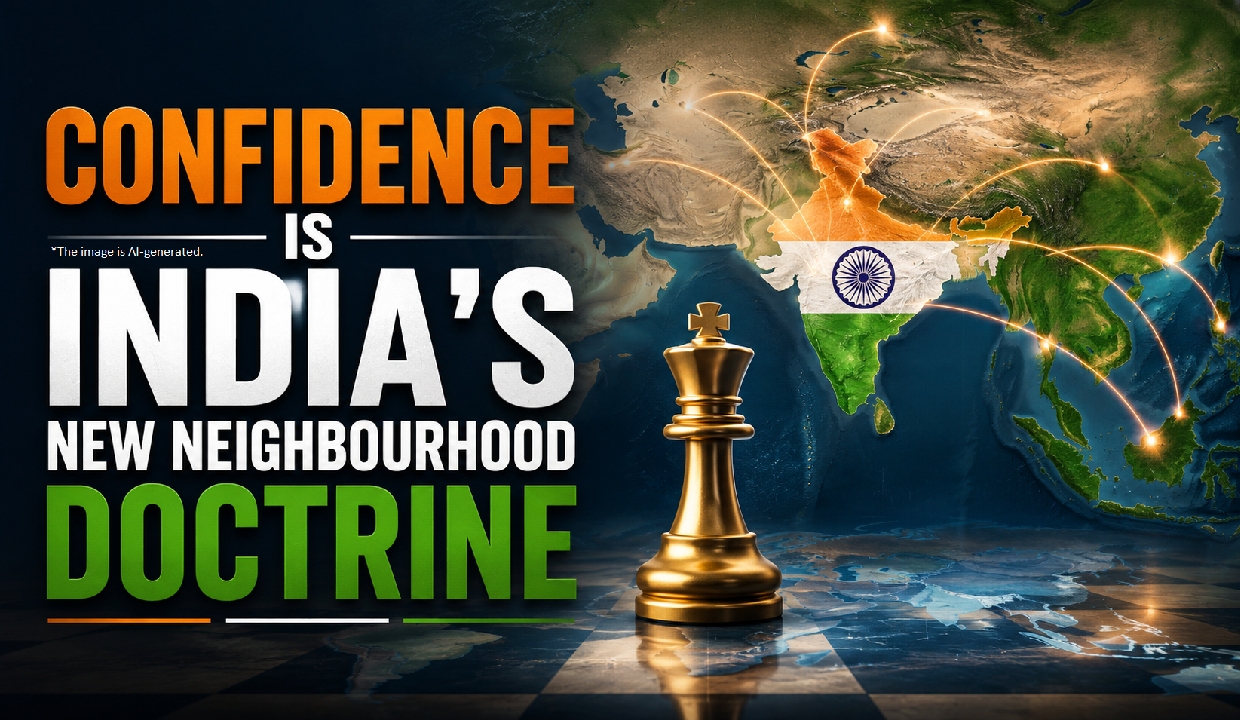
As India navigates an uncertain China, Bangladesh and an strategic Pakistan, the real question is if New Delhi can turn confident rhetoric into a neighbourhood policy
Speaking at the Economic Times World Leaders Forum on Saturday, External Affairs Minister S Jaishankar offered a phrase that will likely outlive the event itself: India, he said, must engage Beijing "from a position of confidence." It was meant to describe China policy alone, but by the time he had finished fielding questions on Bangladesh and Pakistan, it had become something closer to a governing philosophy for India’s entire neighbourhood.
On China, the confidence has some substance behind it. Jaishankar was candid about the "particularly bad patch" between the 2020 Galwan clash and autumn 2024, and credited the border disengagement at Depsang and Demchok, followed by Modi’s Kazan meeting with Xi Jinping, for the thaw since. His formula — deal with Beijing confidently, stand India’s ground, while building the manufacturing muscle to compete rather than merely coexist — is coherent as doctrine. Whether it is coherent as fact is another matter: India still runs a yawning trade deficit with China and remains dependent on it for rare earths, APIs and electronics components that Atma Nirbhar Bharat has yet to meaningfully dislodge.
Confidence, here, is as much aspiration as description. Tellingly, he also cautioned against reading the US-China relationship as a simple "G2" — a reminder that India’s confidence is partly about not being a bystander to bigger powers. On Bangladesh, the "mutual interest" test he prescribed is the right instinct, but it is presently failing its own standard. Jaishankar declined to be drawn on Dhaka’s demand for Sheikh Hasina’s extradition, even as her August 5 virtual address from a Delhi platform has poisoned the run-up to Prime Minister Tarique Rahman’s now-uncertain visit — a visit meant to anchor ties with Bangladesh’s first elected government since 2024. New Delhi’s reluctance to hand over Hasina is defensible on its own terms. But it sits awkwardly with talk of confidence when the relationship with an elected, potentially India-friendly government hangs on a single unresolved question. Pakistan is where the doctrine faces its least examined test.
Jaishankar’s description of Pakistan as "unique" in its use of terrorism is accurate and well-worn. What is new is the company Islamabad now keeps: the Strategic Mutual Defence Agreement with Saudi Arabia, extended in August into a trilateral pact with Turkey at Mecca, complete with unresolved questions about a nuclear umbrella. A confident China policy and an unresolved Bangladesh relationship matter less if India’s western and eastern flanks both begin orbiting a Gulf-anchored security architecture it has no part in. None of this makes "confidence" the wrong vocabulary. But confidence works as diplomacy only when it is backed by demonstrated capability — industrial, military and diplomatic follow-through — not merely asserted. Jaishankar has named the right posture for a fragmenting world. Whether Rahman visits Delhi, whether Dhaka joins the Mecca pact, and whether Indian manufacturing narrows the China gap will determine whether it was substance, or simply well-chosen words.