Colombia's poorest region faces 'triple crisis' after deadly earthquake
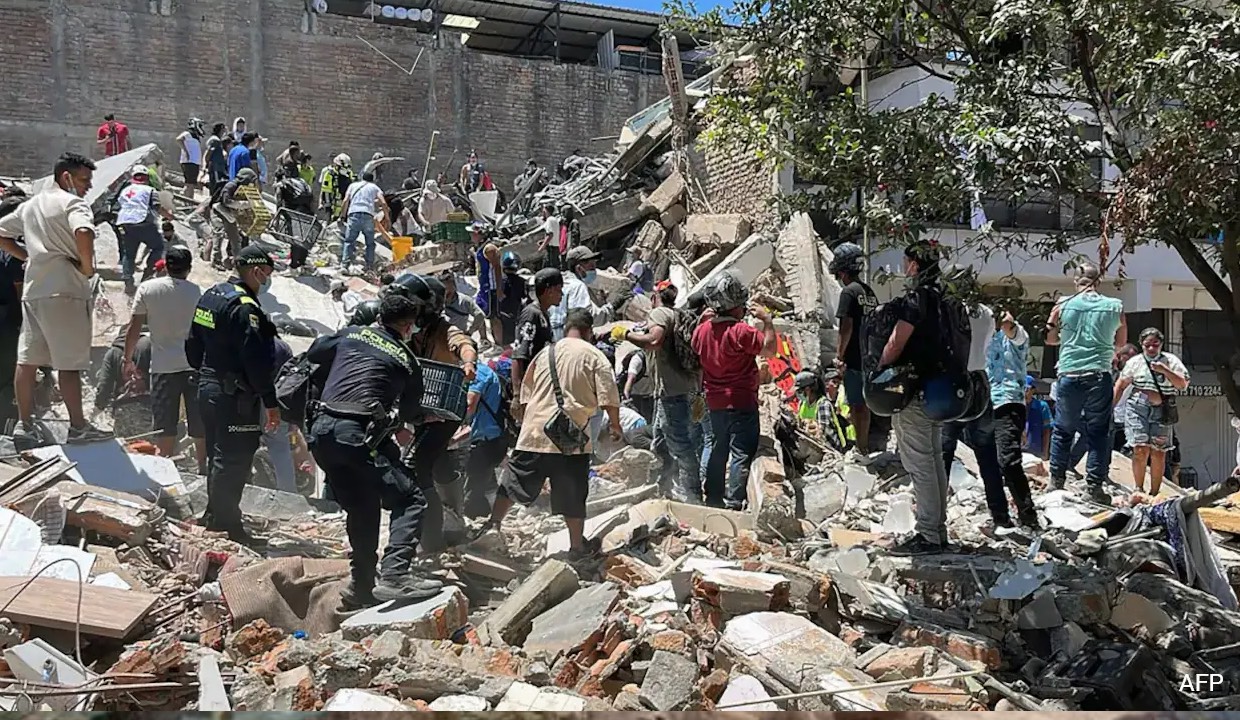
Ismael Arias was on his way to the market when the devastating magnitude 7.4 earthquake struck western Colombia last week with his home region of Chocó at the epicentre.
Leaving home early that day likely saved his life, he says- the two-storey house he had spent years building on his modest wages collapsed in the quake.
"The house is completely destroyed," said the 66-year-old maths teacher in Quibdó, the regional capital.
At least 312 people were killed in the August 10 quake, according to figures published Wednesday by the central government, with 29,000 homes destroyed.
Recovery will be especially difficult for Chocó, which was already grappling with high poverty, poor infrastructure and underfunded health and education services. According to the UN Office for the Coordination of Humanitarian Affairs, 69,000 people in Chocó — about 10% of its population, were affected or displaced by the quake.
The regional government says more than 200 schools were damaged, and poor internet access will make online learning difficult for children. With around 600,000 inhabitants, mostly Afro-Colombian or Indigenous people, Chocó has long been one of Colombia's most neglected regions.
Largely covered by mountains and rainforest, only two precarious roads connect Chocó to the rest of the country. Many towns are reachable only by plane or boat, and the rivers can be dangerous. No roads link communities along Chocó's more than 650-kilometre Pacific coastline to the interior.
In large parts of the region, rebel groups fight for control of illegal mines and drug-trafficking routes, displacing civilians or imposing lockdowns that stop villagers working their fields for days at a time.
"We are facing a triple crisis," said Luis Mora, the UN Population Fund's representative in Colombia. "You have the humanitarian crisis caused by the earthquake, now joining the under-development crisis and the crisis caused by armed conflict in this territory." The agency has been distributing hygiene kits to women affected by the earthquake and working to create safe spaces for women in shelters.
The regional capital's only public hospital is ill-equipped for the disaster
Cristian Maturana, a doctor at Quibdó's only public hospital, said the emergency room was overwhelmed with patients suffering broken bones and other injuries after the quake.
In the days that followed, 36 patients with multiple fractures were flown to a hospital in Medellín, in the neighbouring Antioquia region, because his hospital lacked the staff and equipment to treat them, Maturana said.
The hospital's only refrigerator capable of storing blood donations was also damaged by a power surge after the quake, halting transfusions. It was replaced over the weekend with a fridge donated by a group of oncologists in Bogotá.
"These have been tough days," Maturana said, adding that support from elsewhere in Colombia and abroad "has been crucial." The emergency room is currently operating at twice its capacity, with patients treated in chairs or on stretchers in hospital corridors.
Donations of antibiotics, bandages, blood pressure monitors and other equipment have helped, but the hospital still needs wheelchairs and more beds. "These seem like basic things," Maturana said. "But they are items we have long had shortages of."
Camilo Prieto, a doctor with the Colombian Environmental Movement, a humanitarian group, said his organisation brought in more than two tonnes of medical supplies last week, including electrocardiogram and ultrasound machines, flying some of the aid to remote towns by helicopter and small plane. "By land it would be very difficult," Prieto said. "But some companies and owners of private planes have given us flight hours."
The region has a history of neglect
Wiston Mosquera, the Roman Catholic bishop of the Quibdó diocese, said he hopes the quake draws attention to Chocó's structural problems, including poor healthcare facilities, the lack of roads and persistent power supply issues. "We are decades behind the rest of Colombia's regions," said Mosquera, who was born and raised in Chocó.
President Abelardo de la Espriella has visited Chocó twice since the earthquake and has promised a plan involving billions of dollars in infrastructure investment and job-creation programmes.
Chocó's unemployment rate was the highest in Colombia last year, according to DANE, the national statistics agency. The region's per capita GDP was 14.3 million Colombian pesos in 2025 — about $3,500 — a quarter of Bogotá's per capita income.
De la Espriella said he will appoint a government official to oversee Chocó's recovery and provide subsidies to families left homeless by the earthquake so they can rent new homes.
Arias, the maths teacher who lost his home, said he is sceptical of such promises given the region's history of neglect. He said he spent around $32,000 building his home, taking out bank loans, and will struggle to raise similar funds on his teacher's salary.
"Even if I am helped, I don't think I will get enough," Arias said. He and his partner are for now staying at a relative's home. "It's not the same," he said. "You don't have the freedom there that you get in your own house."