Caste returns to census after 1931
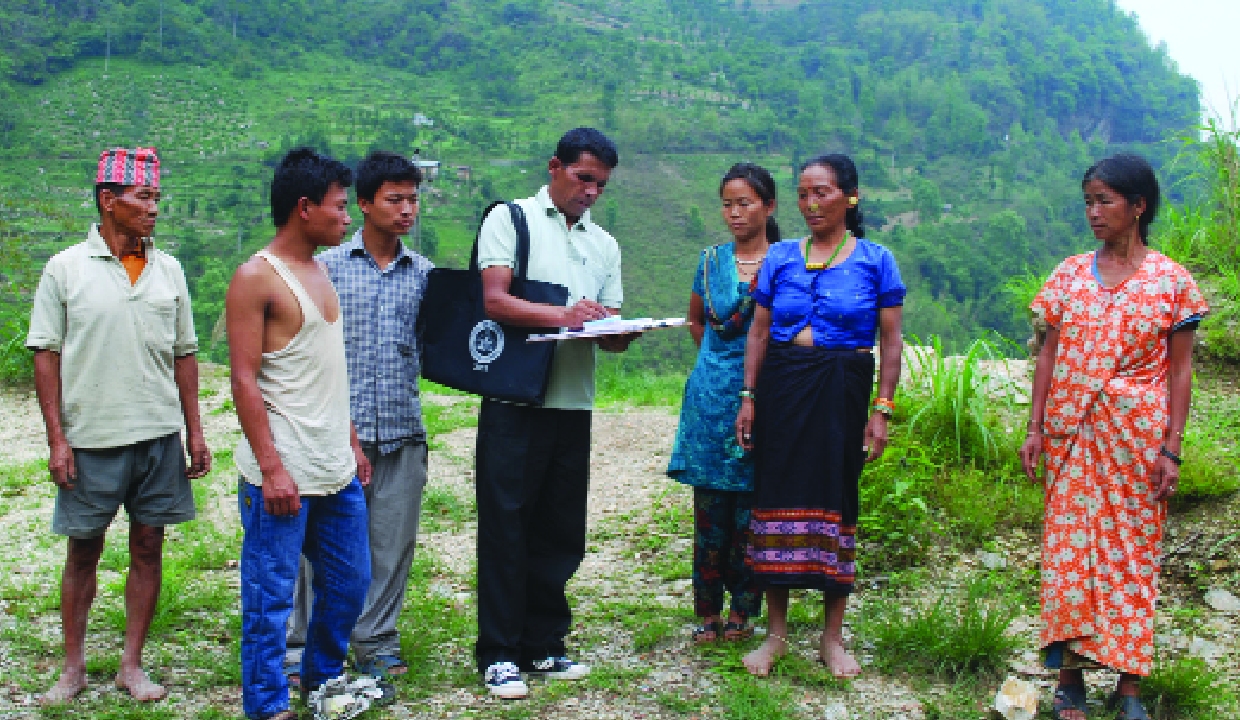
Respondents will face 40 questions covering caste, religion, education, employment, migration and household financials
The 2027 census will collect caste details, for the first time since 1931, along with information on bank accounts, Aadhaar numbers and passport numbers. This is the first time caste will be enumerated in Independent India, beyond the existing categories of Scheduled Castes and Scheduled Tribes. The decision to include caste enumeration was taken by the Cabinet Committee on Political Affairs, chaired by Prime Minister Narendra Modi, on April 30 last year.
The Office of the Registrar General of India (RGI), under the Ministry of Home Affairs, has notified a 40-question Household Schedule for the 2027 Census of India, covering parents’ details, caste, Aadhaar and passport numbers, employment status, the location where a person received the COVID19 vaccination, and the total number of bank accounts held. The questionnaire covers a broad range of demographic, social, educational and economic details. In 2011, there were 29 questions and now, the Census 2027 has 40 questions with some addition to existing questions.
“In exercise of the powers conferred by sub-section (1) of section 8 of the Census Act, 1948 (Act 37 of 1948), the Central Government hereby instructs and directs that the census officers may, within the limits of the local area for which they have been respectively appointed, ask all such questions of all persons residing within such limits, subject to the items enumerated below, for collecting information through the Household Schedule in connection with the Census of India 2027,” a notification from RGI said.
Questions also include queries on name of the person, relationship to head of family, sex, date of birth and age (in completed years), current marital status, age at marriage (in completed years), spouse name, nationality as declared, religion, father’s particulars, mother’s particulars, disability, mother tongue and other languages known, literacy and digital literacy status, status of attendance in educational institution, highest educational level attained and stream/discipline and if the person has worked any time during last year.
“For the conduct of the above Census, there shall be an option for self-enumeration from August 17 to 31 just before the start of house-to-house population enumeration,” the notification added.
Respondents will also be asked for attendance in an educational institution, highest educational level, stream, discipline, if they worked at any time during the last year, category of economic activity, occupation, nature of industry, trade or service, class of worker and if engaged in non-economic activity (for marginal, semi-marginal and non-worker).
Questions on migration will cover a person’s birthplace, place of last residence, reason for migration, duration of stay in the current village or town and permanent residential address and if they travel to their place of work will also be part of the questionnaire.
Currently married, widowed, divorced and separated women will be asked for the number of children surviving at present, the number of children in the current marriage, and the number of children born alive in the last one year.
According to a gazette notification issued earlier this month, population enumeration in Ladakh and snow-bound non-synchronous areas of Jammu and Kashmir, Himachal Pradesh and Uttarakhand, will take place from September 1 to 30. In the rest of the country, the population enumeration (PE) will begin next year.
In January, the RGI had notified 33 questions for the first phase of Census 2027, covering houselisting and housing-related details. The questionnaire included a query on whether the head of the household belonged to the SC, ST or “other” category.