
Spend an evening in almost any busy clinic and you notice something that rarely makes the news. Long after the last patient has left, doctors are still at their desks, typing. Case notes, referral letters, discharge summaries, insurance forms. The medicine finished hours ago. The paperwork did not.
This is the quiet crisis inside modern healthcare, and it is finally getting attention. Study after study shows clinicians spending a large share of their working day on documentation rather than patients. The result is burnout, shorter consultations, and a strange inversion where the people trained for years to heal spend much of their time doing data entry.
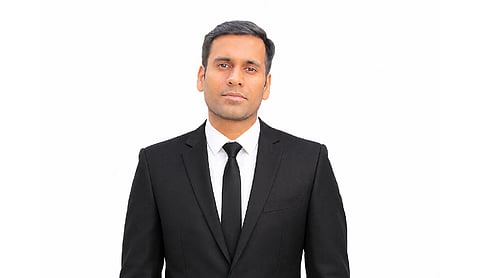
Into this gap has stepped a new class of technology, and among the Indian founders working on it is Shailendra Pathak, founder of the AI HealthTech company Nutrolis. His team has built an AI Scribe, a tool that listens to a doctor and patient in conversation and turns it into a structured, accurate clinical note the doctor simply reviews and signs.
“Healthcare does not only have a diagnosis problem, it has a workflow problem,” Pathak says. “Every minute a clinician spends typing is a minute taken away from the person in front of them. Technology should remove the paperwork, not the judgement.”
That distinction matters, and it is where much of the current debate around AI in medicine goes wrong. The headlines tend to chase the dramatic idea of machines that diagnose or predict disease. Those tools face hard questions of liability, regulation and trust, and adoption is slow.
Documentation is different. Nobody feels precious about writing the same note for the thousandth time. A tool that drafts it accurately, while leaving every clinical decision firmly with the doctor, slips into the working day without asking anyone to surrender anything that matters.
None of this would have been possible a few years ago. What changed is the arrival of language models that can follow messy, real-world conversation, accents, interruptions, half finished sentences, and turn it into clean clinical language.
Nutrolis builds on that shift, teaching its system to recognise the structure of a consultation and draft notes in the format each specialty expects. The doctor speaks naturally, the patient is actually heard rather than watched over a screen, and the record forms quietly in the background. It is a small change inside the room that adds up to a large one across a career.
Pathak is careful to frame the technology as an assistant, never a replacement. The clinician stays in control, reviews the record, and keeps full ownership of the patient relationship. What changes is the friction. Less time typing, more time listening.
The harder part, he readily admits, is trust rather than capability. An AI scribe handles the most sensitive information a person has. So the questions that decide whether it succeeds are not really about the model. They are about accuracy when it counts, patient privacy, compliance with each health system's rules, and clear human oversight built in from the start.
The bigger test is whether tools like this can fit the systems clinics already run on. A scribe that produces a flawless note but cannot place it into the hospital's records simply moves the work around. So the real engineering challenge, Pathak argues, is quiet integration: connecting to electronic health records, respecting each country's data rules, and earning the confidence of clinicians who have watched technology promise much and deliver little. Get that right, and the benefit compounds. Whether in an overstretched Indian outpatient department or a UK practice under similar strain, the same principle holds, that good software should feel almost invisible and hand time back to the people who need it most.
For India, where doctors carry some of the heaviest patient loads in the world, the promise is significant. A tool that returns even twenty minutes a day to a physician is not a small convenience. Multiplied across a system under constant strain, it is a meaningful shift in how care feels for both sides of the consultation.
The future of healthcare AI, on this view, will not be measured by how clever the algorithm is. It will be measured by something quieter and more human: whether it gives doctors back the time to be doctors again.