CAG audit exposes stark gaps in railway passenger amenities
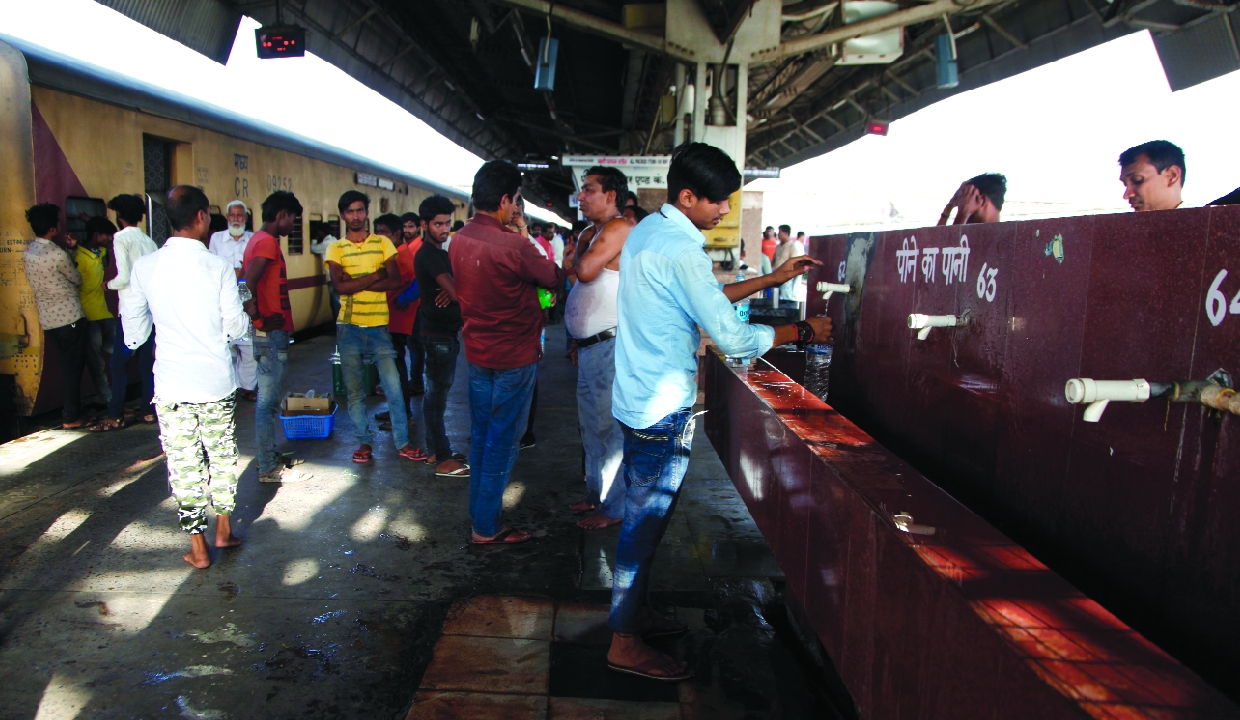
A recent report by the Comptroller and Auditor General of India (CAG) has flagged serious gaps in drinking water facilities and sanitation at Indian railway stations, including the presence of E coli bacteria in water samples from several stations. The presence of E coli is an indicator of possible faecal contamination and can signal that drinking water is not safe for consumption.
Out of 512 stations inspected, 458 stations (more than 89 per cent) were deficient in one or more Minimum Essential Amenities (MEAs), including drinking water, seating, toilets, platform shelters, fans, water coolers and signage. Even high-revenue, high-footfall Non-Suburban Group (NSG-1 to NSG-3 stations) exhibited significant shortfalls, the CAG said in its report titled Passenger amenities and sanitation at non-suburban railway stations in Indian Railways. The report was tabled in Parliament on August 12. The report also found that drinking water booths were in unhygienic condition in 128 stations and platforms were unclean in 77 stations. The presence of stray dogs was noted in 301 stations.
According to the report, water samples collected from water coolers tested positive for E coli at eight stations across four railway zones. These included Coimbatore and Palakkad Junction in Southern Railway; Hyderabad in South Central Railway; Chhatrapati Shivaji Maharaj Terminus, Bhiwandi Road, Kalyan and Lonavala in Central Railway and Madhupur in Eastern Railway.
The audit also found signs of bacterial contamination in drinking water supplied through taps on railway platforms. Water samples collected from taps at 49 stations across eight zones during 2022-23 and 56 stations across nine zones during 2023-24 showed the presence of total coliform bacteria, including E coli, the CAG report noted.
The audit stressed the need for the Indian Railways to follow prescribed protocols for inspecting water supply systems and conduct comprehensive testing of drinking water quality.
“Only 54 stations (11%) had no shortfalls,” the report notes. Of the 512 stations audited, 325 were non-Amrit Bharat stations. The Amrit Bharat Station Scheme is an ongoing initiative of the Railway Ministry, launched in 2022, to modernise over 1,300 railway stations across the country.
During joint inspection and from the earnings data of Railways, the report further observed that even the stations with very high annual earnings (above Rs 700 crore) and with heavy passenger footfall (ranging from 1.03 crore to 11.47 crore passengers annually) were not fully compliant with MEA norms. Out of 512 stations audited, 10 such high-revenue, high-footfall stations continued to exhibit deficiencies in MEAs.
Audit observed deficiencies in the provision of drinking water taps at 138 stations, wherein taps were not provided at all in four stations and were short of the prescribed norms in 134 stations.
Norms for the fans vary based on platform width. For platforms having width of 6 mts - 9 mts, one row of fans are to be provided and for platforms having width above 9 mts, two rows of fans are to be provided. However, deficiencies exist in 114 stations30 in the 6 mts - 9 mts category and in 214 stations in the above 9 mts category.
For NSG 1 to 4 category stations, the norms prescribed for provision of two water coolers per platform and for NSG 5 category station, one cooler is required to be provided on the main platform. Among 240 NSG 1 to NSG 4 category stations, 128 stations had deficiencies (6 not provided; 122 shortfall). Out of 140 NSG 5 category stations, 23 stations lacked this amenity.
Report triggers rail water reset
New Delhi: After a CAG report flagged drinking-water quality, railways ordered filtration systems at nearly 20,000 locations, tank replacements, regular testing and centralised monitoring.