Blasé Capital NARCOTICS GALORE
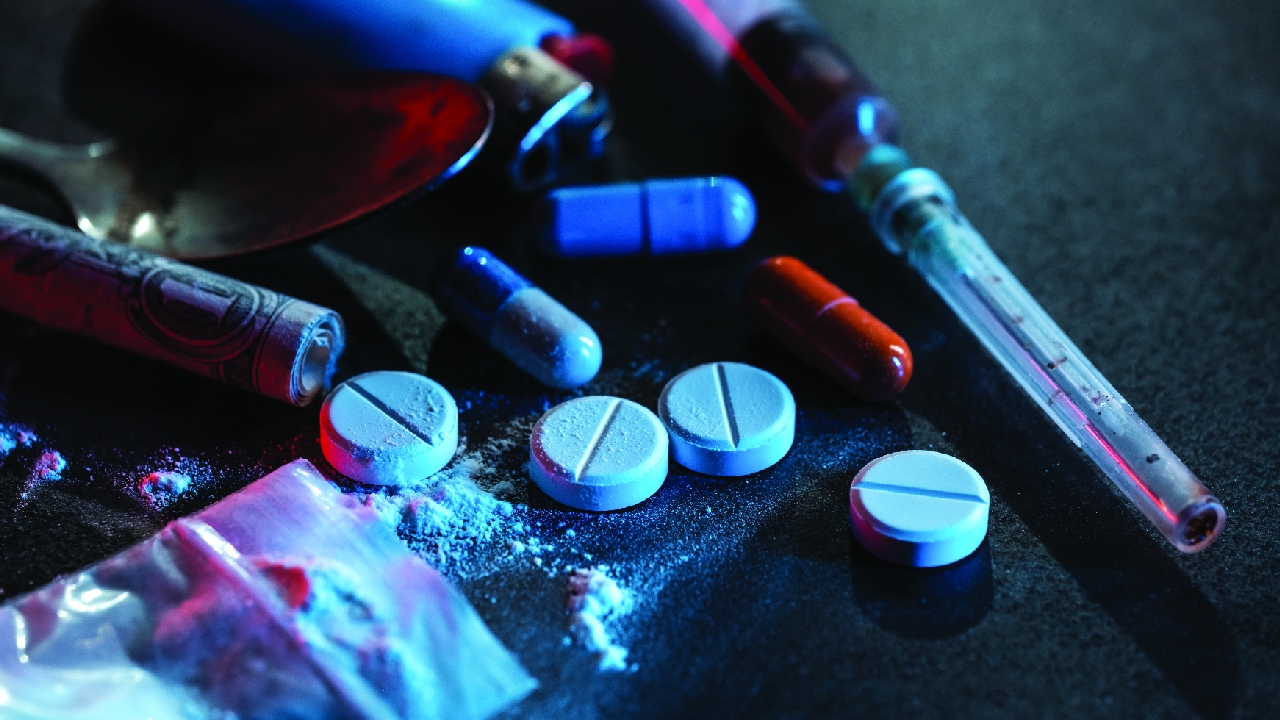
Over the past few years, India has evolved from a “transit hub” to “significant manufacturing base” for synthetic narcotics and illegal medicines. Although the nation remains a route for distribution of traditional products like heroin, it houses illegal factories that make drugs such as methamphetamine, mephedrone, and alprazolam. In 2025 and 2026, Indian investigating agencies such as Narcotics Control Bureau, Directorate of Revenue Intelligence, and Central Bureau of Narcotics have discovered, raided, and dismantled large industrial hubs that make illegal synthetic drugs in states such as Gujarat, Maharashtra, Rajasthan, West Bengal, and Madhya Pradesh. More importantly, the illicit drug makers operate under the garb of legitimate medicine production or chemical manufacturing, as they leverage the vast and growing local pharma infrastructure. The quantities of seizures have increased; methamphetamine seizures doubled in 2024, and those of mephedrone were even steeper.
Over the past decade or so, thousands of crores of rupees worth of illegal chemical narcotics were apprehended by the investigating agencies. The figure was up by more than 50 per cent to more than INR 25,000 crore in 2024 compared to the previous year. The drugs included more harmful and addictive synthetic and pharma drugs, apart from the traditional ones like cocaine and heroin. The Government has adopted a dual approach, both top-to-bottom combined with bottom-to-top ones to manage the growing menace, which has afflicted not just the richer sections, but middle-class and even lower-class sections. Anecdotal reports from north, west, and east India indicate that even the poor sections have access to the cheaper, but more dangerous and live-threatening synthetic drugs, which are mixed with chemicals in unique ways. For example, the slightly-expensive pharma tablets are mixed with extremely-cheap and easily available allergy solutions which, according to experts, provides better ‘kicks,’ but claims more lives.
Some of the seizures and operations in narcotics reveal shocking trends, and hint at the growing size of the illegal market. In a joint operation, Sagar Mantan-I, which was conducted by the Narcotics Bureau, Indian Navy, and Gujarat Police, a huge consignment of 3,300 kg of drugs, which included the traditional charas, hashish, and heroin, apart from the synthetic crystalline powdered meth, was seized from a vessel in the Indian Ocean. It was a record in terms of an offshore seizure. According to a media report, the Narcotics Bureau launched Sagar Manthan to “dismantle the large scale drug cartel activities of wanted smuggler Haji Salim, also known as ‘Lord of Drugs.’ According to officials, the operation was launched… to track down Haji Salim aka Haji Baloch, and his trafficking syndicate spread worldwide. As part of this operation, authorities seized 4,000 kg of illicit drugs linked directly to Salim’s cartel, with several Pakistani nationals arrested.”
Even in the heartland of the nation, industrial hubs have emerged as huge manufacturers, with links to worldwide distribution channels like the Haji Salim one. In Kasna Industrial Area in Noida, 95 kg of meth was hauled in solid and liquid forms. “Chemicals like acetone, sodium hydroxide, methylene chloride, ethanol premium, toluene, and others, apart from imported machinery… were found,” according to reports. As India becomes a major producer of legal medicines, and a huge exporter even to the developed world, pharma factories, both large and small, have sprouted across the country. Chemicals, as is evident from some of the seizures are easily available, both legally and illegally, and these can easily be used to make the illegal drugs in cheaper assembly and formulation units. In the past too, India was a major supplier of chemicals used to make heroin in the Pakistan-Afghanistan region. Indians have graduated from chemical suppliers to drug-makers.
Several global reports highlight the increasing role of India as a mass producer of illegal synthetic and pharma drugs. The World Drug Report (2025) “identifies the global expansion of synthetic drugs, and flags India’s growing role in the production and export of synthetic cathinones and precursors.” The International Narcotics Control Strategy Report (2025) “provides a country-by-country analysis, listing India among the major illicit drug-producing, and precursor chemical source countries for 2025-26.” There is another “detailed thematic report that specifically discusses how India’s pharma infrastructure is being exploited for ‘designer drug manufacturing.” Based on recent findings, international agencies feel that the “seizures of synthetic drugs… may soon outpace those of traditional plant-based narcotics, signalling a shift in the global drug trade. Synthetic substances are not only more potent and addictive but easier to manufacture and traffic.” They can be made in “small, concealed labs with minimal expertise. This allows traffickers to quickly adapt, shifting locations, and modifying chemical substances to evade detection.”
Some of the major centres for the manufacture of synthetic drugs are found in the coastal states of Gujarat, Andhra Pradesh, and Telangana. These are notable manufacturers of legal medicines. Massive quantities of liquid mephedrone were seized in Gujarat, which were being made in units disguised as legitimate chemical factories. According to investigations, “kitchen labs” have sprouted in Hyderabad and Visakhapatnam, which divert ephedrine to make meth. In Maharashtra, Pune, and Raigad, with access to Mumbai coastline and export hubs, have a high density of small-scale pharma units. In Rajasthan, labs are run by drug cartels with access to cross-border groups. In Madhya Pradesh, a huge lab was found in Bhopal.