Blasé Capital INFORMAL-NORMAL
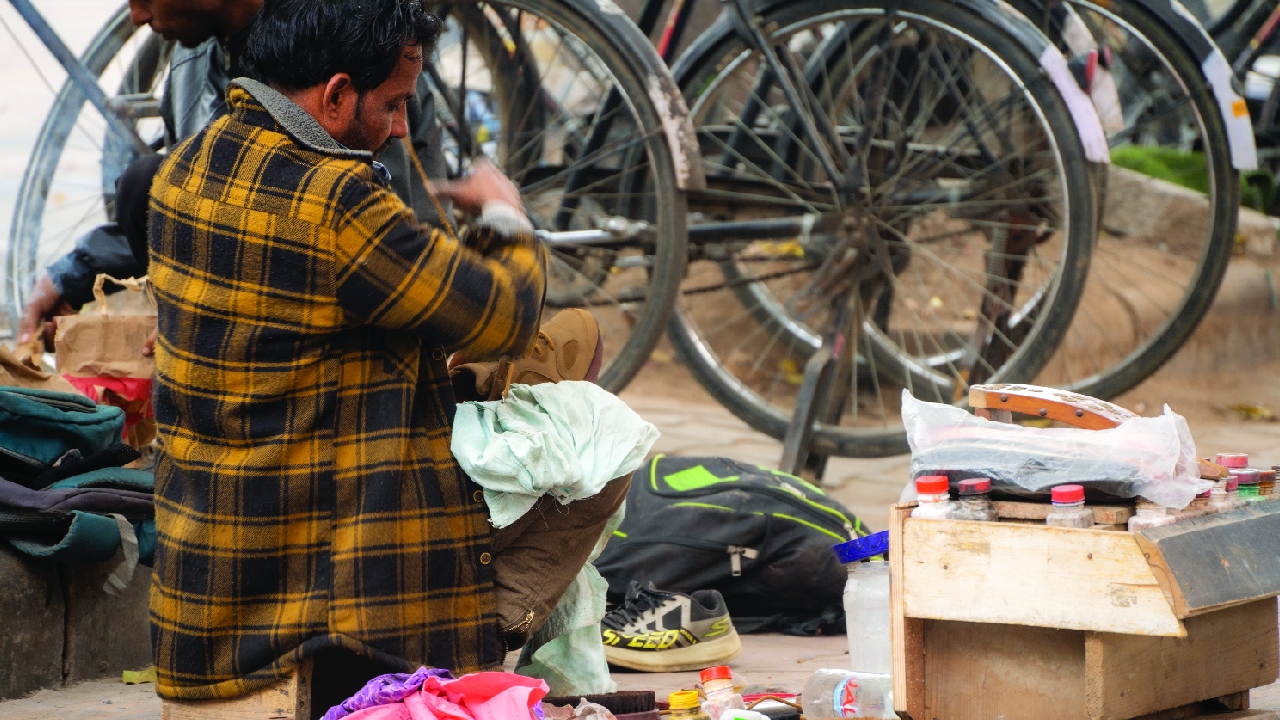
India's informal sector has invariably been demonised as being a huge contributor to the black economy since it remains outside the official reckoning, or downgraded as contributing low-value-, low-skill, and low-productive elements to an emerging economy. Now that the nation shifts to a new GDP series, with wider, more authentic, and transparent data, apart from a new yearly base, the ‘informal’ may acquire sheen, and more acceptance. Experts contend that in several ways, the lowly-graded unorganised sector may become more crucial in the policy-makers’ arithmetic, calculations, and decisions. This may happen for varying, and the following reasons.
One of the surprises thrown by the new GDP series is the growth in manufacturing. The once-wayward, mysterious, and inexplicable annual growth rates in this sector seem stable. Under the old series, growth averaged a not-so-high eight per cent between 2023-24 and 2025-26, bolstered by 12.3 per cent in 2023-24 due to base effect, or extremely low figure in the previous year. Under the new one, according to a media report, the “sector has expanded by 11.2 per cent on average in each of the three years.” Thus, manufacturing did way better.
Possibly the main reason for this unexpected hike in manufacturing growth is because of the better-than-before data from the informal sector. Under the old series, the data for this sector was merely extrapolated from the formal or organised one. In effect, what happened with the registered firms mirrored the unregistered ones. Hence, the growth figures for the sector were dominated by the trends in the formal sector, which was uneven and spiky. More even figures under the new series, which does not extrapolate but seeks real-ground data about the informal sector through a specific annual survey, and the yearly labour force survey, reveal new insights.
If the overall manufacturing grew in a more-or-less stable manner, it indicates that the informal sector more than made up for the downtrend in formal one in some years, and the opposite happened when the formal sector did well. In 2023-24, manufacturing grew by 12.3 per cent under the old series, and the informal was equated with formal. Under the new series, the growth was lower at 11.2 per cent, which implies that the informal did not do as well as the formal, as the growth in the latter may have been higher at over 12 per cent.
In the other two years, the growth was lower under the old series, and the informal sector was estimated to grow at the same lower pace as the formal sector. But since the overall growth under the new series was higher, this implies that the informal grew at a much-faster clip to make up for the low figures in the formal. The inverse relation seems counterintuitive as the formal sector may perform badly for reasons like inflation, external factors, and availability of inputs. The same reasons are likely to propel consumers to seek refuge in the informal sector.
Hopefully, as the data from the informal sector, especially through a specific annual survey of unincorporated firms, becomes better and robust over the years, the discrepancies and differences with the formal sector will be more visible and distinct. It may highlight other features that show the interplay between the two, and the circumstances under which each intersects with or diverges from the other. Indeed, this is crucial since India has a larger informal sector, with more people employed with it, compared to the registered firms. It will provide the policy-makers with better decision-making tools, and avoid the blunders like demonetisation, and forceful imposition of GST.
Look at another insight from the new series. Media reports highlight that while the informal may be more significant in the growth of manufacturing, its share may be over-exaggerated in some segments. For example, the new series devalues the gross value-added in trade, hotels, transport, storage, and communication by a quarter on an average in the past four years, from 2022-23 to 2025-26. Since a bulk of these segments lie in the informal sector, their size was overestimated. Hence, according to the officials, the new data is more robust and realistic, and represents a truer picture of the ground reality.
If one looks at the same data through a different lens or prism, the lower gross value-added may indicate either a shift from the informal to formal, or a saturation in consumption, or both. If the informal was equated with the formal under the old series, the new series implies that the informal is smaller than the formal in these segments. This may imply that consumption habits have shifted. People prefer to go to better and formal hotels and restaurants. Or they wish to get their communication needs from a registered and official store, rather than a streetside one. This may be because of more prosperity, and aspirations.
Yet another negative aspect of the new series is that despite the hoopla about manufacturing, Made-in-India, local production, and exports, the size of manufacturing, as a share of GDP, is lower by almost 1.5 per cent. Hence, the perception among experts, economists, and policy-makers that there is a shift from agriculture to manufacturing may not be true. Instead, there is a shift to services, and possibly more people find lucrative opportunities in niche areas like cash crops.