Blasé Capital Dollar Reclines
Several news items, trends, and insights concluded that the importance of the dollar is on the decline, even as the currency gains strength against the others due to the ongoing Iran war. Two recent events are of great significance in such an analysis. For the first time since the mid-1990s, the gold reserves of central banks surpassed their holdings in the US treasuries, $4 trillion against $3.9 trillion, respectively.
According to media reports, one of the criteria that Iran has posed for a ceasefire is payment, either in Chinese yuan or crypto, for tankers to pass through the Strait of Hormuz.
Both hint at the trends that can undermine the dollar in the future, as were initiatives such as BRICS’ efforts to trade in non-dollar currencies, or bilateral efforts to bypass the American currency. Although both the recent headlines are riddled with a few holes, and past actions did not sail, if they did not fail, the dollar and America are in for some interesting times in the future.
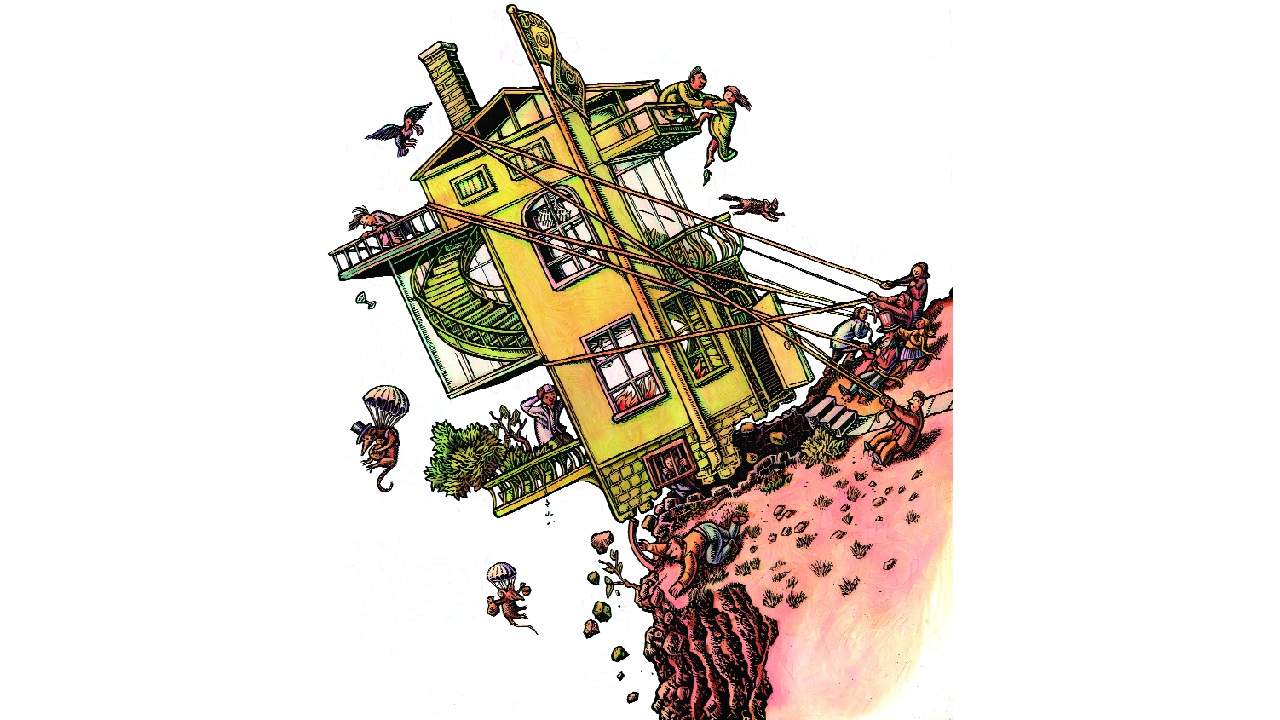
Over the past decade, the share of the US treasuries in the central banks’ reserves declined steadily, and ominously, from 33 per cent to 21 per cent. One can pinpoint several long-term macro factors for this trend. The first is obviously the looming US debt, which is $38 trillion, counting, and ever-growing. This intensifies the so-called ‘debasement effect,’ as investors feel that in the long run, the currency will devalue, even if it is on a temporary rise at the present. Given the high American fiscal deficits, and despite the moves to manage them, there is the urge to increase the money supply.
This erodes a currency’s underlying purchasing power over time, whatever may be its visible strength. Geopolitics, politics, economics, and business have forced nations and firms to wean away from the dollar. China and Russia do not wish to trade in dollars, or own dollar assets, if they can avoid them. The thinking is the same among the Europeans, who wanted to replace the dollar’s dominance with the Euro at least for the past two decades.
Iran’s attempts to take money in yuan or crypto is a step in the same direction, and on the same path and journey. According to a media report, the rise of the dollar began in 1974, when the US treasury secretary met the Saudi King, and chalked up a grand strategic plan.
If the Saudi, then among the major oil producers, traded each barrel in dollars, the US would protect the regime. “Smart geopolitics was scaffolded by smart economics, global demand for oil, and global pricing in dollars entrenched the domination of the dollar,” states the report. It was no coincidence that 1973 marked the first oil shock in modern history. Today, the two of the largest oil consumers, India and China, buy oil in non-dollar currencies.
China pays in yuan to Russia, Iran and Saudi Arabia. India pays Russia, which emerged as the largest seller in the recent past, often in rupees. The focus on petrodollars, which revolutionised the banking and financial systems since the 1970s, has shifted to petro-yuan, petro-rupees, and others.
But let us not get carried away. As far as gold versus treasuries is concerned, one of the major reasons for the ascent of the former is the unexpected boom in prices, which went up 70 per cent in 2025, and have since corrected sharply.
This boosted the values of the central banks’ gold reserves without them having to do anything, although they regularly purchased 1,000 tonnes a year between 2022 and 2024.
Thus, there was a bit of coincidence in the gold surge against the treasuries. In addition, most central banks, including the Indian one, shifted their gold reserves from America to their own countries. One need not forget that gold is not usually traded by the central banks, and the bullion is not a mode of payments among nations, and businesses. Dollar and currencies are. In this respect, the dollar does enjoy an advantage. The fact remains that gold is not a currency, only a hedge, or an asset.
On the crude oil front, petrodollars will remain prominent, especially now, even as Iran, Russia, China, and India shift towards yuan and rupees. After the Iran crisis ends, whichever way it is resolved, and it will be sooner than later, the Middle East may be keener to deal in dollars.
The conflict shows what Iran, and others, can do in West Asia, and how they can disrupt businesses and economies within days and weeks. The Strait of Hormuz and Red Sea, and other choke points will invariably be at risk from some one or the other.
This will push the Middle East closer to the US, rather than Russia or China. The latter two will make inroads but not dent the dollar citadel. More oil will be traded in dollars, especially by the sellers in West Asia. Once this happens, other buyers, and even sellers will follow suit, even as the US takes over the oil supplies from Venezuela, and increases oil exports from its sources. In essence, America’s dominance over oil may increase. Dollar’s prominence may shoot up, at least temporarily.