Blasé Capital OIL RECOIL
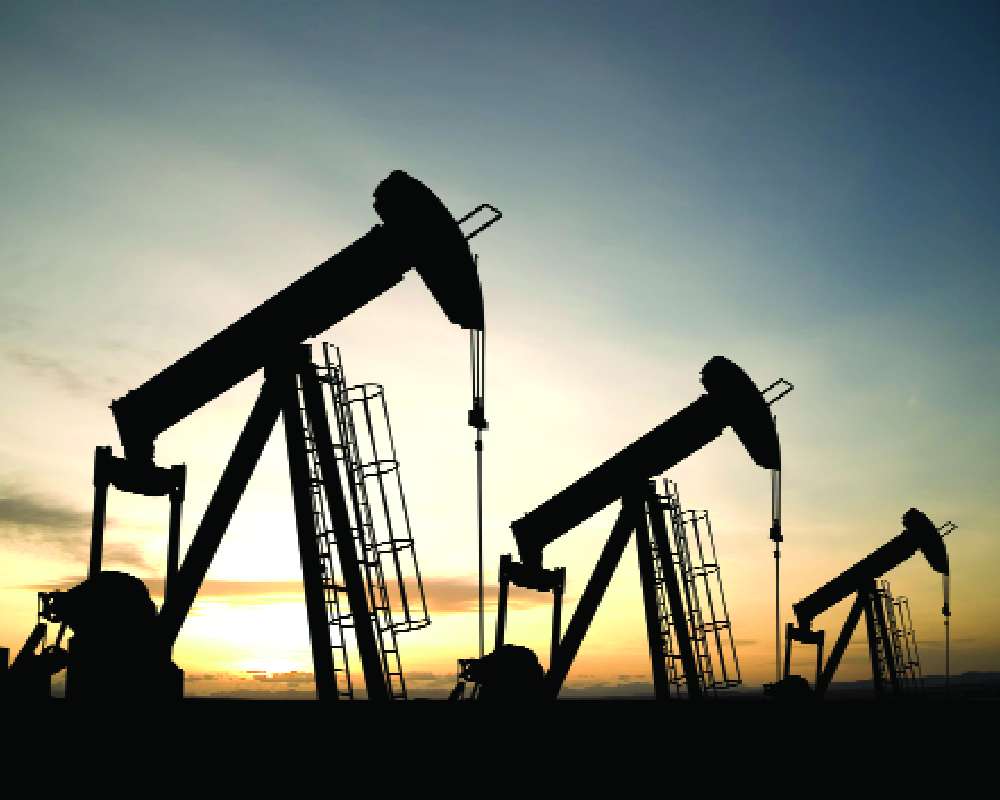
Over the past six months, the stock prices of state-owned oil firms have firmed up. While Bharat Petroleum and Hindustan Petroleum were up more than 10 per cent each, IOC jumped up by nearly 14 per cent. Yet, a recent brokerage report downgraded the shares, from hold to sell, and maintained target prices that showed a downside of 8-12 per cent. This is contrary to the expectations that oil firms are on a rock-steady wicket, and their financials seem strong. According to a recent report by Crisil Ratings, the state-owned oil marketing firms may witness more than 50 per cent growth in operating profits in the current financial year (2025-26). This will boost cash accruals by Rs20,000-25,000 crore. Operating profits fell to $0.13 in 2023 when global crude oil prices averaged $93 a barrel, and zoomed to $20 when prices dropped to $83 in 2024. They average $62 today.
According to the contrarian brokerage report, most analysts are missing the hidden variable, or a factor that is not being considered. The focus is on the refining margins, which is the difference between the value of the petroleum products, and crude oil prices. When the latter go up, as they did in 2023, the margins drop. When oil falls, as it did in 2024 and 2025, the margins go northwards. In the recent past, the Singapore refining margins were as high as $13, which enthused the experts and investors. This explains the rise in the stock prices over the past six months. Since crude prices have dropped, and are expected to continue the slide, refining margins will stay intact. One is not sure what will happen in December 2025, when the sanctions against the Russian oil firms take a concrete shape, supply is restricted, and global demand remains the same.
However, the brokerage report contends that marketing margins of the oil firms are under pressure. These relate to the margins earned from the sale of the various petroleum products such as petrol, diesel, and other refining products. They will drop in the future due to what the report terms as “diesel cracks,” and which will negatively counter the high refining margins. The diesel marketing margins have, in fact, entered the negative territory. They were as high as $4 per litre. The marketing losses will dent future profits, and impact the stock prices. The reason is simple. Despite the volatility in crude prices over the years, the retail prices of the petroleum products have remained stable. The stock market is “overlooking” the risks associated with the weak marketing margins, which can “materially erode earnings,” and make valuations unjustifiable. Hence, the downgrading of the stocks, though target prices remain the same.
Such an analysis is negated by the Crisil report. It has an entirely opposite viewpoint. According to its report, refining margins, which have reportedly doubled to $13 in the recent past, will stabilise at a modest $4-6 per barrel “as moderate global demand, and energy transition trends weigh on refining spread.” In comparison, the unchanged retail fuel prices will “boost marketing margin to $14per barrel (Rs8 per litre), resulting in overall margin improving more than 50 per cent to $18-20 per barrel." The resultant cash accruals will support massive capex plans for brownfield expansion of the state-owned oil firms, with the remainder directed to build pipelines, and marketing infrastructure, and boost green-energy initiatives. This will limit the reliance on external debt, with the ratio of debt to EBIDTA improving to 2.2 times this fiscal from 3.6 times in the previous one. The US sanctions on Russian oil firms will neither affect the margins nor the credit profiles of the Indian firms.
Over the past two months, India’s crude oil imports from Russia have gone up, and the trend will accelerate in November. This is because firms aim to build inventory of the cheaper crude till the American sanctions are imposed in December 2025, and the European Union’s restrictions take shape in January 2026. Hence, Russian imports will fall in December, from 1.87 million barrels per day in November to 6,00,000-6,50,000 barrels per day. This indicates a sharp drop, or a third of this month’s figure. Apart from the private refiners, the Indian state-owned refiners will turn “extremely cautious.” Many refiners, both private and public, have stopped buying Russian oil. Others have indicated their decisions to do so in December. India is under pressure to buy American oil, which may be costly. As it seeks alternatives, its import costs are likely to go up.
One is not sure how the new sources, and relegation of Russian ones will impact the refining, and marketing margins. The first will surely get hit if the average buying prices of crude increase. However, most analysts contend that the difference may not be much. This is because while Russian oil seems considerably cheaper, there are added costs due to the ongoing sanctions, such as higher insurance, and the difference with other sources is minimal. Such calculations need to be measured against the new realities. Marketing margins may remain intact, but the “diesel crack” factor needs to be included in the new calculations. If both the margins are under pressure, both refiners, and marketers will feel the pinch. If not, there will be some respite for the marketers. Since, there is no clarity, one may witness volatility in the oil stocks in the future.