Bengal’s inclusive and plural identity
The statement by Bengal BJP president and Member of Parliament Samik Bhattacharya that people of Rajasthani, Bhojpuri and Hindi-speaking backgrounds who have lived in Bengal for generations are also Bengali is not merely a political statement. It opens an important discussion about Bengal’s social structure and India’s pluralistic character. Chief Minister Shubhendu Adhikari’s support for this view makes the issue even more significant. It reminds us that the identity of a state cannot be defined by language alone; it must also be understood through social participation, cultural belonging and shared citizenship.
Bengal has historically been a plural society. Kolkata and other parts of the state have been home for generations to Rajasthani, Bhojpuri, Maithili, Hindi-speaking, Punjabi, Gujarati, Odia and other communities. These communities have contributed substantially to Bengal’s trade, industry, education, literature, journalism, art and public life. Their presence is therefore not external to Bengal’s history; it is an integral part of it.
To equate the word ‘Bengali’ exclusively with one’s mother tongue would consequently be to limit the broader reality of Bengal. A person may speak Bhojpuri, Maithili, Awadhi, Marwari, Rajasthani or Hindi at home and yet be deeply connected with Bengal’s soil, culture and public life. Language is undoubtedly an important part of identity, but social commitment, cultural participation and citizenship cannot be judged by a single linguistic criterion.
The Indian Constitution recognizes equal citizenship within diversity. A person can simultaneously be a resident of Bengal, a Hindi speaker, a member of a particular cultural tradition and an Indian citizen. These identities do not necessarily contradict one another; they can enrich one another.
This is especially important in Bengal, where language and culture have long been politically and socially sensitive issues. The historic struggle for the recognition and preservation of Bengali is legitimate and deserves respect. But protecting Bengali does not require excluding people who speak other languages from Bengal’s collective identity. Respect for Bengali can coexist with equal respect for Hindi, Urdu, Rajasthani, Santali and other languages.
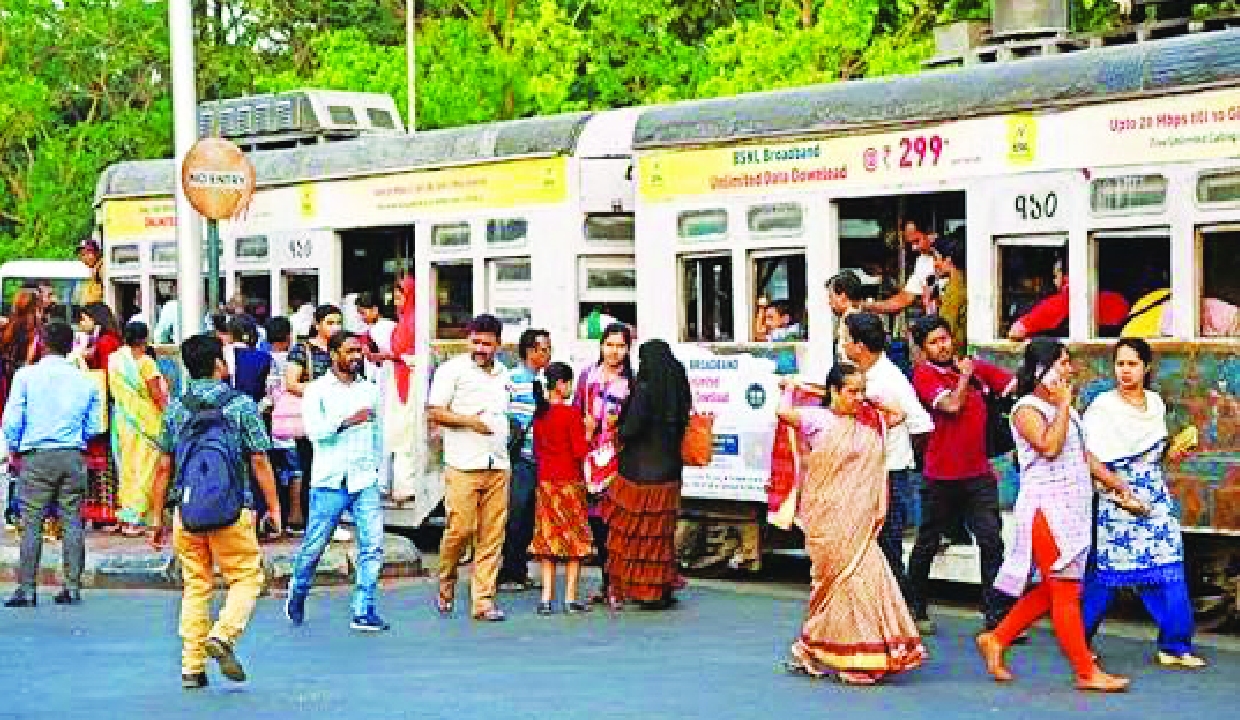
Indeed, Bengal’s cultural strength lies in this coexistence. The culture of a city is not created by its dominant language alone. It is shaped by its markets, neighbourhoods, food, literature, music, education, labour and everyday relationships. Kolkata’s streets and marketplaces vividly demonstrate this cultural intermingling. Families that have lived in Bengal for generations have become part of its social history.
At the same time, recognizing Hindi-speaking communities as part of Bengal carries a responsibility for those communities as well. Those who regard Bengal as their home should respect its language and culture, develop sensitivity towards its society, learn the local language where possible and participate in its public life. Such engagement does not diminish their original identity; it strengthens their relationship with Bengal.
In this context, I recall the letter written to me by the renowned Bengali litterateur Sunil Gangopadhyay on November 26, 2026, in which he appreciated my commitment to and knowledge of Bengali culture, observing that they were greater than those of many Bengalis themselves.
Bengal must therefore move beyond the narrow binary of ‘Bengali versus non-Bengali’. The more meaningful question is: Who considers Bengal their home and feels responsible for its future? The identity of a democratic society lies not in uniformity but in the ability of people with diverse roots to share a common sense of belonging. Bengal has historically absorbed and nurtured many cultural streams. In the nineteenth century, it became a major centre of the Indian Renaissance, influencing modern education, printing, journalism and social reform across India, including the Hindi-speaking regions. Bengali intellectuals and institutions also made significant contributions to the development and spread of Hindi. Among them, Ishwar Chandra Vidyasagar deserves special mention for his interest in Hindi education. Raja Rammohan Roy, Shyam Sundar Sen, Amritlal Chakravarti, Bhudev Mukherjee, Chintamani Ghosh, Kshitindramohan Mitra, Sharada Charan Mitra, Ramananda Chattopadhyay, Suniti Kumar Chatterji and many others contributed in different ways to India’s linguistic and intellectual life. Rabindranath Tagore established the Hindi Bhavan at Santiniketan and invited Hazari Prasad Dwivedi to teach Hindi. Even today, Bengali-speaking scholars such as Prof. Soma Bandyopadhyay, Tanuja Majumdar and Gautam Sanyal continue to contribute to Hindi.
The history of Indian languages is therefore not a history of competition but of exchange and mutual enrichment. Hindi and Bengali have influenced one another and together contributed to the making of modern Indian consciousness. A Bengali-speaking person’s love for Hindi does not diminish their Bengali identity, just as a Hindi-speaking person’s affection for Bengali does not weaken their Hindi identity.
Bengal’s identity is not a closed room but a flowing river into which many streams merge. Recognizing generations of Hindi — and Rajasthani-speaking residents as part of Bengal’s social identity affirms this inclusive tradition. What is needed now is to transform this idea from a political statement into a practical culture of equal respect, equal rights and shared citizenship.
The writer is a professor at Mahatma Gandhi International Hindi University, Wardha; Views presented are personal.