Belgium hedges against an unpredictable US
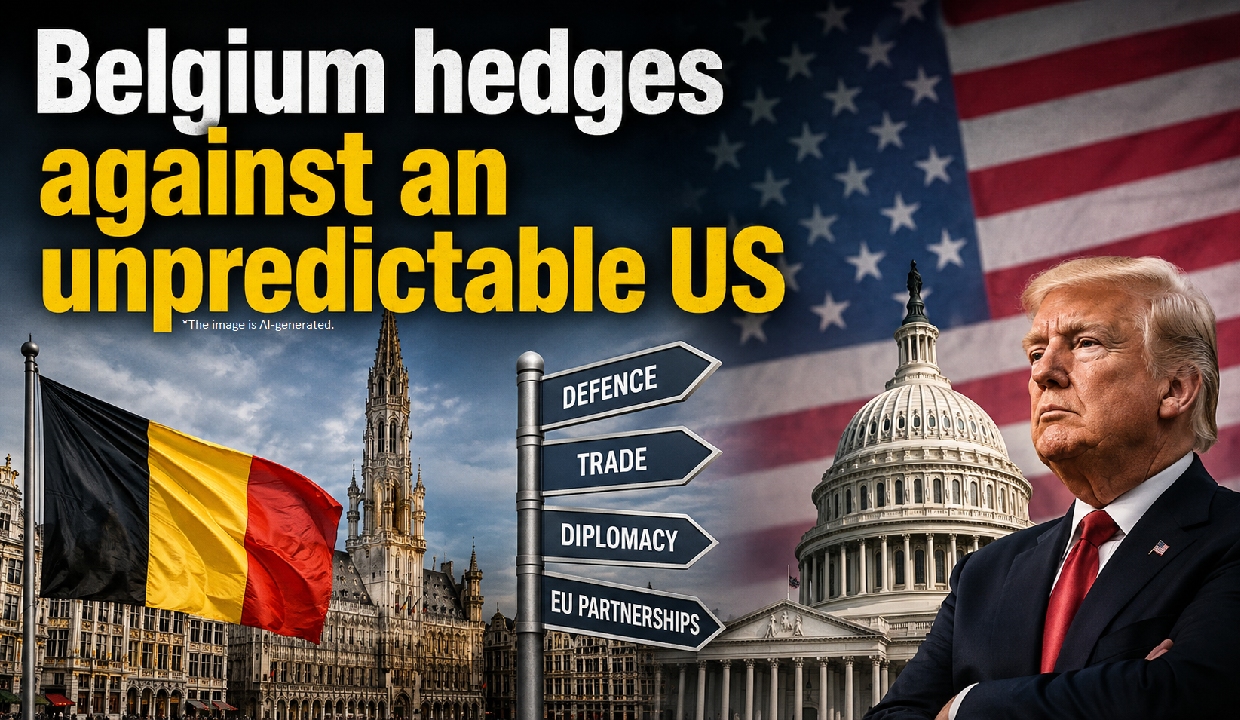
From defence co-production to the India-EU free trade agreement, Brussels and New Delhi are finding common ground for a rules-based economic order
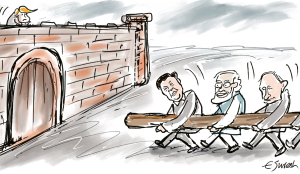
When Bart De Wever landed in New Delhi on September 2, he became the first Belgian Prime Minister to visit India in two decades — his first as PM. A wreath at Rajghat, warm words at Hyderabad House and ten outcomes in three days signalled more than protocol: a considered European wager on India just as Washington’s commitment to open trade looks conditional at best. De Wever did not need to name Donald Trump in Mumbai to be understood. Addressing the India-Belgium High-Level Dialogue on the India-EU Free Trade Agreement, he cautioned against a rising tide of protectionism, mocking leaders who "decide something on Monday, revoke it on Wednesday, and reinstall it on Saturday." When the room applauded, he added, wryly, that their applause told him exactly who he meant. India needed no footnote. Its exporters had lived that whiplash directly: a 50 per cent US tariff over Russian oil purchases, cut to 18 per cent by a bilateral deal, then to 10 per cent after the Supreme Court struck down Trump’s wider tariff powers.
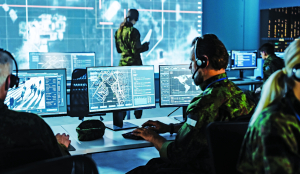
For his hosts, De Wever’s complaint simply described the recent past. Belgium brought substance to match the sentiment. Officials framed the outcomes around "three Ts" — trade, technology, talent. A defence Letter of Intent, an industry MoU between Belgium’s BDSI and India’s SIDM, and contracts signed by defence ministers Rajnath Singh and Theo Francken point toward co-designing and co-producing military hardware, not merely buying it.
A CBI-Belgian Federal Police pact on transnational crime carries an unspoken subtext: the pending extradition of fugitive diamantaire Mehul Choksi, in Belgian custody since 2025. Add semiconductors, critical minerals, renewable energy, an investment fast-track mechanism, and a target to double the $13-billion trade relationship within five years, and this reads less like a courtesy call than a partnership being deliberately rebuilt. The deeper convergence, though, is of worldview. Belgium and India — one a small federal state balancing linguistic communities, the other the world’s largest democracy — share a commitment to pluralism, the rule of law and open markets that both leaders called a "natural" fit.
Brussels backs India’s bid for a permanent UN Security Council seat, and De Wever went out of his way to praise Modi personally, casting him as a rare point of steadiness amid global disorder. Beneath the flattery sits calculation: as Washington’s tariffs swing and Beijing’s leverage grows, both capitals are hedging toward each other, and toward a rules-based order that no single power controls. That same logic underwrites the India-EU Free Trade Agreement itself — concluded in January, awaiting signature, and set to scrap tariffs on 96 per cent of EU goods, the largest such pact either side has struck. The takeaway is straightforward. Europe’s middle powers, modest individually, are becoming collectively significant as India diversifies away from an unpredictable Washington. Whether this visit’s promise holds will be measured less in joint statements than in whether its MoUs mature into contracts — and whether Choksi finally comes home.