Beijing’s problems in Kathmandu
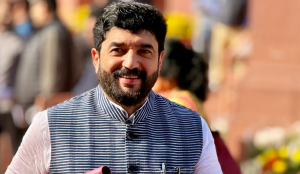
JHAPA (NEPAL): Yesterday, Nepal went to polls, and the results will start coming in from today evening. There are several issues involved, and many former prime ministers are in the fray. Along with the talks of internal democracy, Gen Z’s demand, which toppled the previous regime amid protests, and India-Nepal relations, what is at stake is the future ties with China. The last one becomes crucial because Balen Shah, an engineer-rapper-Kathmandu-Mayor-politician, who emerged as the face of Gen Z demands, and may become the next prime minister, has already dropped a China-linked economic bombshell.
In February, 2026, when Shah’s party, Rastriya Swatantra Party, released its election manifesto, it did not list a major project in the eastern district of Jhapa. “The multi-billion-rupee Damak Industrial Park, Jhapa, later renamed the Nepal-China Friendship Industrial Park, is in the spotlight,” reported The Kathmandu Post newspaper. “The project is part of the Belt-and-Road Initiative (BRI), an ambitious multi-continent infrastructure programme initiated by the Chinese President Xi Jinping. In February 2021, (KP Sharma) Oli (former prime minister who was forced to step down due to students’ protests in September 2025) laid the foundation stone of the project in the district’s Kamal Rural Municipality,” the report added.
Oli’s Communist Party of Nepal (Unified Marxist–Leninist, UML), with a visible tilt towards China, did list the construction of the industrial park in its 41-point “commitment paper.” The Park is spread across 2,200 bighas, and represents a major undertaking under the BRI framework. Economically, it is projected to catalyse regional development, generate 45,000 direct jobs, and a total of 1,60,000 jobs, and enhance diversification in sectors such as agriculture, electronics, textiles, and IT. Media reports indicate that it may involve foreign investment of more than INR 64 billion from China.
In New Delhi, the park’s location near the Nepal-India border, or an area of strategic sensitivity, raised concerns, which were expressed to Kathmandu. The specific problem is the proximity to the Indian-side Siliguri Corridor, or ‘chicken-neck’ area, a 22-km-wide and 60-km-long land that connects the Indian mainland (West Bengal) to the North East. In Nepal, there are questions about environment sustainability, transparency in decision-making, and compliance with the legal and social safeguards. For China, the project may provide geopolitical dominance in the region, where it claims parts of Arunachal Pradesh.
Media reports indicate that the Jhapa project creates unnecessary, and possibly unwarranted, issues between India and Nepal due to the former’s strategic location. Even Nepali officials wonder about the commitment to a mega project on the border, especially since it has related sensitive issues. The Park is being promoted by the Chinese firms as a joint venture, which seeks to access the Indian market through the dry ports situated at the West Bengal and Bihar borders. In December 2024, Nepal signed nine deals with China, including the “Framework for Belt and Road Cooperation,” during Oli’s visit.
“The revised ‘understandings’ were able to insert Nepal’s priorities in the economic development cooperation. The current agreement lists 10 potential projects to be negotiated on an individual basis, and outlines cooperation in five areas, namely economic cooperation; financial sector cooperation; transport, connectivity, and logistics cooperation; trade, industrial capacity, and investment cooperation; and customs cooperation,” according to a June 2025 brief from the think-tank Centre for Social Innovation and Foreign Policy (CSIFS). The modalities of how to fund the mega projects have created a political row.
“The Nepali Congress and the UML (Oli’s party) had contradictory positions over whether Nepal should go for loans or not. According to those who are privy to the negotiations, originally, China had proposed several funding modalities ranging from blended financing models to commercial loans. Nepali Congress had been insistent that it would not be taking commercial loans under BRI, but the final agreement adopted the phrase ‘aid financing modalities’ in place of the ‘grant financing modalities’ insisted upon by the Nepali Congress party,” added the non-profit research entity about the politics of BRI.
Apart from financial and diplomatic concerns, there are allegations related to the environment damage due to several BRI-linked projects. Some reports highlight the significant delays in implementation. None of the 10 projects are finalised, which allows the critics to question the efficacy and effectiveness of the initiative. There are sections which, like the non-profit entity quoted above, caution against the huge financial implications, keeping in view the difficulties that Sri Lanka faced due to the Chinese investments. In Sri Lanka, there was major debt distress due to Chinese loans, with charges of high costs, corruption, and low returns. These, in part, led to the nation’s economic crisis in 2022.
According to a paper, a significant hurdle for Kathmandu is Beijing’s request for substantial tax exemptions, which the Nepal's finance ministry earlier resisted, since the incentives are limited to the construction phases but continue for years after completion. Many feel that this will put undue fiscal burden on Nepal. Despite the misgivings, the previous regime, via the Investment Board of Nepal, which was chaired by Prime Minister Oli, decided to accelerate the Jhapa project. India put its foot down, and told Nepal that it constituted a “red line,” and advised both the Nepali Congress and UML not to move ahead.
According to India’s ministry of commerce and industry, Nepal was the fourteenth largest export destination for India in 2024-25, up from 28 in 2014. The main Indian exports include petroleum, iron and steel, automobiles, machinery, and cereals. Exports from India constitute almost 16 per cent of Nepal’s GDP. Open border and connectivity projects facilitated bilateral trade. Yet, the ties nosedived once Kathmandu veered towards Beijing, and left New Delhi in the lurch. For the past few years, the relations are tense. New Delhi hopes for a possible change after the current elections in Nepal.
While a section of the workers in Shah’s RSP seem unsure about the non-mention of the Jhapa project in the party’s manifesto, they feel that it is a contentious issue, and possibly needs to be left alone for the moment. For political observers, it hints at Shah’s doubts about BRI, as also the Chinese investments. One will know the state of Jhapa and other BRI projects only when a new regime takes over. At present, as the counting continues, the proposed Jhapa project site in its eastern fringes seems barren with patches of overgrown grass and bushes.
(The author has more than three decades of experience across print, TV, and digital media); views are personal