An appreciation of Lekha Chakraborty’s Gender budgeting: That Fire in My Belly
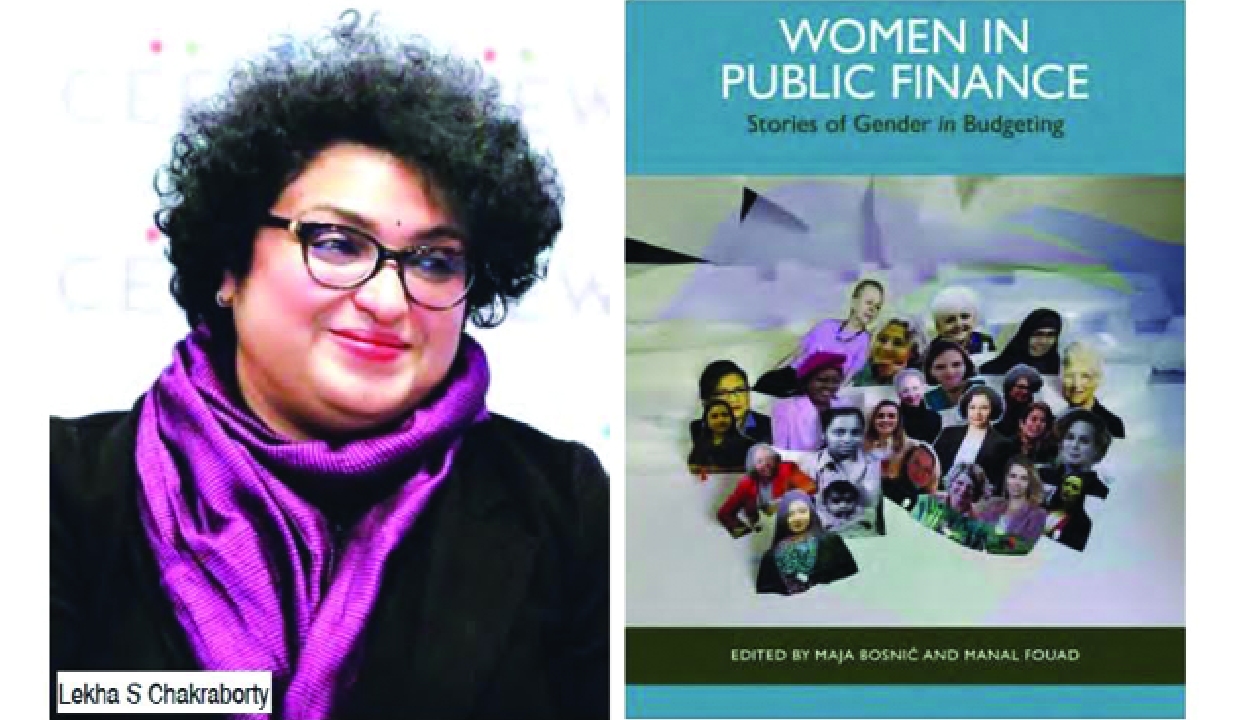
Economists are trained to keep personal experience separate from analysis. But the questions we choose to study often reflect what we have seen in our own lives. Lekha Chakraborty’s chapter shows how personal experience led her to an important question, and how careful research helped move it from the margins of public finance toward the mainstream.
Her chapter intertwines two stories. She describes growing up in Kerala after her father sent her mother a divorce notice by inland letter late in her second pregnancy. Her mother, a Government hospital nurse, continued working and raised two children alone. The second story concerns gender budgeting in India, a field Professor Chakraborty entered in 2000. Early meetings often left her shaken because the issues felt inseparable from her mother’s experience. Over time, she learned to translate that understanding into evidence and policy analysis.
I found her response to institutional resistance especially instructive, with a lesson for anyone seeking to change an established field. Her first presentation met with strong resistance. Senior colleagues urged her institute’s director to scale back the project, arguing that gender was not central to public finance and dismissing the care economy as elitist. She responded by developing models, assembling data, and estimating the effects of gender-responsive budget policies on human development. The Ministry of Finance was receptive because she presented the case in terms it understood and could incorporate into its work.
In my experience, public institutions rarely change course simply because they are told they should. Durable change requires evidence, persistence, and an understanding of how institutions make decisions. Professor Chakraborty showed that the values motivating her work could be supported by rigorous economic analysis. That combination gave her argument credibility and influence.
The economic case is now more widely understood. Budgets that appear neutral can affect women and men differently. For a labor economist, unpaid care work is directly relevant to fiscal policy. Access to child care, water, electricity, transportation, and health care affects whether women can undertake paid employment and what jobs they can hold. Amartya Sen’s work on missing women demonstrated the human consequences of gender inequality.
Professor Chakraborty helped show how taxing and spending decisions can reinforce or reduce it.
Her chapter also emphasizes the importance of making reform part of routine policymaking. India adopted gender budgeting in 2004, followed by the Gender Budget Statement in 2005-06. Implementation required budget circulars, a methodology manual, and training for representatives of twenty-nine states. These administrative details determine whether a promising idea takes hold. Her international work also demonstrates why reforms must be adapted to national and local institutions.
Important work remains. Gender budgeting is established on the expenditure side in India, but intergovernmental fiscal transfers have received less attention. Professor Chakraborty also rightly connects gender budgeting to fiscal consolidation. When Governments reduce deficits, care, health, education, and other investments in human development can be particularly vulnerable. The composition of fiscal adjustment matters alongside the headline change in the deficit.
I was particularly moved by her observation that gender budgeting, and the scholars working on it, gave her a way to understand and describe what had happened to her mother and herself.
Economic frameworks help us move from individual experience to questions we can examine systematically. Here, that process produced research with practical consequences for millions of women.
Professor Chakraborty writes that she may one day produce a book for young girls. I hope she does. Until then, this chapter deserves to be read by students and young economists who worry that their most compelling question has no accepted place in their field.
Her experience shows that personal conviction can sustain a serious and consequential program of economic research.
The author served as the 78th United States Secretary of the Treasury from 2021 to 2025 and as chair of the Federal Reserve from 2014 to 2018. She was the first woman to hold either position, and has also led the White House Council of Economic Advisers; Views presented are personal.
Leave a Comment
Comments (1)
Well written mam