A movement built on a sentence that was never said
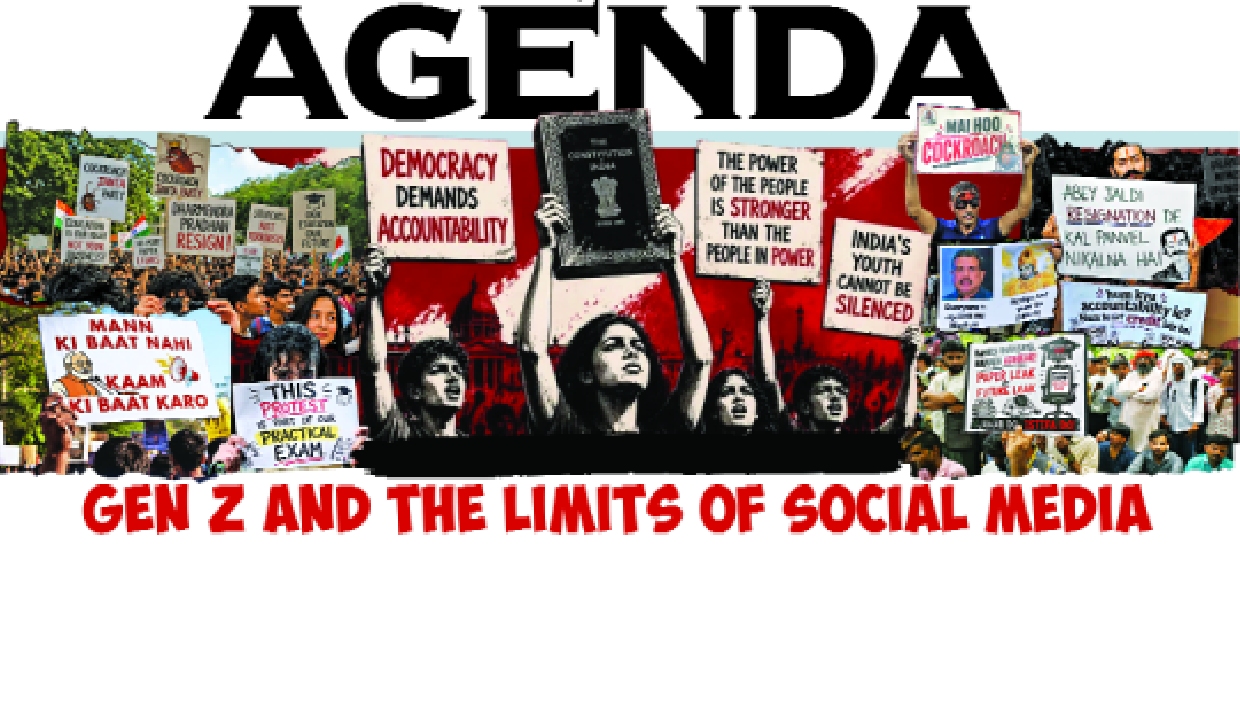
Calls to ban social media surface after every major riot, election controversy or online disinformation campaign. Yet banning platforms that have become integral to communication, commerce and civic participation is neither practical nor desirable. The real challenge lies in setting clear boundaries-holding technology companies accountable, protecting free speech while curbing harmful content, and ensuring digital platforms strengthen democracy rather than undermine it.
The debate is no longer about whether limits are necessary, but what those limits should be.
The protests of the past six weeks began with a quote that was never said the way it was reported. What followed — a political party, a minister’s resignation and a riot outside Parliament - rested on that edit. The lesson is not that social media should be curbed, but that those who broadcast to millions must carry the same responsibility as any news channel
On July 31, the Prime Minister released a short video. He said he forgave the young people who had abused him and his mother, and that the country must show them the right path. Cases against protesters were withdrawn in several states. After six weeks of anger, it was the quietest thing anyone had said.
On May 15, the Chief Justice of India observed in open court. He was speaking about people who had entered the Bar and other professions on fake and bogus degrees. Such people, he said, had sneaked into media and social media, and were like parasites. One word from that hearing was lifted out and sent around the internet on its own. The Chief Justice later clarified that sections of the media had misreported him, and that he regards Indian youth as the pillars of a developed India.
A political party was named after the word before the correction arrived.
A clipped quote, and a party by next morning
The Cockroach Janta Party was founded on May 16, a day after the hearing. That is how quickly context can be removed and a movement built in its place. The clarification came later, and almost nobody saw it. Corrections never travel as far as the claim.
None of this means young people should not have protested. Everyone has the right to protest peacefully. The problem lies in what sat between the courtroom and the street.
If a television channel had run that clip without the sentence around it, it would have answered to the News Broadcasting Standards Authority. A handle with two million followers ran the same clip and answered to nobody. Same reach. Same damage. One rule for one, and none for the other.
Where a protest stopped being a protest
On July 20, the CJP marched on Parliament. Barricades were breached. The police used lathis near Parliament Street and tear gas near Shastri Bhawan and Raisina Road. By evening there was stone-pelting, and police vehicles had been smashed near Rajiv Chowk.
There is a reason that barricade is there. On December 13, 2001, terrorists attacked Parliament, killing nine security personnel and staff. In December 2023, two men entered the Lok Sabha chamber with smoke canisters while the House was sitting. Parliament was in session on July 20 too. The police were answering a physical breach, not an opinion.
The abuse directed at the Prime Minister and his mother was not criticism, not satire and not protest. It served no purpose at all.
Meanwhile the feeds filled up with things that were simply untrue. A post claiming tanks were being rolled into the capital travelled further in an hour than any correction managed in a day. It was quietly deleted. The deletion, as always, reached a fraction of the audience the claim did.
There was more, all of it on the record. A video of the Chief of Defence Staff saying 30,000 army personnel had resigned was AI-manipulated. A clip of soldiers on motorcycles said to be heading for Jantar Mantar predated the protest. A video of a Delhi DCP resigning over the framing of protesters was a deepfake. Delhi Police rebutted fifteen false claims and blocked over 400 handles, many traced to Pakistan.
School children joined a protest whose founding premise was false, because their feeds made staying out of it feel like being left behind.
The silence that gave it away
On July 19, while Delhi was still on the boil, Punjab police uncovered a cheating racket in the pharmacy officers’ recruitment examination. The opposition sought two ministers’ resignations. The Chief Minister insisted not a single paper had leaked in four and a half years. The High Court took notice of a plea to cancel the examination.
The accounts that had run the NEET story every day for six weeks did not run this one for a day.
The CJP’s founder ran social media for the Aam Aadmi Party between 2020 and 2023, including meme campaigns during its Delhi election victories. Its spokespersons have been widely reported to come from the same political circle. For a movement that called itself spontaneous and unattached, that is a considerable coincidence.
Anger that is real is not selective. Selectivity is what tells you a campaign has been organised.
Fix the amplifiers, not the platform
The answer is not to shut anything down. The Prime Minister did not file a case against the people who abused him and his mother. He did not ask for their posts to be taken down. He pardoned them. He does not block his critics on his own timeline either. If this government had wanted an excuse to clamp down, it had plenty this month. It chose restraint instead.
What needs fixing is the layer in between.
An account above a certain size is no longer a private citizen speaking. It is a broadcaster. A channel with a million viewers works under a code. An account with a million followers should not escape one because its distribution is cheaper. Set a threshold of reach, and above it treat the account as a publisher, with a duty to carry a correction as widely as it carried the claim and to declare when a post has been paid for.
Platforms must do their share. X has had community-driven fact-checking in India since 2024. Instagram, where the youngest users are, still has nothing of the kind here. Meta’s own Oversight Board said in March that community notes are no substitute for fact-checking, warning in particular about elections and moments of crisis. The government and the courts should require Meta to build a working system for India before the next flare-up, not after it.
Forwarding something you have not checked is not a neutral act. Amplification is authorship.
The question was never whether Indians should be free to speak. It is whether those who speak to millions will accept the responsibility that has always come with an audience of that size.
Vikas Pandey (Sankrityayan) is a Social Media activist, runs a Noida-based software company; Views presented are personal.