25% of cotton acres in India now grows illegal seed: Study
Somewhere between a farmer’s need to survive and a regulator’s refusal to decide, an entire shadow economy has taken root across India’s cotton belt, one that now covers nearly a quarter of the country’s cotton acreage and runs on seed that carries no legal guarantee, no quality check and no recourse when it fails.
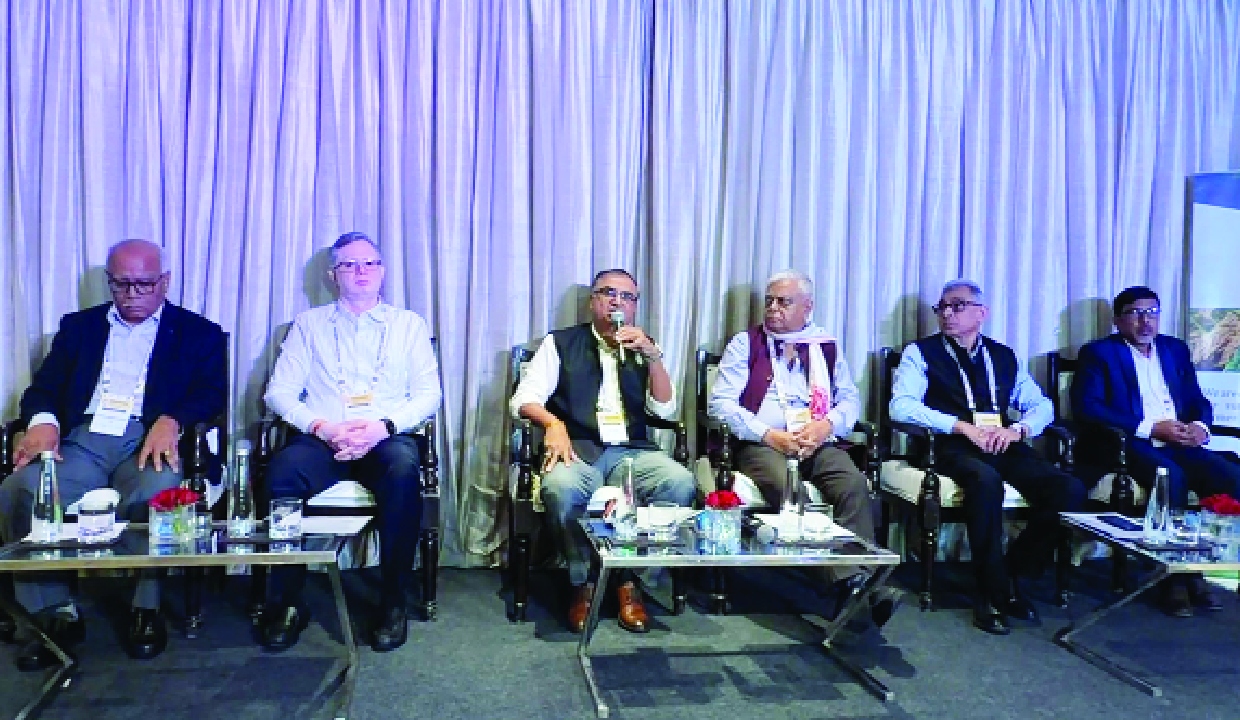
A new field study released in New Delhi on Wednesday has put hard numbers to what many cotton farmers have quietly known for seasons: the crop in their fields is often not the one the law recognises. The study, “Unauthorised Cultivation of HTBt Cotton in India: Extent, Drivers & Implications,” was conducted by the South Asia Biotechnology Centre with support from the Federation of Seed Industry of India and the National Seed Association of India.
It found that unauthorised herbicide-tolerant Bt cotton was grown on 65 to 72 lakh acres during Kharif 2025-26, between 24 and 30 percent of India’s total cotton area, feeding an informal seed market estimated at Rs 1,500 crore.
For the farmer standing in a field sprayed with chemicals bought off an unregulated market, the numbers behind this shift are stark. Manual weeding costs Rs 12,000 to 15,000 an acre, a price that has become unaffordable as farm labour grows scarcer each season. Glyphosate-based weed control, by contrast, costs just Rs 750 to 850 an acre. That gap alone explains why glyphosate use jumped 26 per cent in a single year, from 27,721 kilolitres in 2024-25 to 35,642 kilolitres in 2025-26, increasingly sold through underground networks in 20-litre drums rather than regulated outlets.
Laboratory testing of field samples using ELISA-based gene detection found that 98.2 per cent carried at least one genetically modified trait, meaning the overwhelming majority of tested cotton plants were already technically outside the bounds of what Indian law permits. Nearly 42 per cent of samples were “quadruple stacks,” containing four transgenes including Vip3A, an insect-resistance gene that has never received approval in India.
Meanwhile, sales of the legally approved Bollgard-II seed fell 22.3 per cent between 2022 and 2026, as farmers quietly moved toward seed nobody can vouch for.
Maharashtra has emerged as the epicentre of this shift, with 58 per cent adoption of unauthorised HTBt cotton, rising to 76 per cent in Yavatmal, where the technology has become near-standard practice through open, community-backed cultivation.
Telangana and Andhra Pradesh are catching up fast, at 66 per cent and 49 per cent respectively, touching 82 per cent in Mahabubabad and 75 per cent in Kurnool. Rajasthan shows little HTBt adoption so far, but rising demand for illegal BG-III seed to fight pink bollworm.
Dr CD Mayee, President of the Indian Society for Cotton Improvement and President of SABC, warned that unchecked use of unapproved genes and unmonitored glyphosate spraying could breed resistant pests and weeds that devastate cotton productivity, stressing that proper stewardship is only possible once the technology itself is made legal.
FSII Chairman Ajai Rana said farmers are not breaking the law out of choice but are paying a black-market premium because the regulatory system has failed to give them the technology they actually need. He said India has lost its self-sufficiency in cotton production due to falling yields and become an importer of cotton, and that regulatory approval for herbicide-tolerant and pink bollworm-resistant cotton should now be treated as a national priority.
Because this seed sits entirely outside the Seeds Act and the Seed Control Order, farmers buying it have no quality assurance and no legal recourse if the crop fails, a risk borne entirely by the farmer, not the seller.
The study calls for urgent action: fast-tracking approval of BGII-RRF cotton so farmers can access it through legitimate channels, expanding glyphosate’s regulatory label to permit monitored in-crop use, promoting integrated weed management through herbicide rotation and timed spraying, and strengthening field surveillance against resistance. Its central warning is simple.