
- HOME
- INDIA
- WORLD
- BUSINESS
- STATES
- LAW & JUSTICE
- ENTERTAINMENT
- SPORTS
- VIEWPOINT
- LIFESTYLE
- TECH
My Lords, save the institution that bestowed this title upon you rather than preside over its decline. Introspect on your professional conduct, your contributions since elevation, and your efforts to strengthen the judiciary and serve ordinary citizens. The ground reality, however, presents a deeply troubling picture of a justice system in India facing a profound crisis. In the age of social media, recurring courtroom confrontations and round-the-clock debates on television and podcasts have brought institutional distress into the public domain, making the erosion of faith in the justice system a serious national concern.
Over the last two decades, concerns about the independence, credibility, and institutional autonomy of India’s judiciary have increasingly sparked public discourse and debate. The recurring apprehension is that powerful political, corporate and other vested interests more often than not seek to influence judicial outcomes by questioning judges’ integrity, mobilising public opinion, amplifying controversies and creating an atmosphere of intimidation. Although individual allegations must be assessed on evidence, the broader danger of such pressure tactics deserves serious constitutional scrutiny.
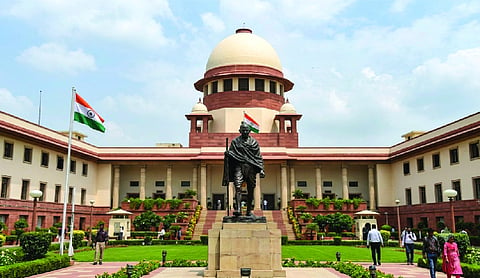
The stakes are particularly high because the Supreme Court of India adjudicates disputes involving Governmental authority, corporate interests, public resources, constitutional freedoms and accountability. Decisions in these areas can affect enormous financial interests and political fortunes. Consequently, even the perception that judges are being subjected to organised pressure can weaken public confidence in the very administration of justice.
A significant episode of judicial decay occurred on 12 January 2018, when four senior Supreme Court judges-Justices Jasti Chelameswar, Ranjan Gogoi, Madan B Lokur and Kurian Joseph-held an unprecedented press conference raising concerns about the functioning of the institution under the then Chief Justice Dipak Misra. Justice Chelameswar warned: “Unless this institution is preserved and it maintains its equanimity, democracy will not survive in this country.” Their intervention demonstrated that institutional independence and internal accountability were matters of profound national importance. Recently, the public spat between Justice Sanjay Kishan Kaul and the former Chief Justice of India DY Chandrachud risks demoralising the entire Indian judiciary and eroding public confidence in one of the country’s most vital constitutional institutions.
The irony is hard to ignore. While serving on the Bench, judges are expected to exercise restraint, avoid unnecessary controversies, and uphold the dignity of their office. Such discipline is essential because judicial authority rests not merely on legal power, but on public trust, impartiality, and institutional credibility.
Yet, once retired, some former judges appear far more willing to enter public controversies, offer sharp personal critiques, and engage in debates that risk overshadowing their judicial legacy.
The question inevitably arises: why does the restraint expected during service sometimes give way to unrestrained public commentary after retirement?
Even more troubling is the perception that post-retirement interventions may reflect ideological loyalties, political proximity, or the interests of influential patrons, political or otherwise.
Any suggestion of paid influence or undisclosed patronage, however, must be supported by credible evidence rather than insinuation. At the same time, retired judges, particularly of the higher judiciary, must guard against taking up the causes of opposition parties or pressure groups in reckless battles or protests against the elected Government at the Centre or time-tested institutions like the Election Commission of India, the Reserve Bank of India and the Lokpal of India, constituting the very bedrock of our parliamentary democracy!
Former judges have every right to speak freely after retirement. But that freedom comes with a corresponding responsibility to protect the credibility of the institution they once served. The judiciary cannot afford to become a battlefield for retired judges trading accusations.
Its authority must remain above personal rivalries, political calculations, and questions of private allegiance. When judicial dignity becomes collateral damage, public faith in the entire institution pays the price. These concerns acquire added significance when Government policies, major commercial transactions, investigations and questions of political accountability reach the courts.
Persistent personal attacks, selective leaks, sensationalised allegations and campaigns questioning judicial motives can potentially discourage judges from deciding contentious cases fearlessly. However, criticism alone is not evidence of a coordinated conspiracy; credible proof is essential before attributing motives to particular individuals or organisations. Ultimately, judicial independence requires protection from pressure originating within the Government of the day as well as from powerful private interests. Transparency in judicial administration, responsible journalism, fair disciplinary procedures and respect for reasoned judgments are indispensable safeguards. A judiciary demoralised by intimidation cannot adequately protect constitutional rights; equally, a judiciary insulated from legitimate scrutiny cannot command enduring public trust.
India’s democratic future therefore depends upon ensuring that neither political power nor corporate wealth can determine the course of justice
The integrity and impartiality of the justice delivery system demand clear institutional boundaries between legislative authority, legal practice and public commentary on judicial proceedings.
Two issues deserve urgent consideration: whether Members of Parliament should be permitted to practise as advocates while possessing the constitutional power to initiate impeachment proceedings against judges, and whether practising advocates should participate in televised debates and podcasts concerning matters of national importance.
Under Articles 124(4) and 217 of the Constitution of India, the removal of Supreme Court and High Court judges follows a constitutionally prescribed process involving Parliament. Members of Parliament can initiate the process in accordance with applicable procedural requirements. Allowing an MP who actively practises law to simultaneously exercise legislative influence over judicial accountability raises legitimate questions about institutional propriety, professional ethics and potential conflicts of interest. Even where no actual impropriety occurs, the possibility of overlapping interests can undermine public confidence in judicial independence.
A clear statutory or professional framework should therefore be considered to prevent such conflicts, subject to constitutional requirements and appropriate safeguards. The objective must be institutional integrity, not the presumption that every parliamentarian or advocate will act improperly.
Similarly, advocates enrolled with the Bar Council of India who actively practise before courts should exercise scrupulous restraint when participating in sensationalised television debates, podcasts or live discussions concerning pending cases, individual judges or controversial judicial decisions. Their professional standing lends considerable weight to their statements, potentially influencing public perception, prejudicing proceedings and exposing litigants or judges to an unfair trial by media.
The concern is not legitimate legal education, academic discussion or responsible criticism of judicial functioning. Rather, it is the transformation of professional legal expertise into public advocacy that may compromise impartiality, confidentiality or the administration of justice.
The Bar Council of India, the Indian Parliament and the relevant judicial institutions should consider clear, enforceable safeguards governing these overlapping roles. Such safeguards must respect and uphold freedom of speech, parliamentary privileges and constitutional rights while preventing demonstrable conflicts of interest.
Justice must not merely remain independent; it must also be seen to be independent. No institutional arrangement should permit the simultaneous exercise of potentially conflicting powers to erode public faith in the inviolable rule of law.
The author is a public policy expert and columnist; Views presented are personal.