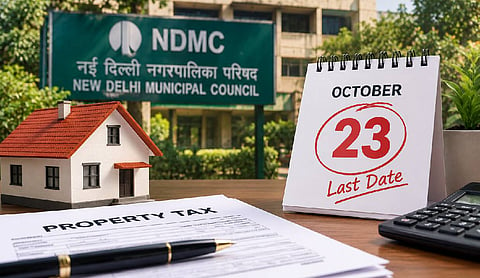

Residents and traders in NDMC areas have only two days left to submit objections to a proposed new property tax system, with the civic body’s deadline for public suggestions on the draft Property Taxes Bye-Laws, 2026, set to close on October 23.
The New Delhi Municipal Council has intensified consultations with resident welfare associations and market bodies ahead of the planned rollout of the Unit Area Method of property taxation, framed under the NDMC Act, 1994, as amended by the Jan Vishwas (Amendment of Provisions) Act, 2026.
The draft bye-laws were published on September 24 in Hindi and English newspapers and uploaded on the NDMC website, inviting objections and suggestions from residents, property owners and other stakeholders over a one-month window.
As part of the consultation process, NDMC’s Property Tax Department has engaged with several resident welfare associations, including those representing Golf Links, Hanuman Road Colony, Babar Road Colony and Khan Market, along with neighbouring associations.
Discussions have also taken place with trade and market bodies such as the New Delhi Traders Association, Khan Market Traders Association and Bengali Market Traders Association.
These interactions have allowed residents and traders to raise practical concerns tied to local conditions before the new taxation system is finalised.
Key issues under discussion include how a property’s age, usage, occupancy status, covered area and plot size will factor into its valuation, along with how residential and commercial properties will be classified under the new framework.
Stakeholders have also raised questions about proposed rebates for eligible property categories, how older buildings will be treated under age-related depreciation provisions, and how occupancy and usage factors might affect tax calculations for properties in similar situations.
NDMC said it is examining taxation practices followed by other municipal bodies as part of the exercise, with the stated aim of developing a structure that protects residents’ interests while supporting the financial sustainability of civic services.
Alongside the bye-laws consultation, NDMC is working to strengthen its online self-assessment system for property tax, aiming to simplify how taxes are calculated, improve transparency, expand digital payment options and reduce disputes between taxpayers and the administration. Particular attention is being given to the concerns of owners of older properties, with the civic body aiming for a simpler compliance process overall.
Suggestions and objections received during the consultation period will be examined by NDMC and placed before the appropriate authorities as part of the statutory finalisation process. Matters relating to valuation methodology may also be referred to the Municipal Valuation Committee where applicable.
A senior official of the Tax Department said the objective was to ensure maximum citizen participation in implementing the Unit Area Method, adding that the civic body was actively engaging with resident associations, traders and other stakeholders to understand their concerns before the framework is finalised. The official appealed to all stakeholders to submit suggestions by October 23 so their perspectives could be considered in the final bye-laws.